Used EV Battery Health: A UK Buyer's Guide to Degradation & Longevity
The rise of electric vehicles (EVs) has been nothing short of meteoric in the UK, with more drivers than ever embracing the silent, smooth, and sustainable ride they offer. As the market matures, so too does the availability of used EVs, opening up an exciting, more affordable pathway to electric motoring. However, one question frequently crops up in the minds of prospective used EV buyers: "What about the battery?"
It's a valid concern. Unlike a conventional petrol or diesel car where engine wear is the primary worry, an EV's battery is its heart and soul, and its long-term health is paramount. While modern EV batteries are remarkably robust and designed to last for many years and hundreds of thousands of miles, they do, like any rechargeable battery, experience a gradual decline in their energy storage capacity over time. This phenomenon, known as degradation, is natural and unavoidable.
But don't let that deter you. Understanding battery degradation, knowing what to look for, and appreciating the protections in place will empower you to buy a used EV with confidence. This guide from CarsLink.ai will demystify EV battery health, arming you with the knowledge to make an informed decision.
Understanding Battery Degradation: What Causes It?
Think of your smartphone battery; over a few years, it holds less charge than when it was new. An EV battery behaves similarly, but on a much larger, more sophisticated scale. Battery degradation refers to the irreversible loss of an EV battery's ability to store energy, meaning its maximum range gradually decreases. The "State of Health" (SoH) is typically expressed as a percentage, indicating the remaining usable capacity compared to its original design capacity.
Several factors contribute to this decline:
- Age and Cycle Count: This is the most fundamental factor. Batteries naturally degrade with age, regardless of use, and each full charge and discharge cycle contributes to wear. The more cycles, the more degradation.
- Temperature Extremes: Both very high and very low temperatures can accelerate degradation. While the UK's temperate climate typically avoids the extremes seen in other parts of the world, consistent rapid charging in very hot weather or repeated full charges in freezing conditions can stress the battery. Modern EVs, however, employ sophisticated Thermal Management Systems (TMS) to keep the battery within optimal operating temperatures.
- Charging Habits:
- Frequent DC Rapid Charging: While convenient for long journeys, regular reliance on high-power DC rapid chargers (especially to 100% capacity) can generate more heat and stress the battery cells compared to slower AC charging.
- Regularly Charging to 100%: Constantly topping up to 100% and leaving the car parked, particularly in hot weather, puts the battery under higher stress.
- Deep Discharges: Consistently running the battery down to very low levels (e.g., below 10-20%) can also be detrimental over the long term.
- Driving Style: Aggressive driving, with frequent hard acceleration and braking, demands more power from the battery, generating heat and potentially accelerating degradation compared to a smooth, economical driving style.
- Battery Chemistry and Management System (BMS): Different battery chemistries (e.g., NMC, LFP) have varying degradation characteristics. Critically, an EV's Battery Management System (BMS) plays a vital role. It constantly monitors cell voltages, temperatures, and current flow, balancing cells and protecting the battery from overcharging, over-discharging, and overheating – all crucial for longevity.
Key Checks Before You Buy: Assessing a Used EV's Battery
Since you can't simply open the bonnet and inspect an EV battery, assessing its health requires a more technical approach. Here’s what you should do before parting with your cash:
- Full Service History: As with any used car, a comprehensive service history is paramount. Look for evidence of regular servicing at authorised dealerships or reputable EV specialists. This ensures the car's software, including the crucial battery management system, has been kept up-to-date.
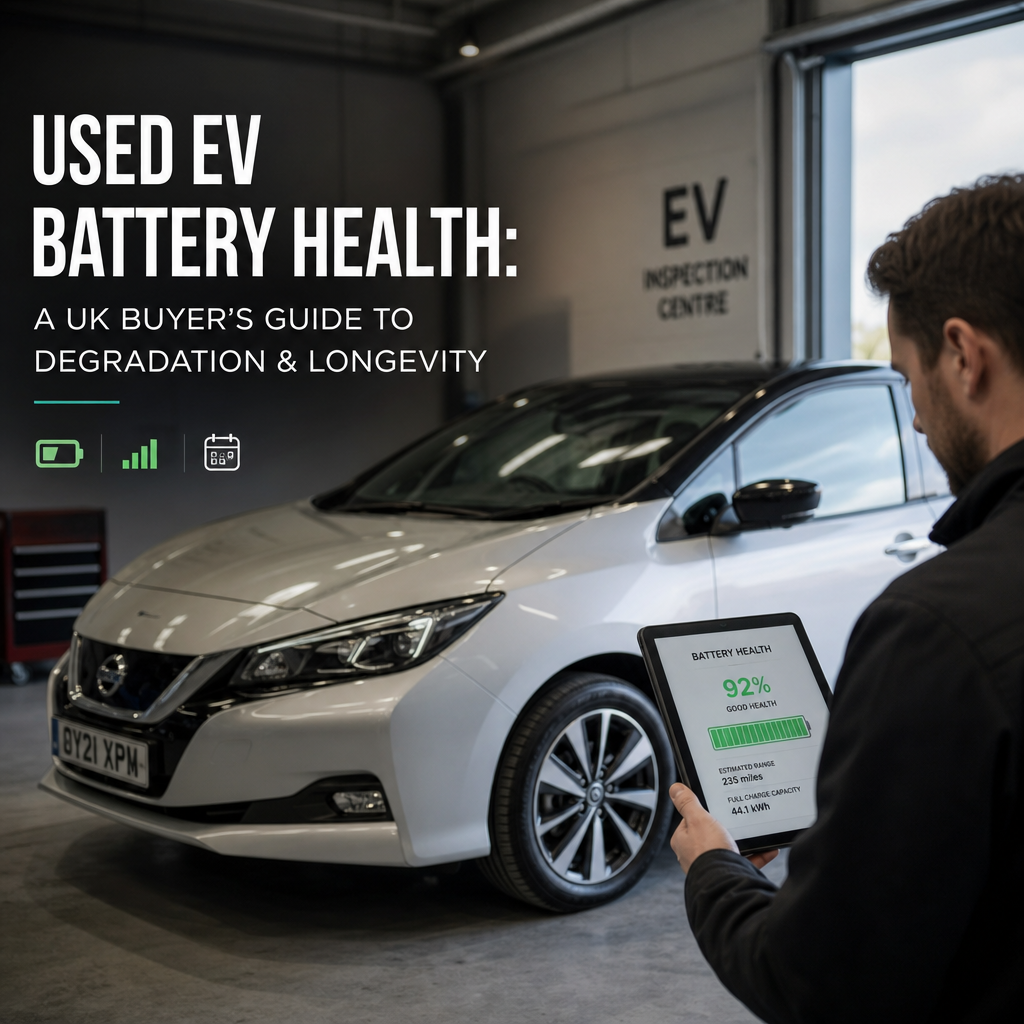
- Dealer Diagnostics & Battery Health Certificate: This is the gold standard. Reputable franchised dealerships (e.g., a Nissan dealer for a used Leaf, a Kia dealer for a used e-Niro) can connect to the car's onboard systems and provide a definitive "Battery Health Certificate" or a detailed diagnostic report. This report will typically show the battery's current State of Health (SoH) as a percentage. Always ask for this. If a private seller or independent dealer can't provide one, they should be willing to facilitate a check at an approved service centre.
- Telematics Data & In-Car Displays:
- Some EVs offer in-car displays or connected apps (if you can get access from the seller) that show the battery's SoH directly. For example, some early Renault ZOE models had a menu option for battery health.
- While not definitive, paying attention to the "Guess-O-Meter" (GOM) range estimator on the dashboard can offer clues. Compare the displayed range at 100% charge with the original WLTP (Worldwide Harmonised Light Vehicle Test Procedure) rating for that model. However, remember that the GOM adapts to recent driving style and temperature, so it’s not a precise SoH indicator.
- Third-Party Apps & OBDII Scanners: For specific models like the Nissan Leaf, apps like 'Leaf Spy' (when used with an OBDII Bluetooth dongle) can provide incredibly detailed information about individual cell voltages and overall SoH. While powerful, using these requires some technical know-how and should be considered supplementary to official dealer checks. Always proceed with caution and ensure you understand what you're doing.
- Test Drive: During your test drive, observe the range display carefully. Does the range drop linearly with the miles driven, or does it seem to plummet unexpectedly? Pay attention to how the car drives under acceleration – any unusual sluggishness could be a sign, though less common.
Manufacturer Warranties & Guarantees: Your Safety Net
Perhaps the most reassuring aspect for used EV buyers is the robust battery warranty typically offered by manufacturers. These warranties are usually separate from the main vehicle warranty and offer excellent peace of mind:
- Standard Coverage: Most manufacturers offer an 8-year warranty for the high-voltage battery. The mileage covered usually ranges from 100,000 miles up to 120,000 miles, depending on the brand and model.
- Degradation Threshold: Crucially, these warranties aren't just for total battery failure. They typically guarantee that the battery will retain a minimum percentage of its original capacity within the warranty period – usually 70% or 75% SoH. If the battery degrades below this threshold within the specified time and mileage, the manufacturer is obligated to repair or replace it at no cost to you.
- Examples: Nissan's Leaf battery warranty is often 8 years/100,000 miles for 75% SoH. Tesla offers 8 years/100,000-120,000 miles (depending on the model) for 70% SoH.
- Transferable Warranty: A significant advantage for used buyers is that these battery warranties are almost always transferable to subsequent owners. This means a used EV that's, say, four years old and has covered 40,000 miles will still have another four years and 60,000 miles of battery warranty protection remaining.
Always confirm the specific warranty details for the used EV you are considering by checking the manufacturer's website or with a franchised dealer using the car's VIN (Vehicle Identification Number). This warranty is your primary safety net against unexpected battery degradation.
Maximising Longevity: Best Practices for EV Owners
Once you've bought your used EV, a few simple practices can help preserve its battery health for years to come:
- Charging Sweet Spot: For daily driving, aim to keep your battery's State of Charge (SoC) between 20% and 80%. This reduces stress on the cells, as both very low and very high charge levels are harder on the battery.
- Avoid Regular 100% Charging: Only charge to 100% when you genuinely need the full range for a long journey. If you do charge to 100%, try to set off soon after it finishes charging rather than letting it sit fully charged for extended periods.
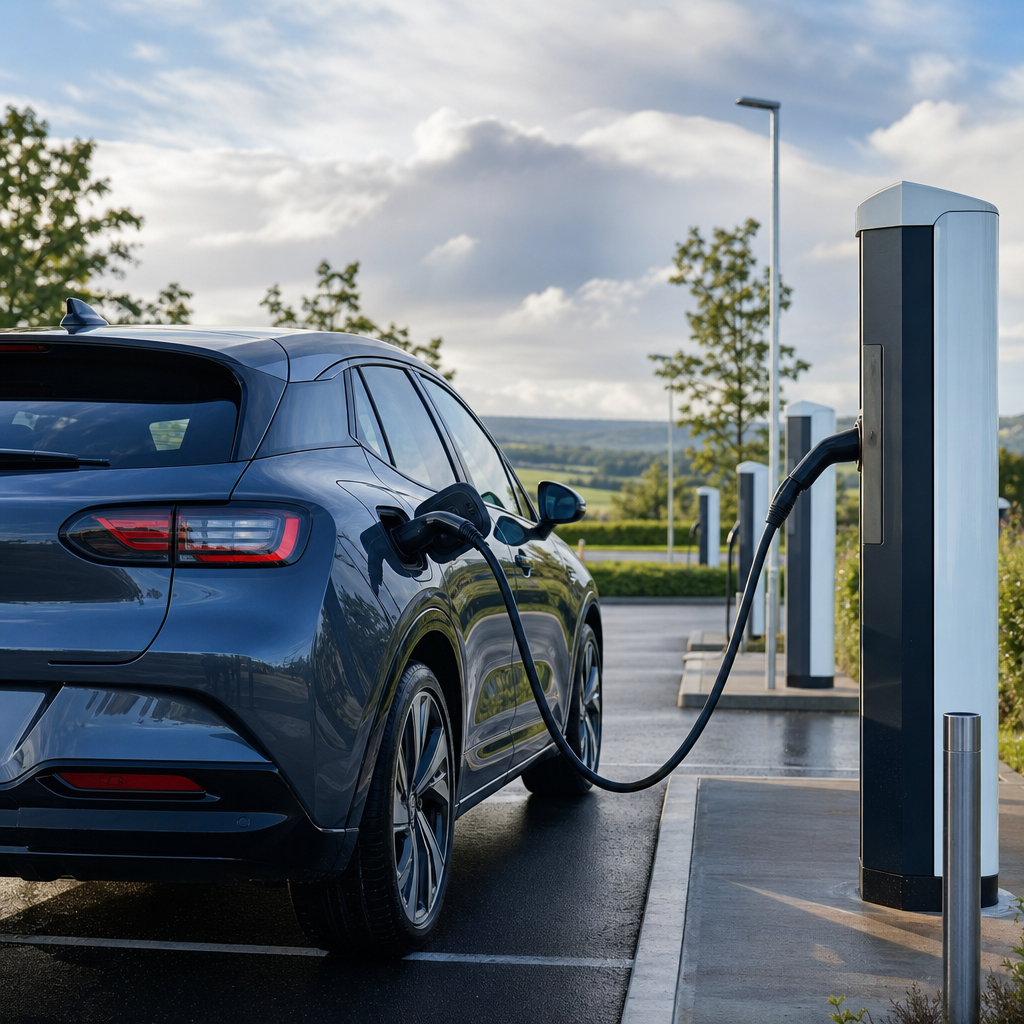
- Mind Rapid Charging: Use DC rapid chargers when you need speed, but don't make them your primary charging method for daily use. Your home wallbox (AC charging) is generally gentler on the battery.
- Pre-conditioning: Utilise your EV's pre-conditioning function, especially in extreme temperatures. While plugged in, this warms or cools the battery to an optimal temperature before you set off, reducing the strain on the battery at the start of your drive.
- Smooth Driving: Drive smoothly, avoiding excessive harsh acceleration and braking. Not only is it safer and more energy-efficient, but it also places less strain on the battery.
- Software Updates: Ensure your car's software is kept up-to-date. Manufacturers frequently release updates that improve battery management, charging efficiency, and overall performance.
- Parking and Storage: If storing your EV for an extended period, aim for a 50-60% charge. In summer, try to park in the shade to avoid extreme heat; in winter, garaging can offer protection from deep cold.
Conclusion
The fear of battery degradation in a used EV is understandable, but with the right knowledge, it's a concern that can be confidently navigated. Modern EV batteries are engineered for impressive longevity, supported by sophisticated management systems and comprehensive manufacturer warranties that protect against significant capacity loss.
By conducting thorough checks, especially requesting a battery health report from a dealer, and understanding the robust warranty coverage, you can mitigate risks. Furthermore, adopting smart charging and driving habits will ensure your EV's battery remains in excellent condition for many thousands of miles.
Embrace the future of driving with a used electric vehicle. With proper diligence, you can enjoy years of reliable, cost-effective, and environmentally friendly motoring. Start your journey today by exploring the fantastic range of used EVs available on CarsLink.ai!