Charging On The Go: A UK Guide to Public EV Charging Networks for Used Electric Car Owners
So, you’ve taken the plunge and joined the electric revolution, perhaps by acquiring a fantastic used EV from CarsLink.ai. Excellent choice! Owning an electric vehicle offers a raft of benefits, from lower running costs (especially if you charge at home) to a smoother, quieter driving experience. However, one area that can feel a bit daunting for new EV owners, particularly those who’ve bought used, is navigating the world of public charging.
Fear not. While the UK’s public charging infrastructure is constantly evolving, it’s far from the wild west it once was. With a bit of preparation and understanding, 'fuelling up' your electric car on the go can be a seamless and stress-free experience. This guide will demystify the key aspects of public EV charging in the UK, ensuring you’re well-equipped for your electric adventures.
Understanding the Main Public Charging Networks
The UK boasts a growing number of public charging networks, each with its own footprint, pricing, and user experience. Getting familiar with the major players will save you time and hassle.
Gridserve: A prominent name, especially if you travel on motorways. Gridserve has replaced much of the older Ecotricity infrastructure at motorway service areas, offering high-power rapid and ultra-rapid chargers (typically 50kW to 350kW). They're known for their impressive Electric Forecourts, which combine multiple charging bays with amenities. Payment is generally straightforward, accepting contactless bank cards.
Instavolt: Often found at retail parks, McDonald's, Costa Coffee outlets, and hotels, Instavolt prides itself on reliability and ease of use. Their rapid chargers are generally 50kW or 125kW+, and payment is almost exclusively via contactless bank card, making it a favourite for many thanks to its no-app, no-subscription approach.
BP Pulse: One of the largest networks, BP Pulse has a vast array of charge points ranging from slow to ultra-rapid, often found in town centres, car parks, and BP forecourts. While their older rapid chargers sometimes have a reputation for reliability issues, they are actively upgrading. They offer a subscription model that can significantly reduce charging costs per kWh, alongside a pay-as-you-go option via their app or an RFID card.
Shell Recharge: As the name suggests, you'll often find these chargers at Shell petrol stations, but also increasingly at dedicated hubs and retail locations. Shell Recharge offers a mix of rapid and ultra-rapid chargers, known for their modern, user-friendly design. Payment is via the Shell Recharge app, an RFID card, or increasingly, contactless bank cards.
Pod Point: You’ll frequently encounter Pod Point chargers at supermarkets (e.g., Tesco, Lidl, Sainsbury’s), workplaces, and hotels. These are predominantly fast (7kW or 22kW) AC chargers, ideal for topping up while you shop or work. Rapid chargers are less common but are expanding. Payment is usually through their app, though some locations offer free charging for customers.
Other significant networks include Osprey, known for their reliable rapid chargers often found at pubs and retail parks, GeniePoint (part of ChargePoint) found in various public car parks, and MFG EV Power at MFG petrol stations. It's worth noting that reliability can vary between networks and even individual charge points, so checking recent user reviews on mapping apps is always a good idea.
Demystifying Connectors and Charging Speeds
Understanding the different plug types and charging speeds is fundamental to successful public charging.
Connector Types:
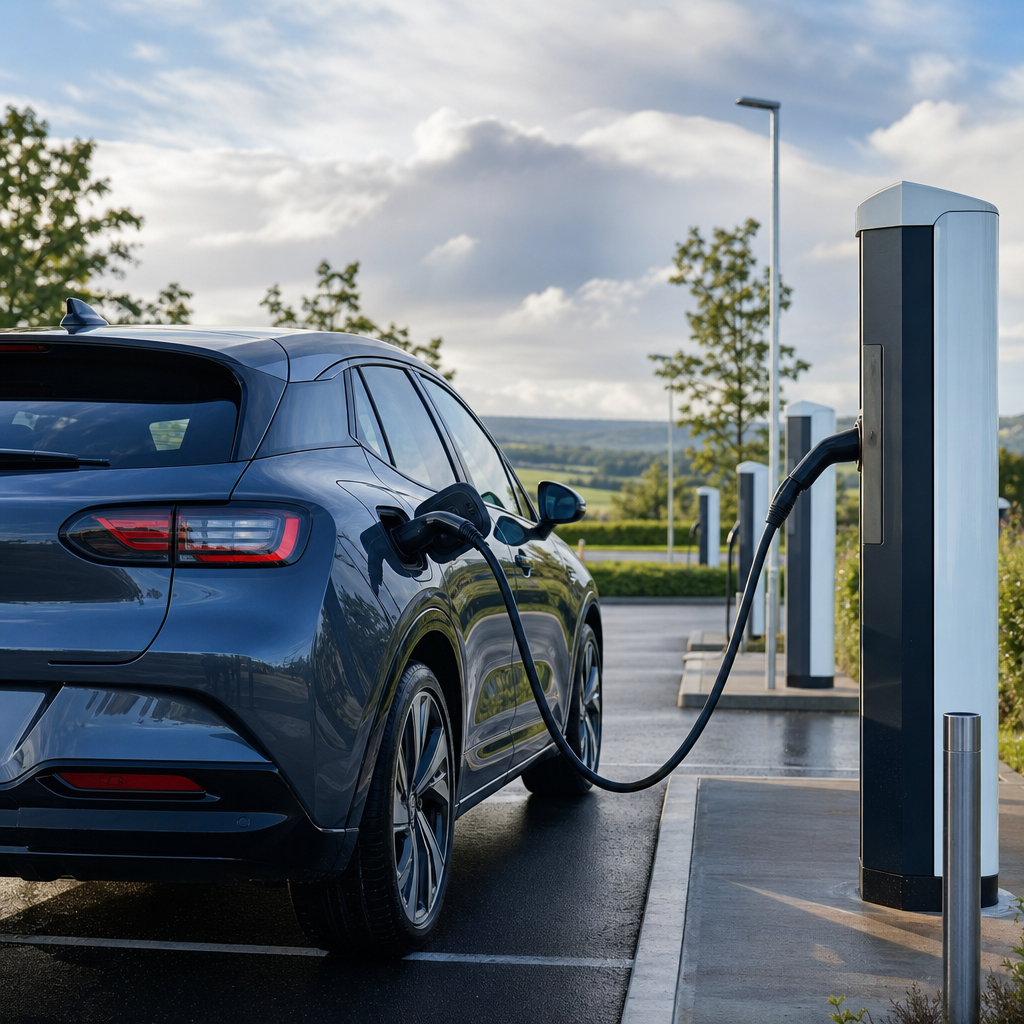
- Type 2 (AC): This is the standard connector for 'fast' charging (AC – Alternating Current) in the UK and Europe. Almost all public slow and fast chargers (3kW to 22kW) will have a Type 2 socket, requiring you to use your own cable (supplied with your car) with a Type 2 plug at both ends. Your used EV, regardless of its rapid charging port, will have a Type 2 port for AC charging.
- CCS (Combined Charging System) (DC): This is the dominant standard for 'rapid' and 'ultra-rapid' DC (Direct Current) charging in the UK for most modern EVs. The CCS connector is essentially a Type 2 plug with two additional pins for DC power, meaning the charge point has an integrated cable that plugs directly into your car. Most rapid chargers offer CCS.
- CHAdeMO (DC): An older rapid charging standard, primarily used by Japanese manufacturers like Nissan (e.g., older Nissan Leaf models) and Mitsubishi. While still available on many rapid chargers, its prevalence is declining as CCS has become the global standard for newer EVs. If you have an older Leaf, CHAdeMO will be your rapid charging connector.
Charging Speeds:
- Slow Charging (3-6kW): Typically found in residential areas, workplaces, or older public spots. These are usually Type 2 AC chargers. A 3kW charger can take 8-12 hours to fully charge a medium-sized EV battery (e.g., 40kWh). Best for overnight charging or very long stays.
- Fast Charging (7-22kW): The most common public AC charging speed, found at supermarkets, leisure centres, and destination car parks. Again, these are Type 2 AC, requiring your own cable. A 7kW charger can replenish a 40kWh battery in 4-6 hours, while a 22kW can do it in 2-3 hours, assuming your car can accept 22kW (many only accept 7kW or 11kW AC). Ideal for topping up while you go about your day.
- Rapid Charging (50kW+): These are DC chargers (CCS or CHAdeMO) with integrated cables. A 50kW rapid charger can typically get most EVs from 20% to 80% charge in 30-60 minutes, perfect for longer journeys.
- Ultra-Rapid Charging (100kW to 350kW+): The fastest public chargers, almost exclusively CCS. These can charge compatible EVs from 20% to 80% in as little as 15-30 minutes, depending on your car's maximum charging acceptance rate. These are increasingly found on motorways and key arterial routes.
Remember, your car's onboard charger limits the speed it can accept. A 7kW AC charger won't provide 22kW to a car that can only accept 7kW AC, and an ultra-rapid 350kW DC charger will only charge your car at its maximum DC charging rate (e.g., 50kW, 100kW, or more).
Navigating Payment Methods: Apps, RFID Cards, and Contactless
One of the biggest frustrations for new EV owners is the variety of payment methods. While standardisation is improving, you'll likely encounter a mix:
- Dedicated Apps: Many networks operate via their own smartphone app (e.g., BP Pulse, Shell Recharge, Pod Point, GeniePoint). You'll typically need to download the app, create an account, register a payment method (credit/debit card), and then use the app to start and stop charging. This can mean having multiple apps on your phone.
- RFID Cards: Some networks offer physical RFID cards that you tap against the charger to initiate a session. BP Pulse, for example, offers these, often linked to your account for subscription benefits. There are also 'roaming' RFID cards like Electroverse (from Octopus Energy, available to all EV owners) or Bonnet, which consolidate access and payment across multiple networks, simplifying the process.
- Contactless Bank Cards: This is the gold standard for convenience and is becoming mandatory for new rapid and ultra-rapid chargers in the UK. Networks like Instavolt, Gridserve, Osprey, and many Shell Recharge points allow you to simply tap your debit or credit card to pay, just like at a petrol pump. This method avoids the need for apps or subscriptions and is generally preferred for its simplicity.
Top Tip: For seamless charging, it’s advisable to download the apps for the networks you anticipate using most frequently and set up accounts before you need to charge. Consider an RFID card like Electroverse for broader coverage.
Finding Available Charge Points and Avoiding Common Charging Etiquette Pitfalls
Finding an available and working charge point is crucial for a smooth journey.
Finding Chargers:
- Zap-Map (Highly Recommended): This is the undisputed champion of UK EV charging apps. Zap-Map provides real-time information on charge point locations, connector types, speeds, availability (for many networks), pricing, and crucial user reviews. You can filter by network, connector, speed, and even whether it has contactless payment. Always check the recent user comments for an indication of reliability.
- PlugShare: Another excellent app offering similar functionality, particularly strong for international travel but widely used in the UK too.
- In-Car Navigation: Many modern EVs have integrated navigation that can route you via charge points, but the real-time availability and user review features of Zap-Map often make it superior for planning.
- Network-Specific Apps: While useful for activation, they only show chargers for that specific network.
Avoiding Pitfalls & Etiquette:
- "Ghost Chargers": These are chargers listed on apps but are out of order, or worse, have been removed entirely. Rely on Zap-Map's user comments for the most up-to-date info.
- Don't Hog the Charger: Once your car is charged sufficiently (e.g., to 80% for rapid charging, or fully for destination charging), move it. Rapid chargers are for convenience and turnover is essential. Many networks charge idle fees if you remain plugged in after charging is complete.
- The 80% Rule (Rapid Charging): Rapid charging significantly slows down after 80% to protect the battery. Unless you absolutely need 100%, stopping at 80% is more efficient for you and frees up the charger faster for others.
- Only Park When Charging: EV bays are for charging only. Parking an ICE (Internal Combustion Engine) vehicle in an EV bay is known as "ICEing" and is a major frustration. Equally, don't park your EV in a charging bay if you're not actively charging.
- Be Patient and Considerate: Sometimes there's a queue. Be polite, communicate with other drivers, and wait your turn.
- Report Faults: If you encounter a broken charger, report it to the network operator and leave a comment on Zap-Map to help other drivers.
Cost Considerations: Per kWh, Subscriptions, and Network Comparisons
The cost of public charging varies significantly and is generally more expensive than charging at home (especially if you have an off-peak tariff).
- Per kWh Pricing: Most networks charge a flat rate per kilowatt-hour (kWh) consumed. This is generally the most transparent method. Rapid charging typically costs between 60p and 85p per kWh, with ultra-rapid often at the higher end. Fast AC charging can range from 30p to 50p per kWh.
- Subscription Models: Networks like BP Pulse offer a monthly subscription (e.g., £7.85/month) which significantly reduces the per kWh cost. For frequent users of a specific network, a subscription can lead to substantial savings. Always calculate if the subscription fee plus reduced rates will be cheaper than pay-as-you-go based on your usage.
- Connection Fees/Per Minute (Less Common Now): Historically, some networks charged a connection fee or billed per minute. This is now much less common, with per kWh being the standard, thanks to regulation and consumer preference.
- Idle Fees: As mentioned, some rapid charging networks apply an "idle fee" (e.g., 10p per minute) if your car remains connected after it has finished charging, encouraging turnover.
- Peak/Off-Peak Pricing: A few networks are starting to introduce dynamic pricing, with higher rates during peak demand hours. Always check the pricing displayed on the charger or in the app before you start a session.
Comparing Costs:
- Instavolt: Often seen as one of the pricier options on a per kWh basis, but praised for reliability and simplicity (no app/subscription needed).
- Gridserve: Competitive pricing, especially considering their high-power ultra-rapid chargers, with easy contactless payment.
- BP Pulse: Pay-as-you-go can be expensive, but their subscription offers good value if you use their network frequently.
- Supermarket Chargers (Pod Point/GeniePoint): Often offer lower rates for fast AC charging, sometimes even free for customers for a limited time.
Always remember to check the exact pricing on the app or charger screen before you plug in, as costs can change.
Conclusion
Embracing a used electric car from CarsLink.ai is a fantastic step towards sustainable and enjoyable driving. While public charging might seem complex at first glance, it's a skill quickly mastered. By understanding the main networks, recognising connector types and speeds, preparing for various payment methods, using smart tools like Zap-Map, and adhering to simple etiquette, you'll find public charging to be a convenient and reliable solution for those longer journeys or when home charging isn't an option. With a little planning, you’ll soon be charging on the go like a seasoned EV pro, ready for whatever the UK’s roads throw at you. Happy motoring!