Preparing Your Home for a Used EV: A UK Buyer's Guide to Charging Infrastructure
The allure of a used electric vehicle (EV) is undeniable. Lower running costs, a smoother driving experience, and a greener footprint make them increasingly popular choices for savvy UK motorists. However, unlike refuelling a petrol or diesel car, 'filling up' an EV primarily happens at home. While the convenience of waking up to a fully charged battery every morning is a major selling point, understanding and preparing your home's charging infrastructure is a crucial step that often gets overlooked in the excitement of a new purchase.
This guide from CarsLink.ai will walk you through everything a UK buyer needs to know to set up their home for efficient, safe, and cost-effective EV charging. From assessing your current electrical system to understanding charger types and navigating grants, we'll ensure you're fully prepared to embrace the electric lifestyle.
Assessing Your Home's Electrical Capacity and Existing Wiring
Before you even think about buying a charger, the first critical step is to understand your home's electrical backbone. This isn't a DIY job; you'll need a qualified electrician to carry out an assessment.
Your Consumer Unit (Fuse Box): A modern consumer unit should be equipped with RCD (Residual Current Device) or RCBO (Residual Current Breaker with Overload) protection. This is vital for safety, detecting faults and cutting power quickly. An older, fuse-wire based unit will almost certainly need upgrading before an EV charger can be installed. Your electrician will check for spare capacity to accommodate the new dedicated circuit for your charger.
Incoming Electrical Supply: Your home receives power from the national grid via your Distribution Network Operator (DNO). The maximum current your home can draw is determined by the main fuse rating, typically located near your electricity meter. Common ratings for UK homes are 60A, 80A, or 100A. A standard 7.4kW home charger draws 32A, which is usually fine for a 100A supply. However, if your supply is 60A or 80A, or if your home already has a high electrical demand (e.g., electric showers, induction hobs), an upgrade may be necessary. Your electrician will be able to advise, and they will coordinate any required DNO notification or upgrade work.
Earthing System: A safe earthing system is paramount. Most modern UK homes utilise a TN-C-S (PME) earthing system, which merges the neutral and earth conductors at some point. While common, EV chargers installed on PME supplies require specific PEN fault protection to prevent potentially dangerous voltage fluctuations. Your electrician will verify your earthing arrangement and ensure the chosen charger or its installation incorporates the necessary safety mechanisms.
A thorough electrical survey by a certified professional (such as one registered with NICEIC, ECA, or similar) is non-negotiable. They will identify any issues and provide a tailored solution, ensuring your charging setup is safe and compliant with UK wiring regulations (BS 7671).
Understanding Charger Types: 3-pin Plug vs. Dedicated Wallbox
When it comes to charging your EV at home, you essentially have two main options, each with distinct advantages and disadvantages:
3-pin Plug ('Granny Charger' / Mode 2):
- What it is: This is the charging cable that typically comes with your EV, allowing you to plug into a standard UK 3-pin (Type G) domestic socket.
- Pros: Requires no installation; you can use it anywhere there's a standard socket.
- Cons: Extremely slow. Operating at around 2.3kW (10 amps), it will add roughly 8-10 miles of range per hour. This means a full charge for an average EV could take 24 hours or more. Crucially, continuously drawing maximum current for prolonged periods can strain older or inadequate domestic wiring, posing a potential fire risk. It's generally not recommended for daily, primary charging.
- Best Use: As an emergency backup or for occasional overnight top-ups when you're away from home.
Dedicated Wallbox (Mode 3, Type 2 Connector):
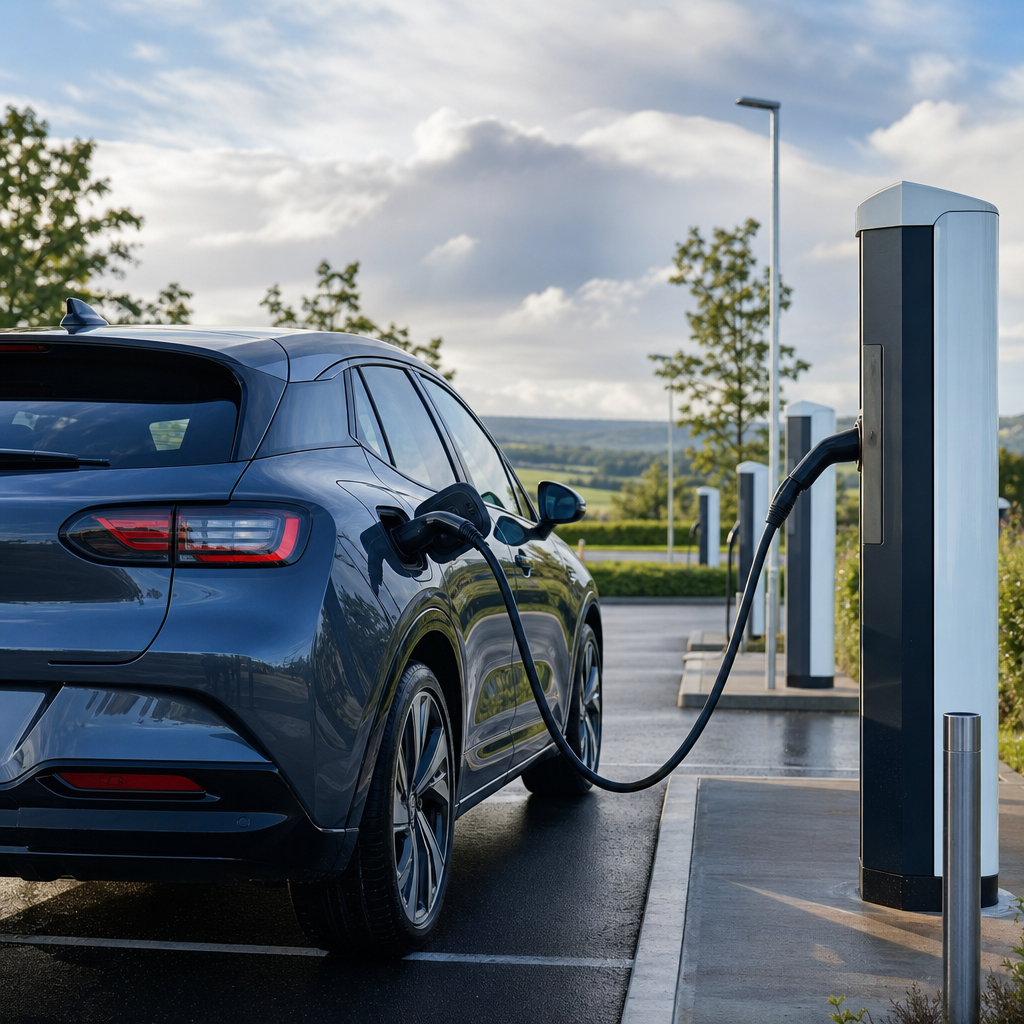
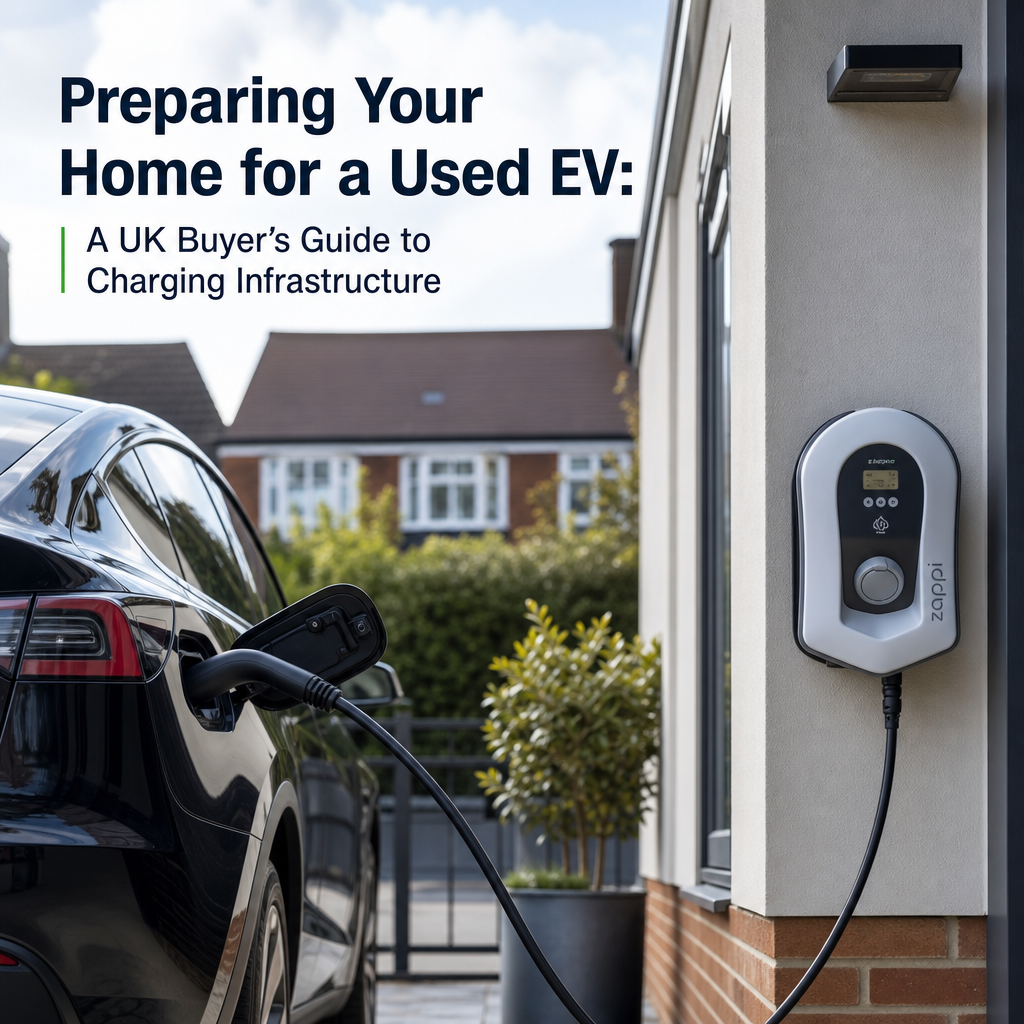
- What it is: A purpose-built EV charger permanently installed at your home, usually on an exterior wall or in a garage. Most EVs sold in the UK use a Type 2 charging port.
- Pros:
- Speed: The most common home wallbox in the UK provides 7.4kW (32 amps) of power, adding approximately 25-30 miles of range per hour. This allows for a full charge overnight (6-10 hours for most EVs). Some homes with a three-phase supply can have 22kW chargers, but these are rare in domestic settings.
- Safety: Designed specifically for EV charging, with integrated safety features like RCDs and PEN fault detection.
- Smart Features: Many modern wallboxes are 'smart chargers'. This means they can connect to Wi-Fi, allowing you to schedule charging for off-peak electricity tariffs (significantly reducing costs), monitor usage via an app, and even integrate with energy management systems.
- Types:
- Tethered: Comes with a cable permanently attached, ready to plug into your car. Convenient as you don't need to get your car's cable out every time.
- Untethered: Has a socket, requiring you to use your car's own Type 2 charging cable. Offers flexibility if you (or a visitor) have an EV with a different connector type (though Type 2 is standard for AC charging in the UK).
- Best Use: The ideal and recommended primary charging solution for home EV ownership.
Exploring Government Grants and Incentives in the UK
The UK government, via the Office for Zero Emission Vehicles (OZEV), has historically offered grants to help reduce the cost of installing home EV charge points. However, it's crucial to understand the current landscape as schemes evolve.
As of recent updates, the EV Chargepoint Grant is the primary offering, but its eligibility has become more targeted:
- Homeowners of Flats: If you own and live in a flat, you may be eligible for a grant covering 75% of the cost of buying and installing a chargepoint, up to a maximum of £350.
- People Living in Rented Properties: If you live in a rented property (either a house or a flat), you may also be eligible for the same grant, provided your landlord agrees to the installation.
- Landlords: There are grants available for landlords of residential or commercial properties to install multiple charge points.
- EV Infrastructure Grant: This grant is for larger installations, such as for properties with multiple dwellings, supporting the costs of wider infrastructure and multiple charge points.
What about homeowners of houses? It's important to note that the previous EV Homecharge Scheme (EVHS), which offered grants to most homeowners of houses, closed to new applications in March 2022. Therefore, if you own a detached, semi-detached, or terraced house, you are generally no longer eligible for an OZEV grant for a single chargepoint installation, unless you fall into the categories above (e.g., living in a flat or renting).
Key things to remember:
- You must use an OZEV-authorised installer for the grant to be valid.
- The chargepoint itself must be a 'smart charger' and OZEV-approved.
- Always check the latest information on the GOV.UK website (search for "EV chargepoint grant") as eligibility and grant values can change.
While direct homeowner grants for houses are mostly gone, the long-term savings from smart charging on off-peak tariffs often outweigh the upfront cost over the lifespan of your EV.
Optimal Placement Considerations and the Installation Process
Careful planning for your wallbox placement can significantly impact both convenience and installation costs.
Location, Location, Location:
- Proximity to Parking: The charger should be close to where your EV will be parked most of the time – typically on a driveway, in a garage, or by a designated parking space.
- Cable Length: Consider which side of your car the charging port is on. A 5-metre cable is standard, but you might need a longer one (e.g., 7.5m or 10m) if your parking isn't perfectly aligned with the charger.
- Proximity to Consumer Unit: The shorter the cable run from your consumer unit to the wallbox, the lower the installation cost. Long runs, especially if they require trenching, can significantly increase the price.
- Accessibility: Ensure the charger is easily accessible and doesn't create a trip hazard. While wallboxes are weather-rated, sheltered spots are often preferred.
The Installation Process:
- Initial Survey & Quote: A qualified EV chargepoint installer will visit your home to assess your electrical system, discuss placement options, and provide a detailed quote. This is where they'll identify any potential complexities.
- DNO Notification: Your installer is responsible for notifying your Distribution Network Operator (DNO) about the new electrical load your charger will place on the grid. For a standard 7.4kW installation, this is usually a simple notification, but for larger or more complex setups, it might require DNO approval.
- Installation Day: On the day, the installer will mount the wallbox, run the dedicated cable from your consumer unit, connect it all up, and thoroughly test the system. This typically takes half a day to a full day for a standard installation.
- Certification: Upon completion, you'll receive an Electrical Installation Certificate (EIC), confirming the work meets safety standards, and the installer will register the installation with local authority building control.
Always choose an installer accredited by a recognised body such as NICEIC, ECA, or NAPIT, and specifically qualified for EV chargepoint installations. This ensures adherence to safety standards and industry best practices.
Estimated Costs and Long-Term Benefits of a Home Charging Setup
While there's an upfront cost to installing a home charger, the long-term benefits in convenience and savings are substantial, making it a sound investment for any EV owner.
Estimated Upfront Costs:
- Wallbox Unit: Prices typically range from £400 to £1,200, depending on the brand, features (e.g., tethered/untethered, smart functionality), and power output.
- Standard Installation: For a straightforward installation (e.g., short cable run, no consumer unit upgrade required), expect to pay between £300 and £800.
- Total Typical Cost: For most standard installations, you're looking at an all-in cost of around £700 to £2,000.
- Complex Installations: Costs can rise significantly if major electrical upgrades are needed (e.g., a new consumer unit, main fuse upgrade by the DNO) or if the cable run is exceptionally long, requires trenching, or passes through multiple difficult areas. These more complex jobs could push the total cost into several thousands of pounds.
Running Costs (Electricity): This is where the real savings begin. Charging at home is almost always cheaper than using public rapid chargers.
- Standard UK Electricity Tariff: At an average of 25-35p per kWh, fully charging a 60kWh EV would cost around £15-£21, giving you 200-250 miles of range. This is still significantly cheaper per mile than petrol or diesel.
- Off-Peak EV Tariffs: This is the game-changer. Energy providers like Octopus Energy (e.g., Octopus Go, Octopus Intelligent Octopus Go), OVO Energy (Charge Anytime), and EDF (GoElectric) offer specific tariffs with very low electricity rates during off-peak hours (typically 00:30-04:30). These rates can be as low as 7.5p to 15p per kWh. On such a tariff, a 60kWh charge could cost just £4.50-£9, making the cost per mile incredibly low.
Long-Term Benefits:
- Unparalleled Convenience: No more detours to petrol stations. Wake up every morning with a 'full tank' and ready to go.
- Significant Cost Savings: Charging at home, especially on an off-peak tariff, drastically reduces your 'fuel' costs compared to petrol, diesel, or even most public charging options.
- Increased Property Value: As EVs become more common, a dedicated home charging point is an increasingly attractive feature for potential buyers and renters, potentially adding value to your property.
- Smart Energy Management: Smart chargers allow you to optimise charging times to utilise the cheapest electricity, potentially integrate with solar panels, and monitor your energy consumption.
- Reduced Environmental Impact: By charging at home, you contribute to a cleaner environment and reduce your carbon footprint.
Conclusion
Embracing a used EV is an exciting step towards sustainable and economical motoring. While the focus often shifts to the car itself, preparing your home's charging infrastructure is equally vital for a seamless and enjoyable ownership experience. By thoroughly assessing your electrical capacity, choosing the right dedicated wallbox, understanding the available (albeit targeted) grants, and planning for optimal placement, you can confidently integrate EV charging into your daily life.
The upfront investment in a home charger quickly pays for itself through convenience and dramatically reduced running costs, especially when paired with a smart charger and an off-peak electricity tariff. So, take the informed approach, consult with qualified professionals, and get ready to enjoy the ultimate convenience of always having a charged vehicle at your fingertips. Welcome to the future of driving!