Keeping Your Workhorse Healthy: Essential Maintenance Tips for Used Vans in the UK
For countless businesses across the UK, from plumbers and electricians to couriers and caterers, a reliable van is more than just transport – it's the beating heart of their operation. Used vans, in particular, represent fantastic value, offering the utility you need without the hefty new vehicle price tag. However, they've often lived a working life before they get to you, meaning proactive and diligent maintenance is absolutely crucial to keep them running efficiently, safely, and economically.
Here at CarsLink.ai, we understand the unique demands placed on commercial vehicles. Unlike a family car, your van is a dedicated workhorse, often carrying heavy loads, covering high mileages, and facing relentless start-stop conditions. Neglecting its upkeep isn't just a minor inconvenience; it can lead to costly breakdowns, lost income, and even compromise safety. This guide will walk you through essential maintenance tips to ensure your used van remains a dependable asset, not a money pit.
Adhering to Regular Servicing Schedules Specific to Commercial Vehicles
One of the most fundamental aspects of keeping your van healthy is strictly following its service schedule. This isn't just a suggestion; it's the manufacturer's roadmap to longevity and reliability. For commercial vehicles, these schedules are typically far more rigorous than those for passenger cars, taking into account the increased stresses of heavy loads and continuous operation.
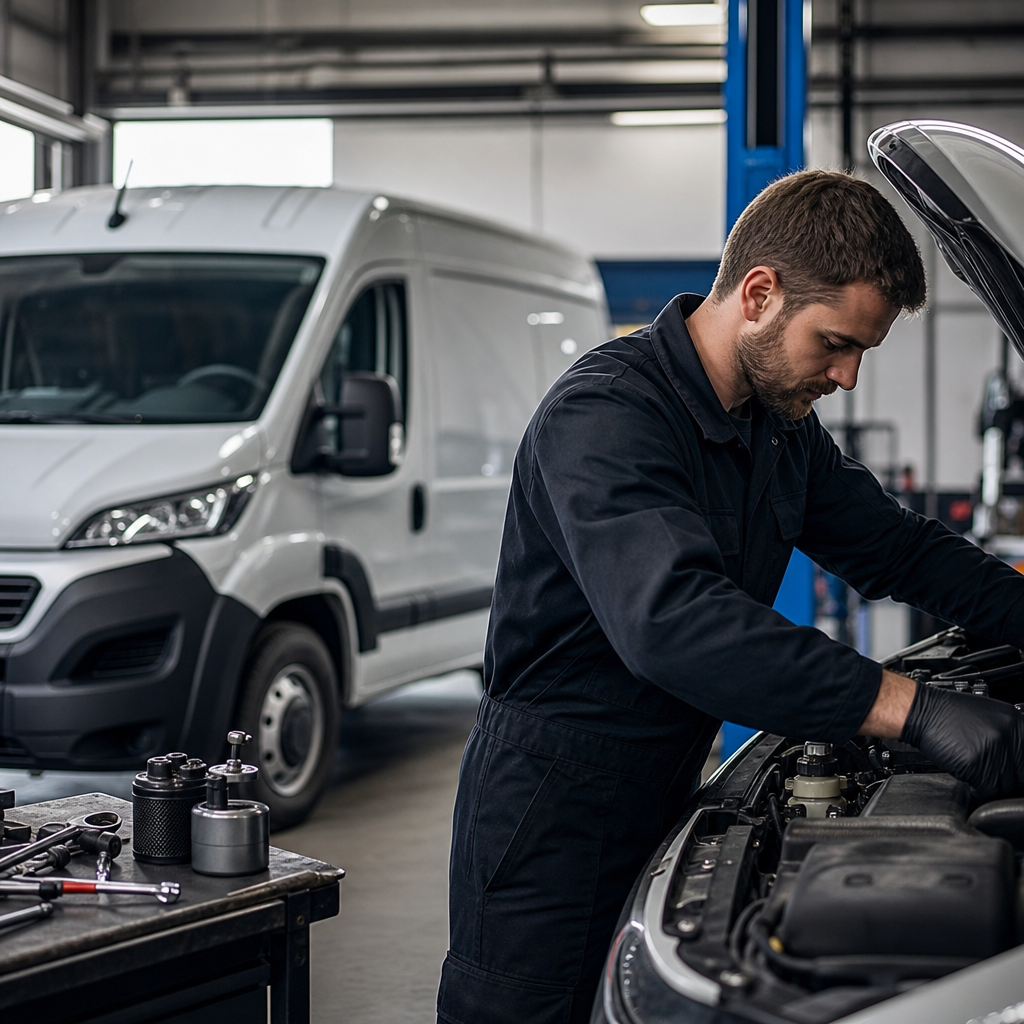
Most manufacturers, whether it's a Ford Transit, Mercedes Sprinter, or Vauxhall Vivaro, will specify service intervals based on mileage or time, whichever comes first. For a high-mileage courier van, this might mean a service every 15,000 miles or annually, while a less frequently used tradesman's van might follow the annual schedule more closely. Services usually alternate between minor checks (oil change, filter replacements, general inspection) and more comprehensive major services (spark plugs, fuel filters, brake fluid, extensive component checks). Missing these can lead to accelerated wear and tear on critical components, reduced fuel efficiency, and a higher risk of unexpected mechanical failure. Always use a reputable garage with experience in commercial vehicles, ensuring they use genuine or equivalent quality parts and follow manufacturer guidelines precisely. This not only keeps your van running smoothly but also helps maintain its resale value.
Critical Checks for Tyre Pressures and Tread
Your van’s tyres are its only contact with the road, making them absolutely vital for safety, handling, and fuel economy – especially when carrying heavy loads. Under-inflated tyres increase rolling resistance, leading to significantly higher fuel consumption and excessive heat build-up, which can cause dangerous blowouts. Over-inflated tyres, on the other hand, reduce grip and lead to uneven wear.
Always check your tyre pressures when the tyres are cold, using the manufacturer's recommended pressures found on a sticker inside the driver's door jamb, fuel filler cap, or in the owner's manual. These often specify different pressures for loaded and unloaded conditions. For instance, a fully-laden VW Caddy might require higher rear tyre pressures than when it's empty. As a rule of thumb, check them weekly, or at least fortnightly, particularly before long journeys or when you anticipate carrying a full load.
Beyond pressure, regularly inspect the tread depth. The legal minimum in the UK is 1.6mm across the central three-quarters of the tread around the entire circumference. However, for optimum safety and performance, especially in wet conditions, we recommend replacing tyres when the tread reaches 2mm. Look for uneven wear patterns (which can indicate alignment issues), bulges, cuts, or embedded objects. Don't forget your spare tyre, too! A healthy spare could be your saviour when you're up against the clock.
Inspecting the Brake System for Wear and Tear Under Consistent Load
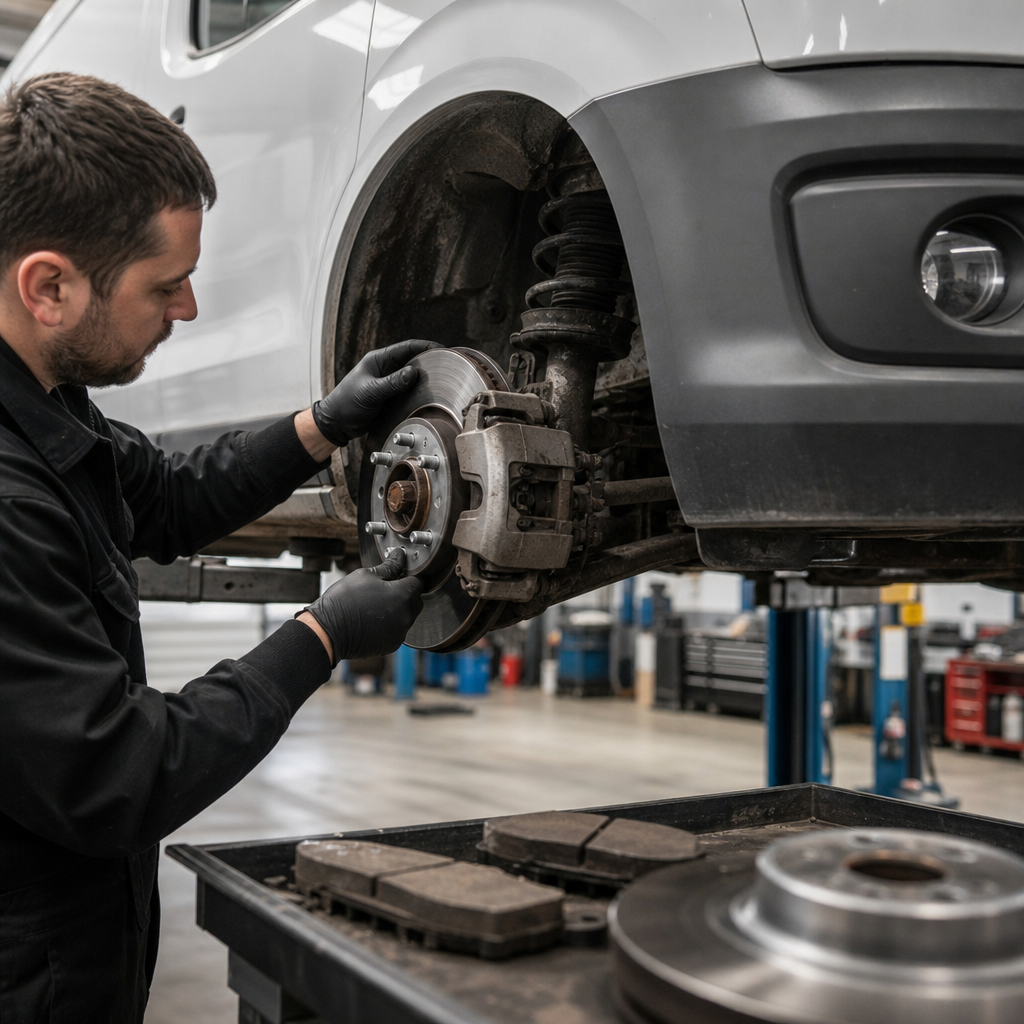
The braking system on a commercial van works considerably harder than on a typical car. Consistently carrying heavy tools, materials, or packages means your brakes are subjected to immense stress, accelerating wear on components like pads, discs, and fluid. A functioning brake system isn't just about stopping; it's about stopping safely, predictably, and efficiently, especially in an emergency.
Be vigilant for any signs of brake wear. Common symptoms include: a squealing or grinding noise when braking (indicating worn pads), a spongy or soft brake pedal, the van pulling to one side under braking, or an illuminated brake warning light on the dashboard. Visual inspections should be part of your routine; if you can see through your wheels, check the thickness of the brake pads and look for deep grooves or scoring on the brake discs. Brake fluid should also be at the correct level and replaced according to the manufacturer's schedule, as it absorbs moisture over time, reducing its effectiveness.
While your regular service will include a professional brake inspection, driver awareness between services is key. If you notice any changes in your van's braking performance, get it checked by a qualified mechanic immediately. Proactive replacement of worn components is far safer and often cheaper than waiting for a complete failure.
Ensuring the Load Area is Safe, Securing Cargo, and Preventing Internal Damage
While not a mechanical component, the condition and management of your van's load area directly impact safety, vehicle integrity, and indeed, your bottom line. An unsecured load can shift during transit, causing damage to the van's interior, the cargo itself, and, crucially, posing a serious safety risk in the event of sudden braking or a collision. Imagine a heavy toolbox becoming a projectile inside your Ford Transit Custom – the consequences could be catastrophic.
Always secure cargo, no matter how small or seemingly stable. Use appropriate lashing straps, bungee cords, cargo nets, or even a robust bulkhead to prevent items from moving. Consider investing in ply-lining for the load area, which protects the internal bodywork from scrapes, dents, and spills. Rubber mats can also prevent items from sliding and reduce noise. If your van has shelving or racking, ensure it's professionally fitted and regularly checked for security.
Beyond securing cargo, be mindful of your van's payload limit. Overloading your van compromises handling, increases braking distances, puts excessive strain on tyres and suspension, and is illegal. Always consult your van's gross vehicle weight (GVW) and payload capacity, typically found on a plate inside the door jamb. A well-maintained and tidy load area also speaks volumes about professionalism and can significantly enhance your van's resale value.
Preparing Your Van for its MOT (Class 4, 5, or 7 Differences)
The annual MOT test is a legal requirement for all vehicles over three years old in the UK, ensuring your van meets minimum road safety and environmental standards. For vans, there are typically two main MOT classes to be aware of:
- Class 4: This applies to most car-derived vans and smaller commercial vans with a Design Gross Weight (DGW) of up to 3,000kg. Examples include the Ford Fiesta Van, Vauxhall Corsa Van, or even many versions of the VW Caddy.
- Class 7: This covers larger commercial vans and goods vehicles with a DGW between 3,001kg and 3,500kg. This includes popular models like the Ford Transit, Mercedes Sprinter, Renault Master, and larger Vauxhall Vivaros.
- Class 5 is generally for larger passenger vehicles and private ambulances, so less common for typical commercial vans.
Before your van's MOT, conduct a thorough visual inspection yourself. Check all lights (headlights, indicators, brakes, fog, reverse, number plate illumination) for correct operation and damage. Ensure your tyres have legal tread depth and no damage. Test your horn, wipers, and washer jets. Check for cracks in the windscreen that obstruct your view, and ensure all mirrors are intact and secure. Verify seatbelts click in correctly and aren't frayed. Lastly, ensure your number plates are clean, legible, and correctly spaced. Addressing these minor issues beforehand can save you time, hassle, and potential re-test fees.
Conclusion
Your used van is an indispensable tool, but like any workhorse, it needs consistent care and attention to perform at its best. By adhering to regular servicing schedules, diligently checking tyres and brakes, managing your load area responsibly, and staying on top of MOT preparation, you're not just preventing breakdowns – you're investing in the longevity, safety, and efficiency of your business. A well-maintained van is a reliable partner, ensuring you can deliver on your promises and keep your operation moving forward, day in and day out. Drive safe, and keep that workhorse healthy!