Demystifying Dashboard Lights: What UK Drivers Need to Know Before Their MOT
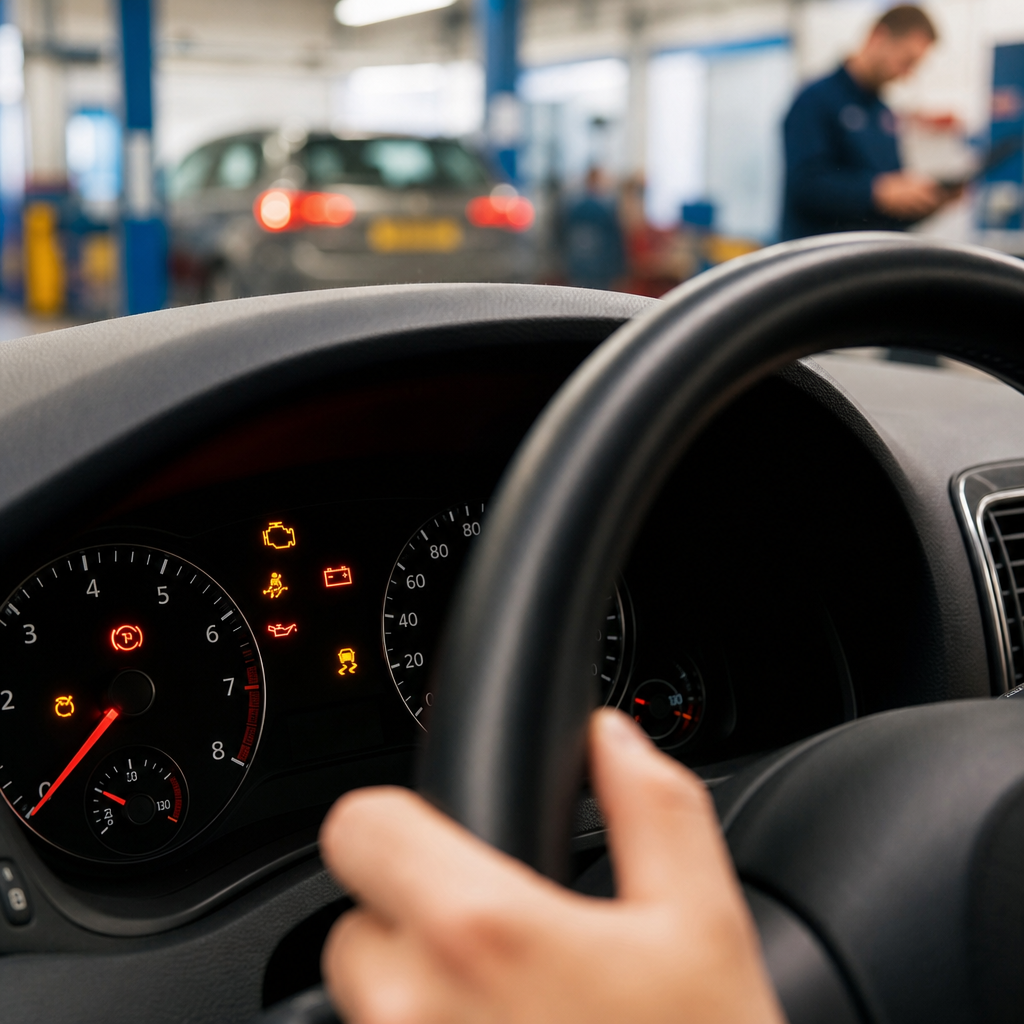
The modern car dashboard is a symphony of lights, dials, and digital readouts, designed to keep you informed about your vehicle's health and performance. Yet, for many UK drivers, the sudden appearance of an illuminated symbol can spark anything from mild confusion to outright panic. Is it a minor glitch? A sign of impending disaster? Or, crucially for those approaching their annual inspection, an automatic MOT failure?
At CarsLink.ai, we believe understanding your vehicle is key to safe, reliable, and cost-effective driving. This guide aims to demystify those dashboard lights, helping you interpret what your car is trying to tell you, and most importantly, what action to take to ensure you pass your next MOT with flying colours – or rather, with no warning lights illuminated!
Understanding Warning Tiers: Colour Coded for Clarity
Just like a traffic light, your dashboard uses a colour-coded system to convey urgency and importance. Learning these basic tiers is your first step to becoming a more informed driver:
Green Lights: Informational & System Active These are generally good news. Green lights indicate that a system is active or engaged. Think of your indicator arrows, main beam headlights, or cruise control symbol. They're telling you something is working as intended. While not usually an MOT concern in themselves, a green light that shouldn't be on (e.g., your indicators staying on permanently) could signify an electrical fault that would be noted.
Amber (or Yellow) Lights: Advisory & Warning Amber lights signal that something needs attention, but isn't an immediate crisis. This could be a low fuel warning, low screen wash, or even the dreaded Engine Management Light (EML). While you might not need to pull over immediately, an amber light demands investigation. Crucially, many amber lights, if illuminated during your MOT, signify a defect in a safety or emissions-critical system and will result in an automatic failure.
Red Lights: Critical & Immediate Action Required Red means stop. A red dashboard light indicates a serious problem that could compromise your safety, the car's integrity, or both. Examples include low oil pressure, high engine temperature, or a fault with your braking system. If a red light illuminates, you should safely stop the vehicle as soon as possible, turn off the engine, and investigate the cause. Continuing to drive with a critical red warning light can lead to catastrophic engine damage, brake failure, or other dangerous situations. These are almost guaranteed MOT failures.
Common MOT Failure Lights: Don't Get Caught Out
When it comes to the MOT, certain illuminated dashboard lights are instant deal-breakers. Testers are looking for a clear indication that all safety and emission control systems are fully functional. If a warning light indicates otherwise, it's a fail. Here are the most common culprits:
Engine Management Light (EML) / 'Check Engine' Light (Amber): This is perhaps the most notorious MOT failure light. It signifies a fault with the engine's electronics, emissions control system, or various sensors (e.g., oxygen sensor, catalytic converter, mass airflow sensor). If this light is on, or if it doesn't illuminate briefly with other lights when you turn the ignition and then extinguish, it's an automatic MOT failure. Crucially, simply clearing the code just before the test can also lead to a failure if the car's "readiness monitors" haven't reset.
Anti-lock Braking System (ABS) Light (Amber): The ABS system prevents your wheels from locking up during hard braking, allowing you to maintain steering control. If the ABS light is illuminated, it indicates a fault within this crucial safety system (e.g., a faulty wheel speed sensor). An illuminated ABS light is an automatic MOT failure.
Airbag / Supplemental Restraint System (SRS) Light (Red or Amber): This light indicates a fault with one or more components of your airbag system, including the airbags themselves, the seatbelt pre-tensioners, or the system's wiring and sensors. As a core passive safety system, any fault indicated by this light is an automatic MOT failure.
Electronic Stability Programme (ESP) / Traction Control Light (Amber): Often appearing as a car skidding symbol, this light usually illuminates when the system is active. However, if it remains permanently on, it indicates a fault within the ESP or traction control system. These systems help you maintain control in challenging driving conditions, making a fault a significant safety concern and an automatic MOT failure.
Tyre Pressure Monitoring System (TPMS) Light (Amber): For vehicles first registered on or after 1st January 2012, an illuminated TPMS light indicates either low tyre pressure or a malfunction with the system itself. Either scenario will result in an automatic MOT failure.
Brake System Warning Light (Red): If this light is illuminated and your handbrake is fully disengaged, it signifies a critical fault within the hydraulic braking system, such as dangerously low brake fluid or a more serious system malfunction. This is a severe safety issue and an automatic MOT failure.
Actionable Steps for Each Light: Your Driving Survival Guide
Knowing what a light means is one thing; knowing what to do is another. Here's a practical guide:
Green Lights:
- Action: No immediate action required, unless the light is on when it shouldn't be (e.g., main beam on during the day), which indicates user error, or if it's malfunctioning (e.g., indicator light stuck).
Amber (non-critical) Lights:
- Examples: Low fuel, low screen wash, bulb failure (if indicated).
- Action: Address the issue soon. Top up fluids, replace bulbs. These are generally not direct MOT failures unless the bulb is a mandatory exterior light.
- Examples: Tyre pressure warning (TPMS).
- Action: Check all tyre pressures immediately and inflate to the correct level. If the light remains on after reinflating and driving a short distance, or if the system is malfunctioning, get it checked by a garage. For vehicles registered post-2012, this is a critical MOT fix.
Amber (MOT Critical) Lights:
- Examples: EML, ABS, Airbag, ESP.
- Action: Do not ignore these. They indicate a fault with a critical system. Arrange for a diagnostic check by a qualified mechanic as soon as possible. Driving with these lights on might not cause immediate breakdown, but it compromises safety or emissions and will lead to an MOT failure. Avoid clearing codes yourself just before the MOT, as it can inadvertently cause a "readiness monitor not complete" failure. Get the underlying problem fixed properly.
Red (Critical) Lights:
- Examples: Oil pressure, coolant temperature, battery/charging system, brake system (non-handbrake).
- Action: Stop safely as soon as possible. Turn off the engine. Do not continue driving. Consult your vehicle handbook for specific advice, or call for recovery. Continuing to drive risks severe damage to your engine, electrical system, or a dangerous loss of braking capability. These issues must be resolved before your car can be safely driven, let alone pass an MOT.
The MOT Tester's Perspective: Why Lights Matter
From an MOT tester's point of view, dashboard warning lights are not just suggestions; they are explicit indicators of vehicle defects. The MOT is a statutory inspection designed to ensure your vehicle meets minimum roadworthiness, safety, and environmental standards. An illuminated warning light for a critical system directly contradicts this purpose.
Here's why certain lights are instant failures:
- Safety Compromise: Lights like ABS, Airbag, and Brake System warnings indicate that fundamental safety features designed to protect occupants or prevent accidents are not functioning correctly. A car with compromised braking or airbag systems is inherently unsafe.
- Environmental Impact: The Engine Management Light often signals issues with emission control components. A faulty catalytic converter or oxygen sensor can significantly increase harmful emissions, failing the MOT's environmental checks.
- Undiagnosable Faults: If a warning light is on, the tester cannot verify the proper operation of the system it represents. The light itself is the fault indicator. They cannot pass a vehicle if a safety system is signalling a malfunction.
- The "Lamp Check": Testers also observe the initial startup sequence. All warning lights should illuminate briefly (a 'bulb check') and then extinguish. If a critical light doesn't come on at all during this check, it could indicate a deliberate attempt to conceal a fault (e.g., by removing the bulb), which is also an automatic failure.
Trying to 'trick' the system by simply clearing codes with a diagnostic tool just before the MOT is a risky strategy. While the light might go off, the underlying fault remains. Furthermore, many modern cars require drive cycles to reset their readiness monitors after a fault code is cleared. If these monitors are "not complete" when tested, it's an automatic MOT failure, as the system hasn't fully self-checked. The only reliable approach is to identify and fix the root cause of the illuminated light.
Conclusion
Dashboard warning lights are your vehicle's way of communicating vital information. They are not cryptic symbols designed to confuse, but rather a crucial part of modern vehicle diagnostics and safety. By understanding the colour-coded tiers and, specifically, which lights will cause an MOT failure, you can act proactively, ensure your vehicle is safe, and avoid the inconvenience and cost of a failed MOT.
Don't ignore them. Treat amber lights with caution and red lights with immediate urgency. Investing in a diagnostic check from a reputable garage when a critical light appears is always money well spent. It ensures your car remains roadworthy, safe for you and other road users, and ready to pass its annual inspection. Drive smart, drive safe, and keep those warning lights off!