Rust Never Sleeps: Your UK Guide to Spotting and Preventing Corrosion on Used Cars
For anyone buying a used car in the UK, rust is an ever-present specter. Our damp climate, combined with the liberal use of road salt during winter, creates a perfect storm for corrosion. Far from being just an aesthetic blight, rust can compromise a vehicle's structural integrity, safety, and ultimately, its lifespan and resale value.
At CarsLink.ai, we understand that an informed buyer is a smart buyer. This comprehensive guide will equip you with the knowledge to identify common rust hotspots, differentiate between minor surface corrosion and serious structural damage, and understand the preventative measures that can save you a significant amount of money and heartache down the line. Don't let rust catch you out – read on to protect your investment.
Common Rust Hotspots on UK Vehicles
Rust doesn't attack randomly; it has preferred areas where moisture, salt, and abrasion are most prevalent. When inspecting a used car, pay particular attention to these notorious UK hotspots:
- Sills (Rockers): These crucial structural components run along the bottom edge of the car between the front and rear wheel arches. They're highly susceptible to stone chips, which expose bare metal, and they often trap moisture and salt, leading to insidious internal corrosion that bubbles through the paint. Check both the outer sills and, if possible, the inner sills, especially around jacking points which can easily be damaged.
- Wheel Arches: The constant spray of water, mud, and road grit from the tyres, coupled with stone chips, makes wheel arches prime targets. Examine the lip of the arch where it meets the wing, and also inside the arch where mud and debris can accumulate and hold moisture against the metal.
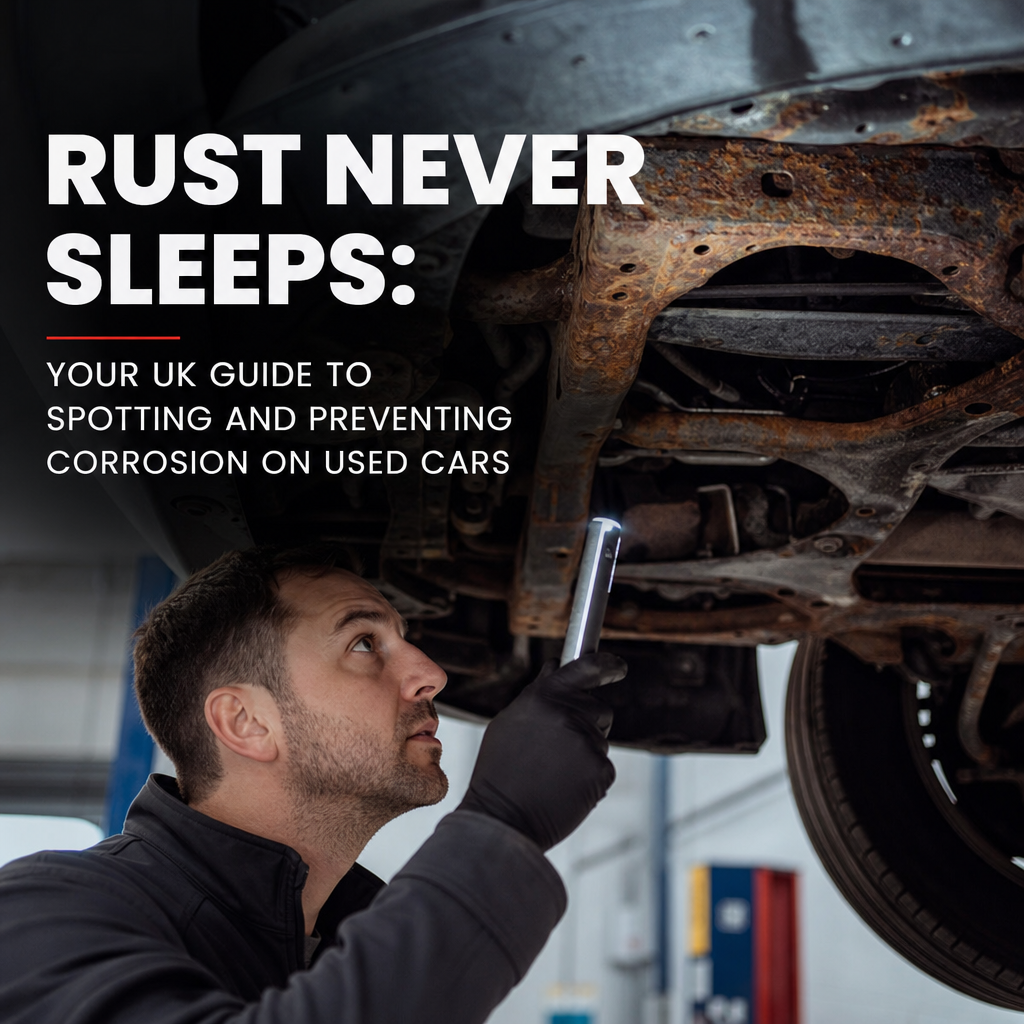
- Subframes and Suspension Components: These vital parts, which support the engine, gearbox, and suspension, are directly exposed to the elements. Corrosion here can weaken mounting points, affecting handling, ride quality, and potentially leading to dangerous failures. Look for flaking metal, especially around welds and bolt-on sections.
- Chassis Rails/Underbody: The main structural backbone of the car, these rails run front to back underneath the vehicle. Extensive rust here is a serious issue that can compromise crash safety and lead to an immediate MOT failure. Pay close attention to any areas that look like they've been patched or painted over to hide damage. Don't forget the integral jacking points, which are often the first part of the chassis to be damaged by improper lifting.
- Brake and Fuel Lines: Often made of metal, these critical lines run along the underbody. Rust here is extremely dangerous, as it can lead to leaks, brake failure, or fuel spills. Check them carefully for any signs of deep corrosion or pitting.
- Exhaust System: While not usually a structural concern, a rusted-through exhaust will lead to an MOT failure due to excessive noise or emissions. Manifolds, downpipes, catalytic converters, and silencers are all vulnerable, especially at their joins.
Remember that road salt, widely used on UK roads from autumn to spring, accelerates corrosion significantly in all these areas.
Decoding Rust: Cosmetic vs. Structural
Not all rust is created equal. Understanding the difference between minor surface corrosion and serious structural rot is paramount when evaluating a used car.
Surface Rust (Cosmetic):
- Appearance: Typically presents as small, localised patches of light orange or brown discoloration. You'll often find it where paint has been chipped by stones, around minor scratches, or on unpainted metallic components like exhaust hangers or suspension arms that are not structurally critical.
- Implication: Primarily an aesthetic issue. While it can spread if left untreated, it doesn't immediately compromise the vehicle's safety or structural integrity. It can usually be addressed with relatively simple DIY methods like sanding, priming, and touch-up paint, or a minor bodyshop repair. Surface rust itself is not an MOT failure.
- Detection: Often feels rough to the touch but the metal beneath is solid. It doesn't flake extensively or feel soft.
Deep/Perforating Rust (Structural):
- Appearance: This is the dangerous kind. Look for bubbling paintwork that feels soft underneath, large flakes of metal, or actual holes in the bodywork or chassis. When poked firmly (and safely!) with a screwdriver or even a finger, the metal might give way easily.
- Implication: This is a serious concern. It indicates that the metal has lost significant integrity, compromising the vehicle's strength and safety in a collision. Critically, deep rust in "prescribed areas" of a vehicle is a guaranteed MOT failure. These areas include sills, chassis rails, suspension mounting points, seatbelt anchorages, and any other part vital for the car's structural integrity or safety.
- Detection: The metal will feel weak, crumbly, or you might find outright holes. Be particularly wary if you see evidence of fresh underseal or thick paint applied suspiciously in these critical areas – it could be an attempt to mask serious rust. A professional pre-purchase inspection is invaluable for identifying hidden structural rust.
Battling the Elements: Preventative Measures
Prevention is always better, and far cheaper, than cure. Even if you've just bought a used car with minimal rust, taking these steps can significantly extend its life.
- Regular Washing, Especially the Underside: This is arguably the most crucial preventative measure, particularly during the winter months. Road salt is incredibly corrosive. Washing your car frequently, including a thorough rinse of the underbody (many automated car washes offer this option, or you can do it with a pressure washer at home), removes the corrosive salt, mud, and grit before they can cause significant damage.
- Waxing and Paint Protection: A good layer of wax or a paint sealant creates a barrier against moisture and environmental contaminants. While primarily protecting the visible body panels, it also helps to minimise the impact of stone chips, which are often the starting point for surface rust.
- Professional Undersealing/Waxoyl Treatment: This is highly recommended for any car you plan to keep for a significant period, especially in the UK. A professional treatment involves cleaning and drying the entire underside of the vehicle before applying a protective coating (e.g., Waxoyl, Dinitrol, or a rubberised undersealant). This creates a durable, flexible barrier that seals out moisture, salt, and grime, providing long-term corrosion protection. While it's an upfront cost (typically a few hundred pounds), it can save you thousands in future rust repairs and significantly prolong your car's life. Ensure any treatment is applied to a clean, dry surface, as sealing rust in will only accelerate the problem.
- Keep Drain Holes Clear: Car bodies are designed with drain holes in sills, doors, and boot lids to allow water to escape. If these become blocked with leaves, mud, or debris, water can pool and sit directly against the metal, leading to internal corrosion. Regular checks and clearing can prevent this.
- Prompt Repair of Paint Chips and Scratches: Even a tiny stone chip can expose bare metal to the elements. Invest in a touch-up paint kit for your car's colour and address these minor imperfections as soon as you notice them. It's cheap insurance against future rust bubbles.
The Cost of Corrosion: Repair vs. Value and Safety
When faced with rust, it's essential to weigh the repair costs against the vehicle's overall value and, critically, your safety.
- Repair Costs Can Escalate Rapidly:
- Surface Rust: Relatively inexpensive. DIY repairs might cost under £50 for materials. A professional spot repair might be £100-£300.
- Structural Rust: This is where costs skyrocket. Repairing a rusted sill might involve cutting out old metal, fabricating new sections, welding, grinding, and painting. This is skilled labour and can easily run into hundreds of pounds per side, potentially £500-£1,000 or more if extensive. Repairs to chassis rails or subframes can be even more complex and expensive, potentially exceeding the value of an older, cheaper car.
- Impact on Vehicle Value: A car with significant rust issues will have a dramatically reduced market value. Potential buyers will factor in the cost of repairs, if they're even willing to take on a project.
- Critical Safety Implications: This is arguably the most important consideration. Structural rust compromises the very integrity of your vehicle. In an accident, a rusty chassis or sill won't absorb impact as designed, putting occupants at much greater risk. Rust on brake lines, fuel lines, or suspension mounting points presents an immediate and severe safety hazard, increasing the risk of mechanical failure on the road.
When to Walk Away: If you're looking at a used car and identify extensive structural rust, particularly in multiple areas, it's often wise to walk away. The cost of repair might quickly eclipse the car's purchase price, leaving you with a costly headache and a vehicle that still has a limited lifespan. Always get a professional pre-purchase inspection, especially for older or cheaper vehicles, to get an expert opinion on any identified rust and its potential cost to rectify.
Conclusion
Rust is an unavoidable challenge for car owners in the UK, but it doesn't have to be a deal-breaker. By understanding where to look, what to look for, and how to implement effective preventative measures, you can make an informed decision when buying a used car and protect your investment for years to come.
Prioritise regular washing, consider professional undersealing, and address minor blemishes promptly. Most importantly, when inspecting a potential purchase on CarsLink.ai, be diligent. A thorough check for rust can save you from an expensive future repair bill, ensuring your next used car is a safe, reliable, and worthwhile acquisition. Don't underestimate the silent killer – rust never sleeps, but with the right knowledge, you can keep it at bay.