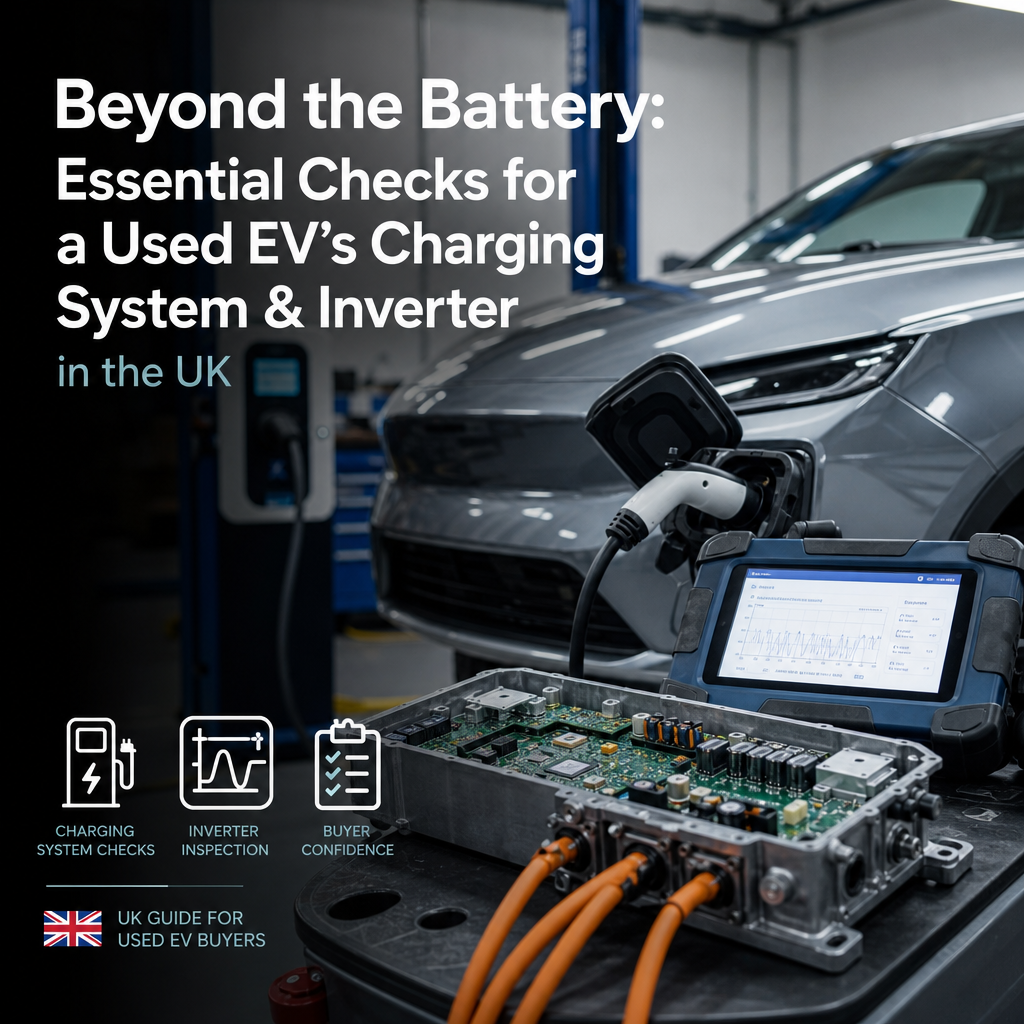
Beyond the Battery: Essential Checks for a Used EV's Charging System & Inverter in the UK
As the UK embraces electric vehicles with ever-increasing enthusiasm, the used EV market is booming. While the headline figure of battery health often grabs all the attention – and rightly so – it’s crucial for prospective buyers to remember that an EV is far more than just its battery pack. A sophisticated charging system and a powerful inverter are the unsung heroes, constantly working behind the scenes to keep your electric car running smoothly. Overlooking these critical components could lead to costly repairs and significant inconvenience down the line.
At CarsLink.ai, we understand that buying a used EV is a significant investment. That's why we're delving beyond the battery's state of health to guide you through the essential checks for a used EV's charging system and inverter. From the physical connection points to the intricate software managing power flow, we'll equip you with the knowledge to make an informed purchase and ensure your next EV is ready for the road, and importantly, ready to charge reliably.
The First Line of Defence: Charging Port and Cables
Your interaction with an EV's charging system begins at the charging port and cables. These are the physical gateways for electricity, and as such, they are susceptible to wear, tear, and misuse. A thorough inspection of these components can reveal early warning signs of neglect or damage that could impact charging performance and safety.
Start with the charging port on the vehicle itself. In the UK, most modern EVs use a Type 2 connector for AC charging and a CCS (Combined Charging System) port for DC rapid charging (often combined into one larger port). Older models might feature a CHAdeMO port for rapid charging, particularly Japanese imports.
- Visual Inspection: Look closely at the plastic housing around the port. Are there any cracks, chips, or signs of impact? Scratches are normal with use, but deeper damage suggests rough handling.
- Pin Integrity: Examine the metal pins inside the port. Are they straight and clean, or are any bent, corroded, or discoloured? Bent pins, especially on a Type 2 connector, can prevent charging or create an unsafe connection. Corrosion, often appearing as a green or white powdery residue, indicates moisture ingress or chemical exposure.
- Security Flap/Cover: Check that the port's protective flap or cover operates smoothly and seals effectively. This is vital for keeping out dirt, debris, and crucially, moisture.
- Spring Mechanisms: If the port has spring-loaded mechanisms for locking the cable, ensure they function correctly. A faulty locking mechanism can cause cables to disconnect or fail to initiate a charge.
Next, consider the charging cables. While the car might not come with all its original cables, it should ideally include the primary Type 2 to Type 2 cable for public AC chargers and/or a domestic three-pin 'granny charger'.
- Cable Sheathing: Run your hands along the entire length of the cable. Look for any cuts, abrasions, kinks, or signs of crushing. Frayed or damaged insulation exposes internal wires, posing a serious safety risk.
- Connectors: Inspect both ends of the cable – the car-side connector and the wall/charger-side connector. Check for cracks in the plastic housing, bent or corroded pins, and any signs of overheating, such as melted or discoloured plastic. The pins should be firm and not loose.
- Strain Relief: Pay attention to where the cable enters the plastic connector housing. This area, known as the strain relief, is often where damage occurs from repeated bending. Look for signs of stress or fraying.
If any of these physical components show significant damage or corrosion, it should be a red flag. Repairs or replacements can be costly, and compromised charging hardware can lead to unreliable charging or even electrical hazards.
The Brains Behind the Charge: Understanding the Inverter
Beyond the physical connections, the "brains" of the charging operation reside within the car's power electronics, primarily the on-board charger (often referred to as an inverter or converter). This component is responsible for converting the AC (alternating current) electricity from your home or a public AC charge point into DC (direct current) that the battery can store. For DC rapid charging, this conversion happens at the charging station itself, but the car's internal system still manages the power flow and battery communication.
Faults with the on-board charger or inverter can manifest in several ways:
- Dashboard Warning Lights: The most obvious sign is a warning light or message on the instrument cluster. Look for messages like "Check EV System," "Charging System Fault," "Powertrain Malfunction," or specific fault codes related to charging or power electronics. A diagnostic scan (which you should request from the seller) can pinpoint specific issues.
- Audible Cues: When an EV is charging, it's normal to hear some fan noise as components cool down. However, unusual buzzing, humming, clicking, or grinding noises coming from the car's bonnet area (where the on-board charger is typically located) could indicate a fault with the inverter or cooling system.
- Slower Charging Speeds: If you're consistently experiencing charging speeds significantly below what's expected from a known charger (e.g., a 7kW home charger only delivering 3kW, or a 22kW public AC charger only giving 11kW, when the car is rated for 22kW AC), it could point to a degradation or fault in the on-board charger. This isn't just an inconvenience; it can be an expensive repair.
- Intermittent or Failed Charging: If the car frequently starts and stops charging without warning, or outright refuses to charge despite a healthy connection, the on-board charger might be failing.
Identifying these issues can be challenging without specialist equipment, but being aware of these potential symptoms during a test drive or initial inspection is vital. Don't dismiss persistent warning messages related to the EV system.
The Digital Heartbeat: Software Updates and Service History
Modern EVs are essentially computers on wheels, and their performance, efficiency, and reliability are heavily reliant on sophisticated software. The charging system and battery management system (BMS) are particularly software-intensive, and manufacturers frequently release updates to optimise their operation.
When evaluating a used EV, a thorough review of its service history is paramount. Look for evidence that the car has been regularly serviced at an authorised dealership or a reputable EV specialist. Specifically, inquire about:
- Software Updates: Has the car received all recommended software updates and firmware upgrades? These updates often include critical improvements to charging algorithms, battery thermal management, and inverter efficiency. Missing updates could mean the car isn't performing optimally, or worse, is susceptible to known bugs that have since been patched.
- Recall Work: Check if any technical service bulletins or safety recalls related to the charging system, inverter, or battery management have been addressed. You can often check for open recalls on a manufacturer's website using the car's Vehicle Identification Number (VIN).
- Diagnostic Reports: Ask for any recent diagnostic scan reports. These can show past fault codes, battery health parameters, and software versions, giving you a clearer picture of the car's electronic health.
An incomplete service history or a lack of documentation regarding software updates should be a cause for concern. It suggests that the car may not have benefited from important optimisations or fixes that could affect its long-term reliability and charging performance.
Real-World Performance: Testing Charging in Action
Ultimately, the most definitive test of an EV's charging system and inverter is to witness it in action. While a full battery diagnosis might require specialist equipment, you can perform several practical checks during your test drive or viewing.
- Home Charging Simulation (if possible): If the seller has a home charge point, ask if you can plug in the car for a few minutes. Observe if the car's dashboard indicates charging has commenced, and if the charger unit itself confirms a connection and power delivery. Even a standard 3-pin 'granny charger' test is useful to confirm basic functionality.
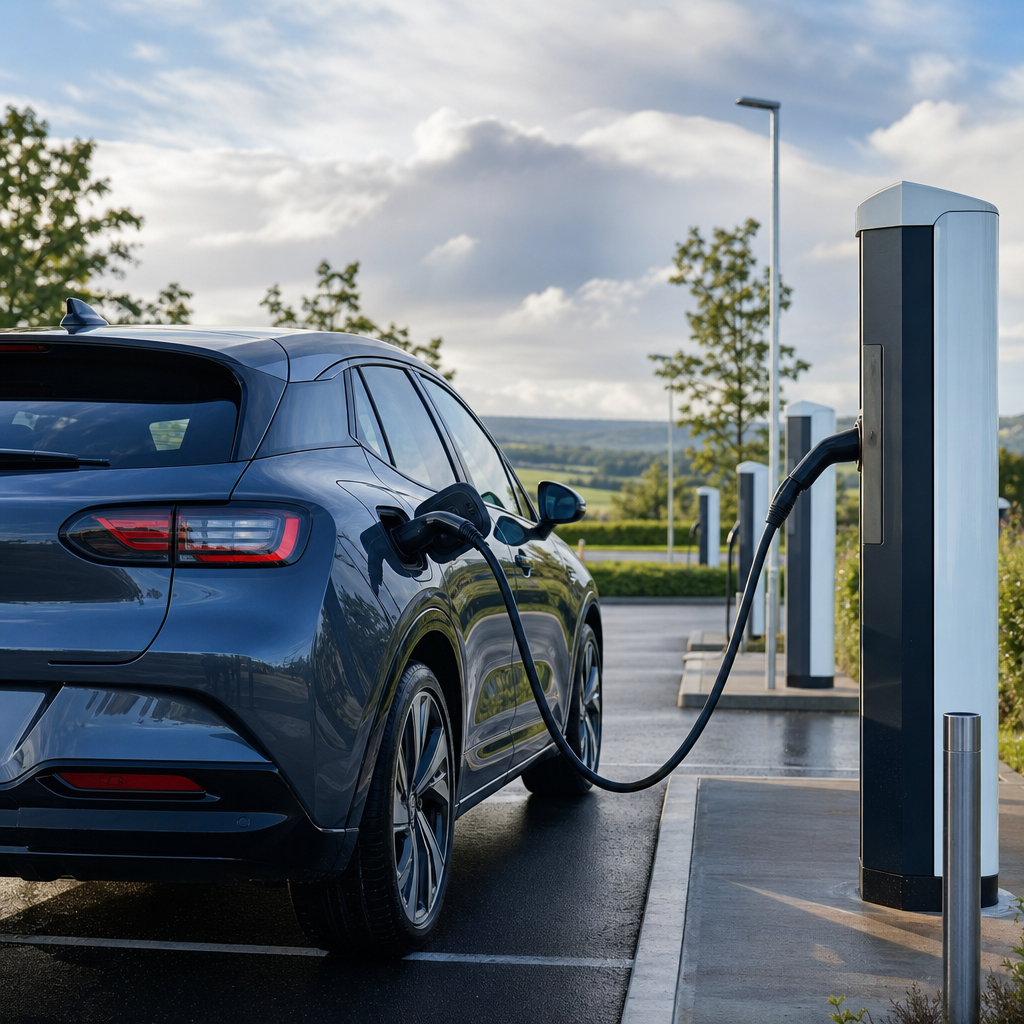
- Public AC Charger Test: This is perhaps the most accessible and important test. Plan your viewing or test drive to include a stop at a public AC Type 2 charger (e.g., at a supermarket, leisure centre, or public car park).
- Connection Reliability: Plug in the car. Does it connect first time? Does the car acknowledge the connection and does the charging station initiate charging without error?
- Power Delivery: Observe the car's dashboard display and, if available, the charging station's screen. Does it show the expected charging power (e.g., around 6.5-7kW for a 7kW charger, assuming the car supports that speed)?
- Consistency: Monitor the power delivery for a few minutes. Is it stable, or does it fluctuate wildly? Does it frequently drop out and reconnect? Inconsistent charging can point to issues with the on-board charger or communication protocols.
- Public DC Rapid Charger (if feasible): If the car supports rapid charging and there's a compatible rapid charger conveniently located, this is an excellent test. Be aware that rapid charging typically requires an active account with a charge point operator.
- Ramp-up and Stability: Watch how quickly the power ramps up to the expected level for the car and charger. Does it hold that power consistently (factoring in the usual tapering as the battery fills)?
- Thermal Management: Listen for the cooling fans. While they will be loud during rapid charging, listen for any unusual grinding or struggling noises.
- Error Messages: Any "charging interrupted" or "fault" messages during this test are a significant concern.
Taking the time to perform these real-world charging tests provides invaluable insight into the health and reliability of the EV's charging system. It's a practical way to confirm that all the unseen components are working in harmony.
Conclusion
Buying a used EV in the UK is an exciting prospect, offering a sustainable and cost-effective alternative to traditional petrol and diesel cars. While battery health rightly remains a primary concern, the often-overlooked charging system and inverter are equally critical to your EV ownership experience. From the physical integrity of the charging port and cables to the software governing power delivery, and the ultimate test of real-world charging performance, a diligent inspection of these components is non-negotiable.
By following these practical checks and reviewing the vehicle's history, you'll gain crucial peace of mind, mitigate future repair costs, and ensure that your pre-loved EV isn't just brimming with battery life, but also equipped with a reliable and robust charging system ready for the road ahead. Don't just check the battery; ensure your future EV can charge safely and consistently, keeping you moving with confidence.