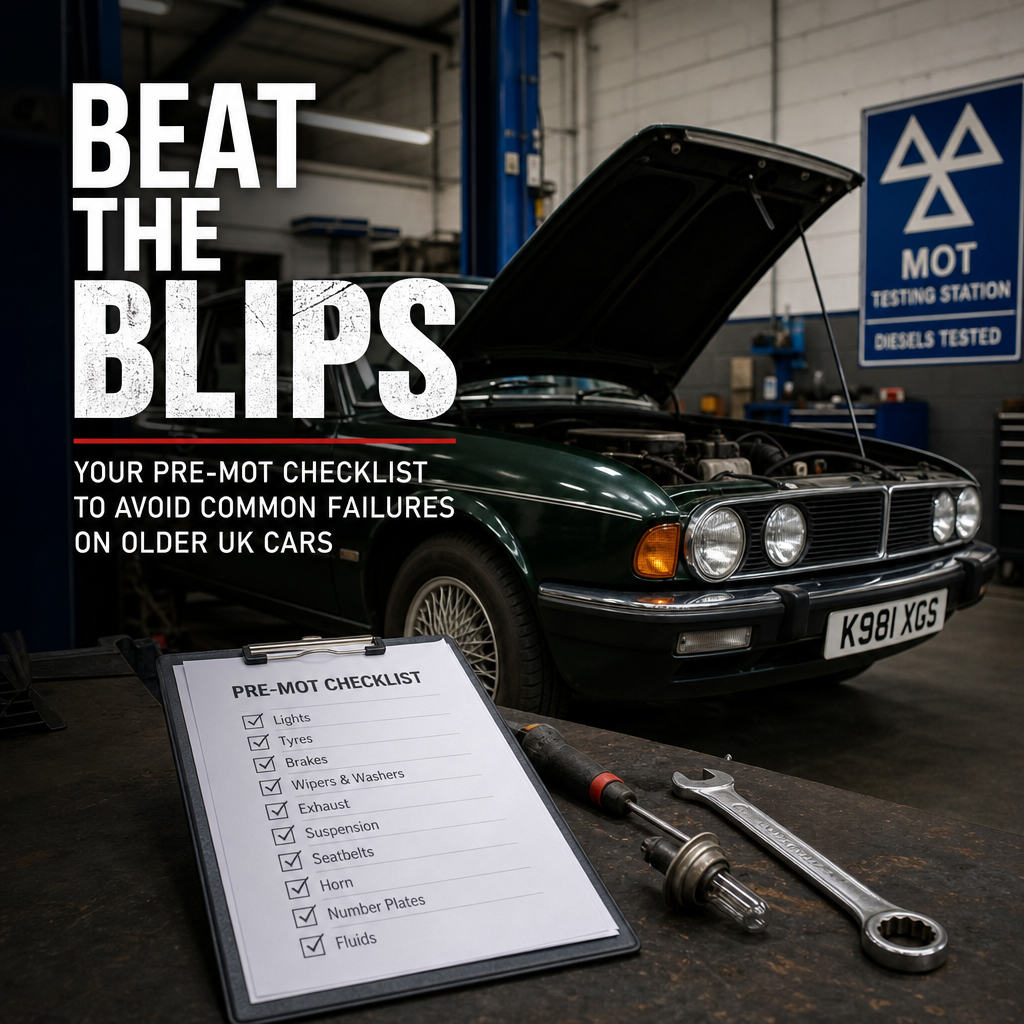
Beat the Blips: Your Pre-MOT Checklist to Avoid Common Failures on Older UK Cars
The annual MOT test can often feel like a looming hurdle, especially when you own an older vehicle. That little pink certificate is a critical gateway to keeping your car legally on the road, yet countless owners face the dreaded "fail" and the subsequent unexpected repair bills. For vehicles aged eight years and above, wear and tear become more pronounced, leading to common failure points that often catch owners by surprise.
But what if you could significantly improve your chances of a first-time pass? At CarsLink.ai, we believe in empowering UK used car owners with the knowledge to maintain their vehicles effectively and economically. This comprehensive guide provides a practical, pre-MOT checklist designed to help you identify and rectify potential issues before your car even sees the test lane, saving you time, money, and stress.
The Usual Suspects: Common MOT Failure Points for Older Cars
Older cars, by their very nature, are more susceptible to the ravages of time, mileage, and our unpredictable British weather. While the MOT test covers a vast array of components, certain areas consistently emerge as primary culprits for failure in vehicles aged 8+ years. Understanding these common pitfalls is the first step to a successful pre-MOT check.
- Suspension Components: Worn shock absorbers, perished bushes in wishbones or anti-roll bars, and broken or corroded coil springs are frequent offenders. Excessive play in these components leads to instability and poor handling, failing the test. For instance, a collapsed top mount on a Ford Focus, or corroded spring cups on a Vauxhall Corsa, are often overlooked until the tester finds them.
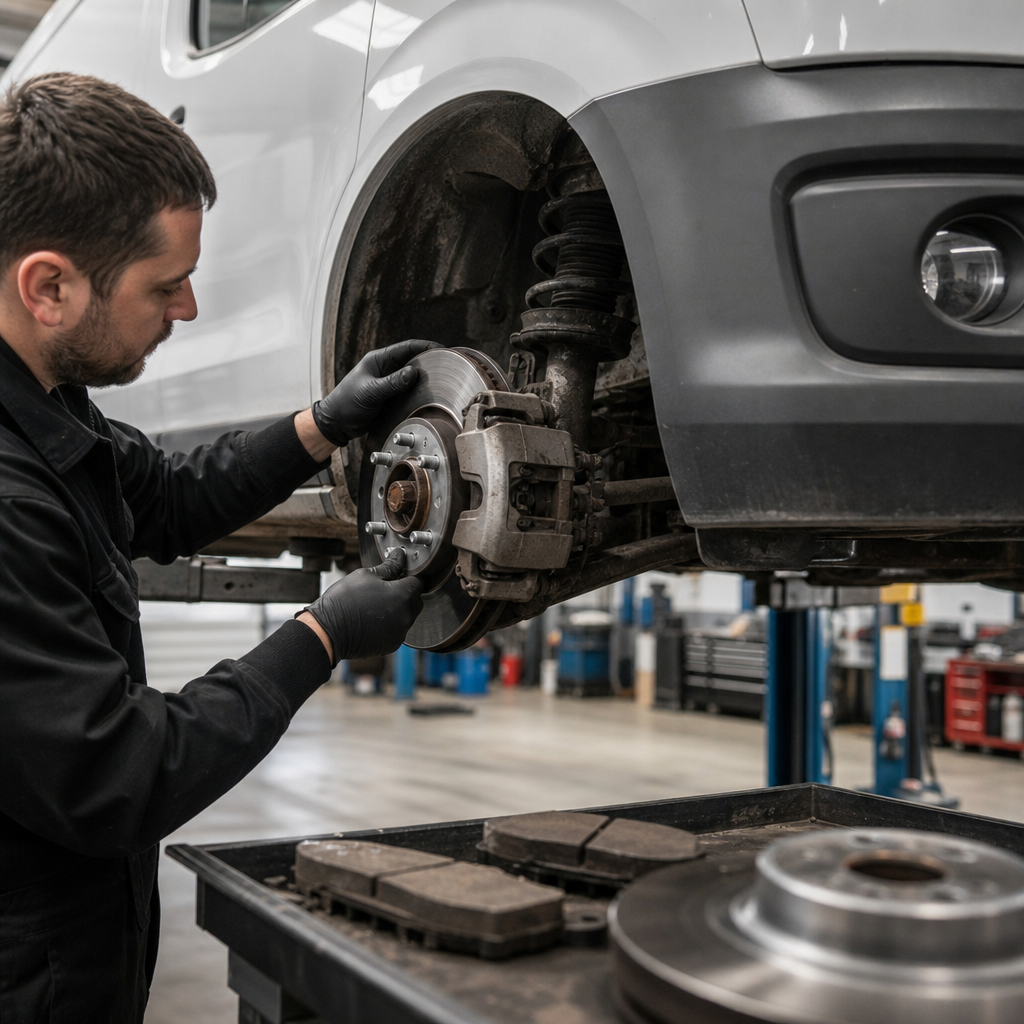
- Braking System: This is a safety-critical area. Common failures include excessively worn brake pads and discs, binding calipers, insufficient handbrake efficiency, and critically, corroded or leaking brake pipes and hoses. A spongy pedal or pulling to one side under braking are tell-tale signs.
- Lighting and Signalling: Simply put, if a light isn't working or isn't the correct colour, it's a fail. This includes headlights (dipped and main beam), sidelights, indicators, brake lights (including the high-level third brake light), fog lights, and even number plate lights. Headlight alignment is also a common snag.
- Tyres: Incorrect tread depth (below 1.6mm across the central three-quarters of the tyre’s width and its entire circumference), bulges, cuts, or cracks on the sidewall, and even incorrect tyre sizes across an axle are all reasons for immediate failure.
- Steering Components: Any excessive play in the steering rack, track rod ends, or ball joints will lead to a failure, impacting the car's ability to steer accurately and safely.
- Emissions: Older cars can struggle with modern emissions standards, especially if components like the catalytic converter, DPF (Diesel Particulate Filter), or lambda (oxygen) sensor are failing or clogged. Excessive smoke from the exhaust is an obvious sign.
- Corrosion: Rust is an old car's arch-nemesis. Significant corrosion on structural components like sills, chassis rails, suspension mounting points, or even around seatbelt anchorages will result in a fail. Sharp edges from corroded bodywork can also lead to rejection.
- Windscreen and Wipers: A chip or crack larger than 10mm in Zone A (the area directly in front of the driver, swept by the wiper) or larger than 40mm elsewhere in the swept area will fail. Worn or split wiper blades that don't clear the screen effectively are also a no-go.
Your DIY Pre-MOT Walkaround: The Basics You Can Check
Many potential MOT failures can be spotted and rectified with a simple visual check and minimal tools. Dedicate an hour to this DIY inspection – it's often the difference between a pass and a retest fee.
Lighting and Signalling:
- Turn on your ignition and check all external lights: headlights (dipped and main beam), sidelights, indicators (front, rear, and side repeaters), front fog lights, rear fog light, reverse lights, and number plate lights.
- For brake lights, you'll need a helper or park facing a reflective surface (like a garage door) to check all three (two main, one high-level).
- Ensure all lights are the correct colour (e.g., amber for indicators, red for brake lights) and working brightly. A dim light might indicate a dying bulb.
Tyres:
- Tread Depth: Use a 20p coin. Insert it into the main tread grooves. If you can see the outer band of the coin, your tread is likely below the legal 1.6mm minimum. Check across the central three-quarters of the tyre and around its entire circumference.
- Condition: Inspect the sidewalls for any bulges, cuts, cracks, or signs of perishing. Don't forget the inner sidewall!
- Pressure: While not a direct MOT fail unless severely underinflated and affecting tyre condition, correct pressure ensures even wear and safe handling. Check your owner's manual for recommended pressures. Ensure all tyres on the same axle are of the same construction type (e.g., radial) and ideally the same size and type.
Wipers and Washers:
- Wiper Blades: Lift the wiper arms and inspect the rubber blades for splits, hardening, or general wear. Run the wipers to check if they clear the screen smoothly without streaking.
- Washer Fluid: Top up your windscreen washer reservoir. Test the jets – ensure they spray onto the screen effectively.
Fluid Levels:
- Pop the bonnet and check your engine oil level (using the dipstick), coolant level (in the expansion tank), brake fluid level, and power steering fluid level (if applicable). All should be within the min/max markers. While low fluid isn't an MOT fail in itself, it could indicate a leak which is a fail.
Beyond the Surface: Visual and Auditory Checks
Once the simple checks are done, it's time to get a little more hands-on. These inspections require a keen eye and ear, and ideally, a safe way to raise your car (e.g., ramps) if you're comfortable doing so, or at least a good torch and a mat to look underneath.
Corrosion:
- Bodywork: Look for significant rust or holes on the sills, wheel arches, and around door hinges. Pay close attention to any sharp edges caused by rust, particularly on wings or bumpers.
- Structural Areas: This is crucial. Shine a torch under the car and inspect the chassis rails, subframes, and suspension mounting points for excessive corrosion. Any perforation or serious weakening here is a guaranteed fail. Also, check brake pipes for surface rust – they should not be pitted or extensively corroded.
- Seatbelt Mounts: Check around the anchor points for seatbelts inside the cabin for any rust that might compromise their integrity.
Exhaust System:
- Leaks: Start the car from cold and listen for any blowing or rattling sounds, which indicate a leak or loose mounts. Feel around the exhaust pipe for escaping gases (carefully, it will get hot!). Visually inspect the entire system from manifold to tailpipe for any holes, cracks, or excessively corroded sections. Ensure all hangers and mounts are secure.
- Catalytic Converter/DPF: Check for any obvious physical damage. If your car has been struggling with emissions or making unusual noises, it could point to a failing cat or clogged DPF.
Dashboard Warning Lights:
- When you turn the ignition on, most warning lights (e.g., engine management, ABS, airbag, brake warning) will illuminate briefly and then extinguish.
- Crucially, no warning lights should remain illuminated when the engine is running. An active warning light, especially for safety systems like ABS, airbags, or the Engine Management Light (EML), is an automatic MOT failure. If one is on, it indicates a fault that needs professional diagnosis.
Windscreen and Mirrors:
- Windscreen: Inspect for chips or cracks. Remember the critical size and zone rules: anything larger than 10mm in Zone A (the driver's direct line of sight, about 29cm wide) or larger than 40mm elsewhere in the swept area will fail. Small chips can often be repaired by specialists.
- Mirrors: Ensure all mirrors (interior and exterior) are securely fixed and not excessively cracked or broken, obstructing vision.
Seatbelts:
- Pull each seatbelt out fully and inspect for cuts, fraying, or damage. Check that the buckle engages and releases correctly and that the belt retracts smoothly.
When to Call in the Cavalry: Seeking Professional Advice
While many issues can be fixed at home, some problems are best left to qualified mechanics. Attempting complex repairs without the right tools or expertise can be dangerous and costly.
- Suspension or Steering Noises: If you hear knocking, creaking, or feel excessive play when wiggling the wheels (while the car is jacked up safely), it's likely a worn bush, ball joint, or tie rod end. These require specialist tools and alignment afterwards.
- Brake System Concerns: Any leaks from brake lines or calipers, a spongy brake pedal, or severe brake judder indicate issues that require immediate professional attention. The braking system is paramount to safety.
- Engine Warning Lights: If your Engine Management Light (EML), ABS, or airbag light remains on, a garage can use diagnostic equipment to read fault codes and pinpoint the exact problem. This is far more efficient than guesswork.
- Excessive Smoke or Emissions Issues: If your car is emitting unusual colours of smoke (blue for oil, white for coolant, black for rich fuel mixture), or you suspect emissions problems, a garage can conduct an exhaust gas analysis and identify the underlying cause.
- Major Corrosion: While you can spot surface rust, determining if corrosion has compromised structural integrity requires an experienced eye. If you find significant rust on chassis components or around suspension mounts, a professional assessment is vital.
Investing in a pre-MOT inspection by your local garage can be a wise move for older vehicles. For a relatively small fee, they can conduct a thorough check, identify any potential failures, and provide a quote for repairs. This proactive approach allows you to address issues before the official test, often at a lower cost and with less pressure than after a failed MOT.
By following this comprehensive checklist, you're not just preparing for the MOT; you're actively ensuring your older car remains safe, reliable, and roadworthy. Happy motoring from the team at CarsLink.ai!