Right-Sizing Your Ride: Selecting the Perfect Used Van for UK Business Needs
For any UK business, a van isn't just a vehicle; it's a vital member of the team, a mobile workshop, and often the face of your brand. Yet, choosing the right van, particularly from the used market, is a decision many businesses get wrong, leading to inefficiencies, unnecessary costs, or even lost opportunities.
At CarsLink.ai, we understand that "one size fits all" simply doesn't apply to commercial vehicles. The perfect van for a florist delivering bouquets across London will be vastly different from what a construction firm needs to transport materials to a building site in Birmingham. This guide will walk you through the essential considerations for "right-sizing" your next used van, ensuring it perfectly aligns with your business's unique demands and the realities of operating on UK roads.
Matching Your Van to Your Mission: From Courier to Constructor
The first step in finding your ideal used van is to clearly define its primary purpose. What exactly will you be doing with it, and what will you be carrying? Categorising your business type can help narrow down the vast array of options available.
- Small (Compact/City Vans): Think Ford Transit Connect, Vauxhall Combo, Citroën Berlingo, or Peugeot Partner. These agile little workhorses are perfect for businesses operating predominantly in urban environments.
- Ideal for: Last-mile delivery couriers (parcels, food), florists, mobile dog groomers, small appliance repair, or electricians/plumbers carrying only tools and small parts.
- Why they excel: Their compact footprint makes them incredibly fuel-efficient, easy to park in tight city spaces, and nimble through congested streets. They often drive much like a car, making them a great option for drivers transitioning from cars or those who value easy manoeuvrability.
- Medium (Panel Vans): This highly versatile category includes popular choices like the Ford Transit Custom, VW Transporter, Mercedes-Benz Vito, and Vauxhall Vivaro. They represent the sweet spot for many UK businesses.
- Ideal for: General tradespeople (plumbers, carpenters, painters carrying a good range of tools, materials, and even small white goods), local delivery services needing more volume, event caterers, or mobile mechanics.
- Why they excel: They offer a significant jump in cargo volume and payload over compact vans without becoming unwieldy. Available in various lengths and heights, they provide a flexible solution for carrying longer items or larger quantities, striking a great balance between capacity and practicality.
- Large (Full-Size Panel Vans): The big hitters of the commercial world – the Ford Transit (often 2-tonne or 3.5-tonne variants), Mercedes-Benz Sprinter, VW Crafter, Fiat Ducato, and Peugeot Boxer.
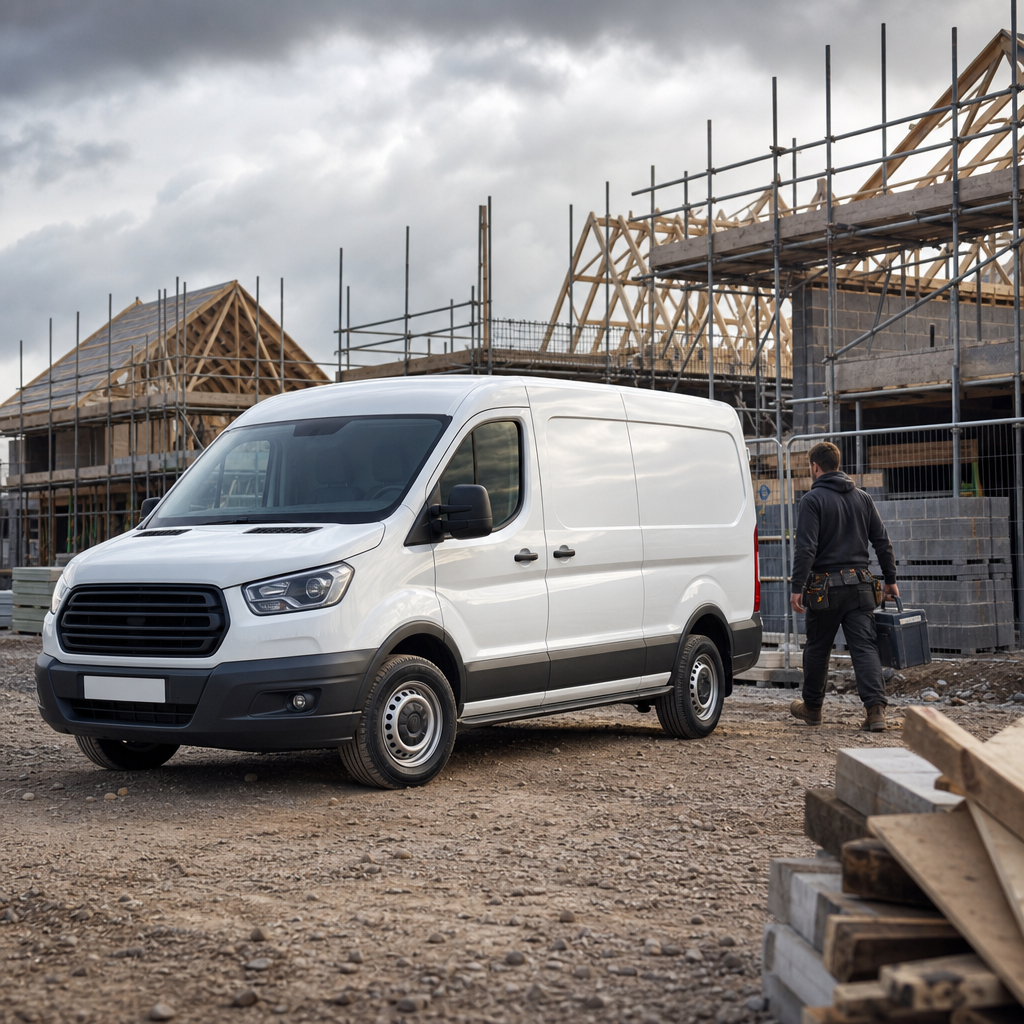
- Ideal for: Construction companies (carrying plasterboard, timber, large power tools, or even small excavators), removal firms, furniture delivery, large-scale mobile services (e.g., bespoke camper conversions, large mobile workshops), or heavy equipment transport.
- Why they excel: These vans offer maximum load volume, payload capacity, and often incredible flexibility with multiple wheelbase lengths (LWB, XLWB) and roof heights (H2, H3). They are built to handle serious work and can transport items that would be impossible in smaller vans.
- Specialised Vans: While this guide focuses on panel vans, remember options like Lutons (for maximum volume), Tippers (for construction waste), and Refrigerated Vans (for temperature-sensitive goods) exist for highly niche applications.
Actionable Advice: Before you even look at a van, make a definitive list of everything you typically carry: dimensions of your largest items (e.g., a standard sheet of plasterboard is 2.4m x 1.2m), the total weight of your average load, and how frequently you load/unload.
Beyond the Badge: Cargo Volume, Internal Dimensions, and Practical Access
Once you've identified the general size category, dive deeper into the specifics of a van's loading area. The external dimensions can be deceptive; what truly matters are the internal measurements and how easily you can get your goods in and out.
- Cargo Volume (Litres / Cubic Metres): This is the headline figure for a van's carrying capacity. While important, it doesn't tell the whole story. A van with high volume might not have the specific length or width you need. For example, a florist needs high volume for delicate arrangements, while a plumber needs length for pipes.
- Internal Dimensions: The Critical Details:
- Load Length: This is paramount. Can it accommodate your longest tools, pipes, timber, or ladder inside the van? Many vans offer a "load-through bulkhead" feature (e.g., on some Ford Transit Customs or VW Transporters) that allows long items to extend under the passenger seat, greatly increasing effective load length without needing a longer wheelbase.
- Load Height: Essential for bulky items, standing tools, or if you regularly work inside the van (e.g., a mobile workshop). Look for H1 (low roof), H2 (medium roof), or H3 (high roof) designations. Remember that H3 models might struggle with height restrictions in multi-storey car parks.
- Load Width: Crucially, pay attention to the width between the wheel arches. This is often the narrowest point and determines if items like Euro pallets (1.2m x 0.8m) or sheets of MDF can lie flat. Some vans are specifically designed to fit two Euro pallets side-by-side, which can be a massive advantage for certain businesses.
- Practical Access Points:
- Sliding Side Doors: How many? One or two? In busy UK streets, a kerbside sliding door is invaluable for safe loading/unloading without blocking traffic. Dual sliding doors offer even greater flexibility.
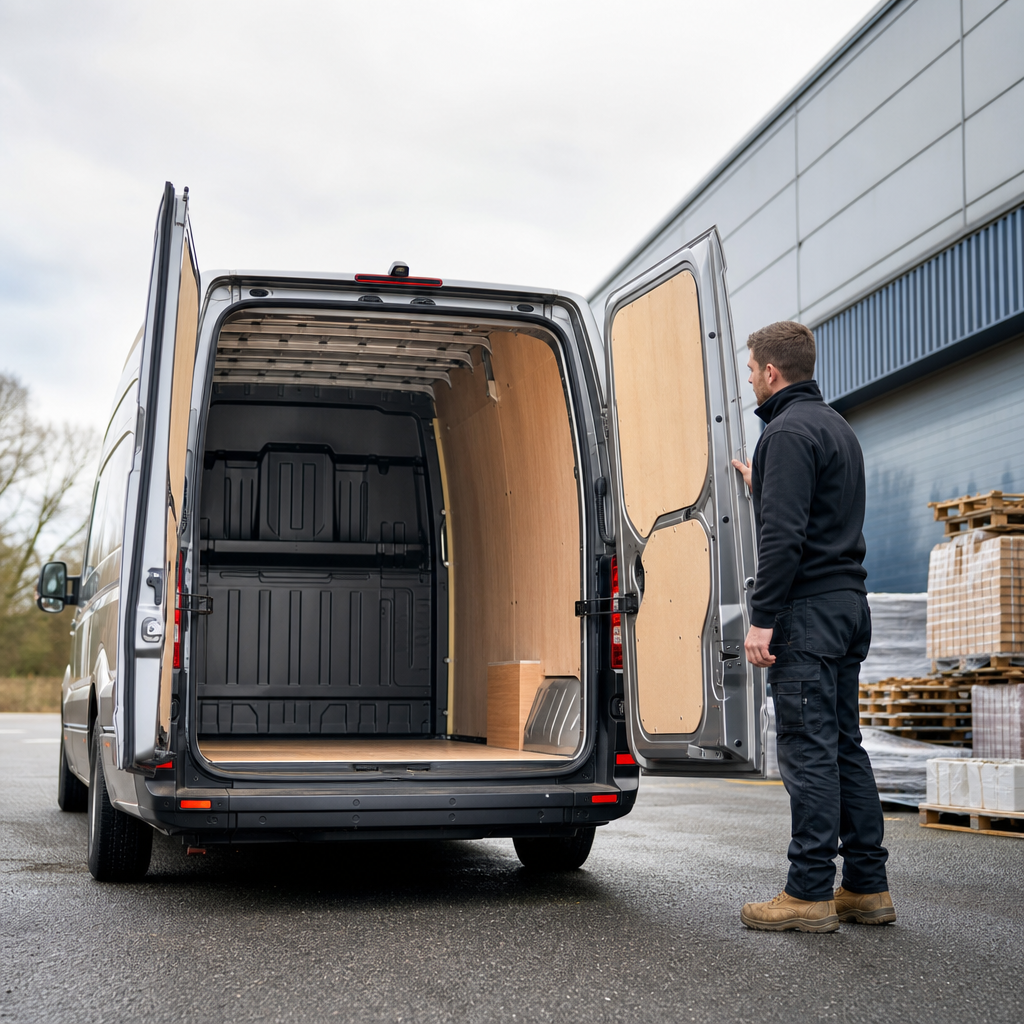
- Rear Doors: Do you prefer twin barn doors (which often open to 180 or even 270 degrees, great for forklift loading or tight spots) or a tailgate (which can offer shelter from rain but requires more space behind)? Consider your typical loading scenarios.
- Loading Height: How high is the lip of the load bay from the ground? A lower loading height reduces strain when frequently lifting heavy items, a significant factor for health and safety and driver fatigue.
Specific Example: A plasterer might initially look at a Ford Transit Custom L1H1. However, if they regularly carry full sheets of plasterboard (2.4m), an L2 model, or one with a load-through bulkhead, would prevent them from having to cut sheets down or leave the rear doors ajar.
Navigating the UK Urban Jungle: Manoeuvrability and Parking
The UK's diverse road network, from narrow village lanes to bustling city centres, presents unique challenges for van drivers. Your van's size and agility directly impact efficiency and stress levels.
- Narrow Streets and Alleys:
- Compact vans (e.g., Peugeot Partner) excel here, squeezing through gaps and navigating tight turns with ease. Their car-like dimensions make them far less intimidating for city driving.
- Medium vans (e.g., VW Transporter) are generally still manageable for most urban situations, but their longer wheelbase can make U-turns trickier.
- Large vans (e.g., Mercedes-Benz Sprinter LWB) can be a real handful. Their wide turning circles and sheer length demand careful planning and considerable driver skill, potentially adding significant time to journeys in congested areas.
- Parking Considerations:
- Parking Bays: Will your van fit comfortably in standard UK parking bays or dedicated commercial vehicle bays? A large van might overhang, inviting fines.
- Height Restrictions: A crucial point for any business operating in towns or cities. Many multi-storey car parks, tunnels, and even some low bridges have height limits. A high-top (H3) van might save you numerous detours or prevent access altogether. Always check the external height before committing.
- Parking Aids: When buying used, prioritise models with parking sensors (front and rear) and, ideally, a reversing camera. These features are invaluable for preventing costly dents and speeding up parking, especially with larger vans where rear visibility can be limited.
- Kerbside Loading/Unloading: The ease with which you can pull up to a delivery point, safely access your cargo, and move on is paramount. Dual sliding doors can be a game-changer here, allowing access from either side of the vehicle depending on the kerb position, reducing the need for awkward manoeuvres or double-parking.
- Payload vs. Gross Vehicle Weight (GVW): Understand the difference. Payload is what you can legally carry, but the Gross Vehicle Weight (GVW) is the maximum permissible weight of the van including its own weight and everything inside (driver, passengers, fuel, cargo). For standard Category B licence holders (the most common UK driving licence), the limit is 3,500kg (3.5 tonnes) GVW. Exceeding this requires a different licence (Cat C1) and carries severe penalties for overloading, affecting insurance and road safety. Always check the van's specific GVW and ensure your expected load falls well within the legal limits.
The Bottom Line: Balancing Load Capacity with Running Costs and Driver Comfort
The initial purchase price of a used van is just one part of the financial puzzle. Long-term running costs and driver satisfaction directly impact your business's efficiency and profitability.
- Fuel Efficiency: Generally, bigger engines and heavier vans consume more fuel. Consider the engine size (e.g., a 1.5L diesel in a small van vs. a 2.0L or 2.2L diesel in a medium or large van) and its real-world MPG figures (not just the optimistic manufacturer claims). While diesel remains dominant for vans, increasingly, businesses are looking at electric vans for urban operations to benefit from lower running costs and exemption from ULEZ/CAZ charges. Ensure any diesel van you consider is Euro 6 compliant if you operate in or near UK Clean Air Zones.
- Insurance and Road Tax (VED): Larger, more powerful, or higher-value vans typically incur higher insurance premiums. Commercial vehicle Road Tax (VED) is usually a flat rate, but always check the specifics for the year and model you're considering on the DVLA website.
- Maintenance and Servicing:
- Reliability: Certain models, like the Ford Transit and VW Transporter, have strong reputations for robustness. However, with used vans, a comprehensive service history (FSH) is more crucial than brand reputation alone.
- Parts Availability and Cost: Popular models usually benefit from readily available and more affordable parts. Exotic or less common vans might lead to more expensive and longer waits for repairs. Factor in regular servicing costs to keep your van on the road and earning money.
- Driver Comfort and Features: This is often overlooked but incredibly important, especially for drivers spending long hours in their van. A comfortable, well-equipped cabin can significantly boost productivity and morale.
- Ergonomics: Look for comfortable, supportive seats, an adjustable steering wheel, and a logically laid-out dashboard.
- Technology: Bluetooth connectivity (for hands-free calls and music streaming), DAB radio, and satellite navigation (either built-in or via smartphone integration) are now standard expectations for many.
- Air Conditioning: Essential for comfort, especially during summer months, helping drivers stay alert and focused.
- In-Cab Storage: Practical storage solutions for documents, phones, drinks, and personal items help keep the cabin tidy and efficient.
- Safety Features: Modern vans increasingly come with advanced safety features like ABS, ESP, multiple airbags, and increasingly, autonomous emergency braking. These not only protect your driver but can also influence insurance premiums.
Conclusion: Your Business, Your Van, Your Success
Right-sizing your used van purchase is one of the smartest decisions you can make for your UK business. It's about finding that sweet spot where practicality meets cost-effectiveness, ensuring your vehicle is an asset, not a liability.
By meticulously considering your mission, diving into the nitty-gritty of internal dimensions and access, factoring in the realities of UK urban navigation, and balancing long-term running costs with essential driver comfort, you can confidently select a used van that will serve your business faithfully for years to come. Don't rush the decision; do your homework, list your non-negotiables, and always conduct a thorough inspection and test drive before committing.
Start your informed search today and discover the perfect used van for your business needs right here on CarsLink.ai.