The Right Van for the Job: A UK Tradesperson's Guide to Used Commercial Vehicles
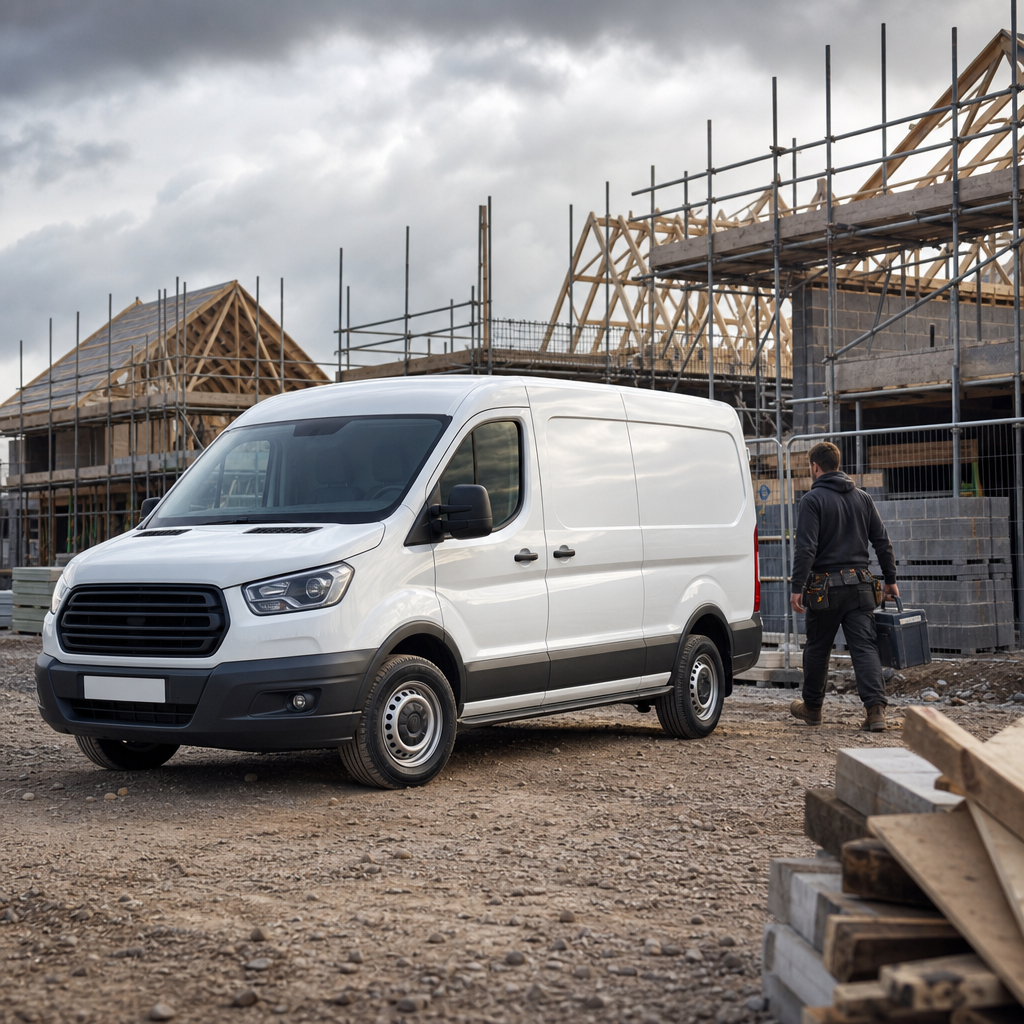
For any tradesperson, your van isn't just a mode of transport; it's a mobile workshop, a storage unit, and often, the public face of your business. It's the unsung hero that enables you to get the job done, day in, day out. Given the demands placed on these workhorses, choosing the right used commercial vehicle is one of the most significant investments you'll make in your business.
At CarsLink.ai, we understand that finding the perfect balance between reliability, practicality, budget, and specific trade requirements can be a daunting task. This guide is designed to cut through the jargon and provide UK tradespeople with a practical roadmap to help you navigate the used van market, ensuring your next commercial vehicle is truly fit for purpose.
Identifying Your Specific Trade Needs: Payload, Volume, and Specialised Features
Before you even start browsing models, take a critical look at what you actually need your van to do. This isn't just about getting from A to B; it's about carrying your livelihood safely and efficiently.
Payload: This refers to the maximum weight your van can legally carry, including the driver, passengers, tools, materials, and any fitted equipment (like racking). Overloading is illegal, dangerous, and can invalidate your insurance, so it's crucial to get this right.
- Electricians: Typically carry lighter items – hand tools, cable reels, consumer units, light fittings. A smaller van with a payload of 600-900kg might suffice.
- Plumbers: Transport boilers, copper piping, radiators, water tanks, and often heavy wet-trade materials. A moderate payload of 800-1200kg is usually a good starting point.
- Builders: Often carry the heaviest and bulkiest items – bricks, bags of cement, timber, heavy power tools, rubble. You'll likely need a large van with a payload exceeding 1000kg, or even a chassis cab with a specific body type (e.g., a tipper) for very heavy loads.
Volume: This is the internal cubic capacity of the load bay. Do you need to transport long lengths of pipe, full sheets of plasterboard, or multiple large appliances?
- Small Vans (e.g., Ford Transit Connect, Vauxhall Combo): Ideal for urban work, light loads, and parking in tight spots. Perfect for service engineers, couriers, or smaller electrical jobs.
- Medium Vans (e.g., Ford Transit Custom, Vauxhall Vivaro): The UK's most popular segment, offering a great balance of size, payload, and manoeuvrability. Suitable for most plumbers, general builders, and larger electrical jobs.
- Large Vans (e.g., Ford Transit, Mercedes-Benz Sprinter): Essential for bulkier items, high payloads, or if you need to stand up inside. Great for kitchen fitters, large-scale builders, or scaffolding erectors. Many offer different wheelbases (L2, L3, L4) and roof heights (H1, H2, H3) to tailor volume precisely.
Specialised Features: Consider what extras will make your life easier and safer:
- Roof Racks: Essential for ladders, long pipes, or timber.
- Tow Bars: For trailers, waste removal, or moving larger equipment.
- Enhanced Security: Factory-fitted alarms, deadlocks, reinforced bulkheads, or internal locking mechanisms for toolboxes.
- Crew Cabs: If you regularly transport a team of two or more, a crew cab with a second row of seats can be invaluable.
Top Used Van Models for UK Tradespeople
While personal preference plays a part, certain models consistently prove their worth in the demanding world of trade.
For Electricians & Light Trades (Small to Medium Vans):
- Ford Transit Connect: A perennial favourite, offering car-like driving dynamics, excellent reliability, and various lengths and payloads. Parts are readily available, keeping running costs down.
- Vauxhall Combo / Peugeot Partner / Citroën Berlingo: These models (often sharing platforms) are praised for their efficiency, surprisingly spacious load bays for their size, and comfortable cabins. Newer models often feature clever load-through bulkheads for longer items.
- Renault Kangoo: Another strong contender in the compact van segment, known for its practicality and urban agility.
For Plumbers & General Builders (Medium Vans):
- Ford Transit Custom: The undisputed king of the UK van market. Available in numerous configurations, it's known for its superb driving experience, robustness, and strong residual values. A massive used market means plenty of choice.
- Vauxhall Vivaro / Renault Trafic / Nissan NV300: These vans are essentially siblings, sharing the same platform and engines. They offer practical load spaces, decent payloads, and comfortable rides, making them excellent value on the used market.
- Volkswagen Transporter: A more premium option, the Transporter boasts excellent build quality, car-like comfort, and strong engines. It holds its value well, making it a sound long-term investment.
For Heavy Trades & Specialists (Large Vans & Beyond):
- Ford Transit (full-size): The larger sibling to the Custom, available in a vast array of sizes, roof heights, and body styles (panel van, chassis cab, dropside, tipper). It's a true workhorse, versatile and dependable.
- Mercedes-Benz Sprinter / Volkswagen Crafter: Often considered the benchmark for large vans, particularly for those needing high payloads and robust build quality. Sprinters are renowned for reliability and comfort, especially over long distances. The Crafter (particularly post-2017 models) offers similar virtues, with FWD/RWD options to suit different needs.
- Pickups (e.g., Ford Ranger, Toyota Hilux): While not panel vans, pickups are increasingly popular with builders and those working off-road or needing to tow heavily. Their open beds are ideal for dirty or awkwardly shaped materials.
Fuel Efficiency, Engine Size, and Clean Air Zone Compliance
Running costs are a major factor for any business. Fuel, maintenance, and compliance charges can quickly add up.
Fuel Efficiency & Engine Size: Most used vans in the UK are diesel-powered, offering a good blend of torque for carrying heavy loads and decent fuel economy.
- Smaller engines (1.5L-2.0L diesels): Generally more fuel-efficient, especially if you're predominantly driving in urban areas or carrying lighter loads. Look for Euro 6 engines for compliance benefits.
- Larger engines (2.0L+ diesels): Provide more power and torque, essential for heavy loads, motorway cruising, and towing. While potentially less efficient on paper, they can be more economical in the long run if the smaller engine is constantly strained.
- Electric Vans: The landscape for used electric vans (e.g., Vauxhall Vivaro Electric, Maxus eDeliver 3/9, Ford E-Transit Custom) is growing. While the upfront cost is higher, running costs are significantly lower, and they are exempt from all Clean Air Zone charges. This is a future-proof option, particularly for urban-based trades.
Clean Air Zone (CAZ) / Ultra Low Emission Zone (ULEZ) Compliance: This is perhaps the most critical consideration for UK tradespeople operating in or around major cities.
- What it means: Many UK cities (including London, Birmingham, Bristol, Glasgow, Sheffield, Tyneside) now have zones where older, more polluting vehicles are charged a daily fee.
- Diesel Vans: To be compliant and avoid charges, most diesel vans need to meet Euro 6 emissions standards. Generally, this applies to vans registered from September 2016 onwards.
- Petrol Vans: Petrol vans need to meet Euro 4 standards, which typically covers vehicles registered from January 2006. Petrol vans are less common for commercial use due to lower torque and higher fuel consumption.
- How to check: Always verify a specific vehicle's compliance using the official government website (gov.uk/check-clean-air-zone-charges) or the relevant city's transport authority website (e.g., TfL for London ULEZ). A non-compliant van could cost you hundreds, if not thousands, of pounds a year in charges.
Evaluating Conversion Potential and Essential Pre-Purchase Checks
A van's utility is often defined by its interior. The ability to organise and secure your tools and materials is paramount.
Conversion Potential:
- Racking & Shelving: Modular racking systems (e.g., Sortimo, Van Guard, Bott) transform a messy load bay into an organised workspace. Look for vans that either come with existing systems, or have a bare load bay that’s easy to fit out. Consider whether the load bay offers suitable anchor points for secure installation.
- Tool Storage: Look for options for secure, lockable toolboxes or underfloor storage to deter thieves.
- Bespoke Fit-outs: Some trades require specific additions like power inverters, external power outlets, small workbenches, or even wash facilities. Ensure the van's dimensions and electrical system can accommodate such modifications.
- Bulkhead: A robust, fixed steel bulkhead is crucial for safety (preventing items from entering the cabin during sudden braking) and security.
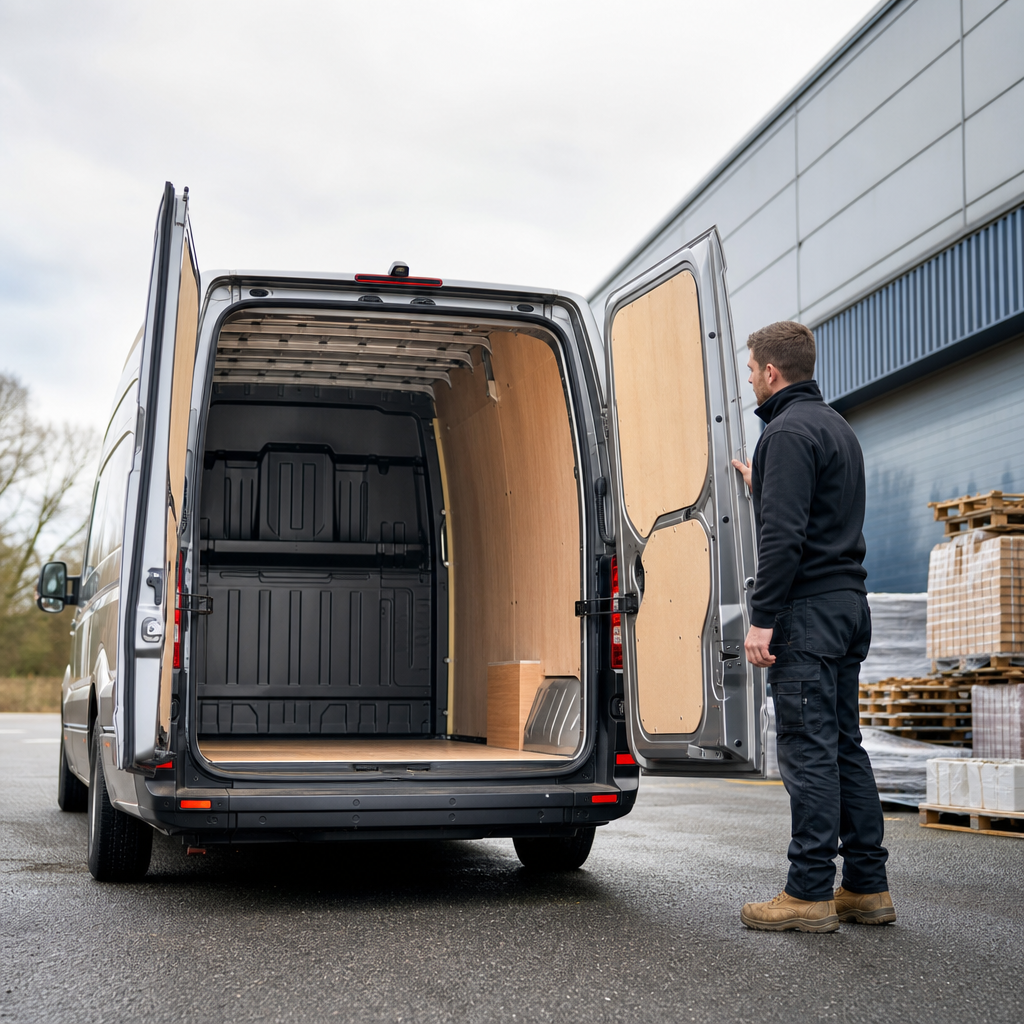
- Ply-lining: Many used vans will come ply-lined. This is a huge bonus as it protects the interior metalwork from dents and scrapes, which can lead to rust.
Essential Pre-Purchase Checks for Commercial Wear and Tear: Commercial vehicles work hard, so a thorough inspection is crucial.
- Service History: Demand a full, documented service history. Commercial vehicles accrue mileage quickly and need regular maintenance. Gaps in service history are a major red flag.
- MOT History: Check the online MOT history (gov.uk/check-mot-history) for advisories, consistent mileage, and recurring issues. This provides invaluable insight into how the van has been maintained.
- Bodywork & Undercarriage: Look for significant dents, scrapes, and rust, especially around wheel arches, sills, and the load bay. Pay close attention to the chassis and suspension components underneath for signs of damage or heavy corrosion.
- Interior & Load Bay: Examine the cabin for excessive wear on seats, steering wheel, and pedals. Test all electricals – windows, mirrors, lights, radio. In the load bay, look for impact damage, holes in the floor, or compromised ply-lining.
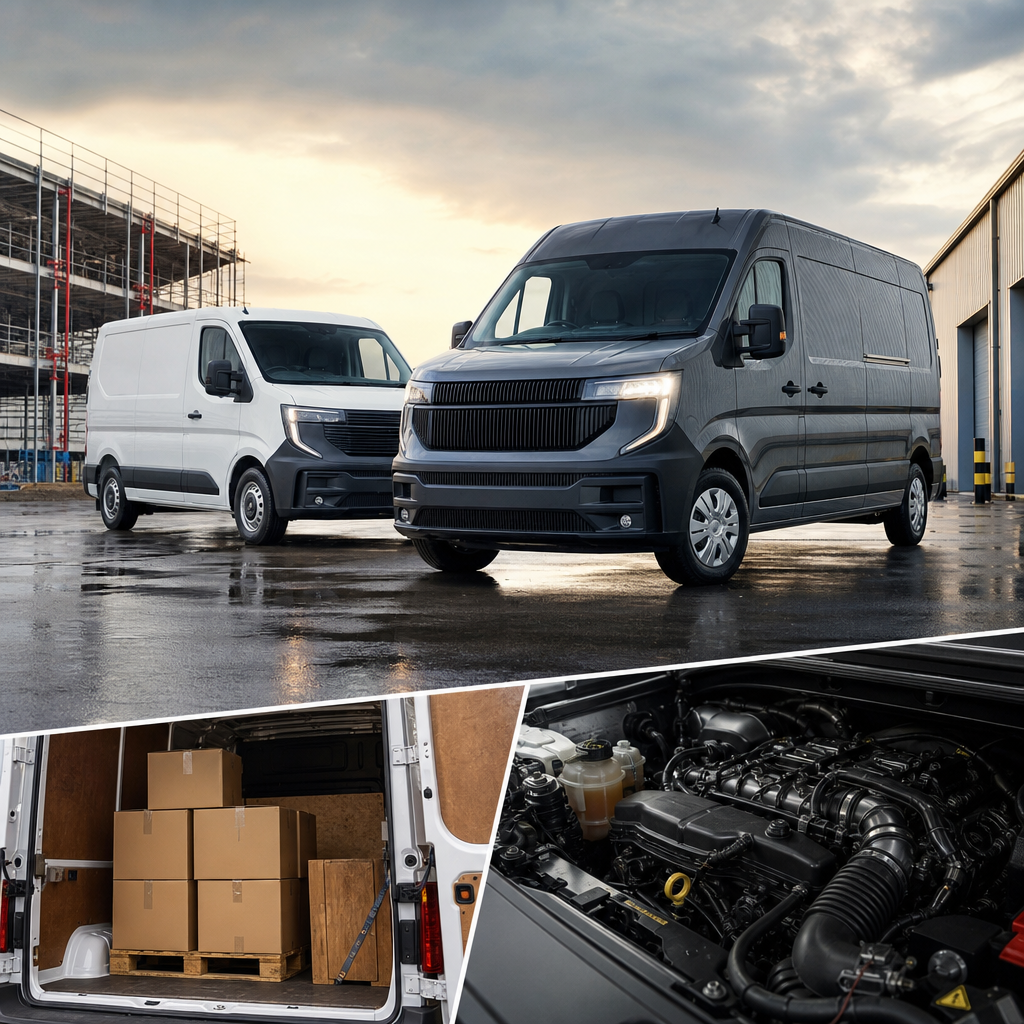
- Engine & Drivetrain: Listen for unusual noises, check for smoke from the exhaust (blue for oil, white for coolant, black for fuel issues). Look for fluid leaks under the bonnet and underneath the van.
- Test Drive: This is non-negotiable. Check the clutch for slip or judder, gears for smooth engagement, brakes for effectiveness and pulling, and the steering for responsiveness. Listen for suspension knocks over bumps. A comprehensive test drive, ideally with some weight in the back, will reveal many issues.
- Tyres: Check tread depth (minimum 1.6mm, but more is better) and for uneven wear, which could indicate alignment or suspension problems.
- Documentation: Ensure the V5C logbook is present and matches the VIN on the vehicle. Verify any finance agreements (via an HPI check) to ensure clear title.
Conclusion
Your commercial vehicle is the backbone of your trade. Choosing the right used van isn't just about finding the cheapest option; it's about making a strategic business decision that enhances your efficiency, protects your tools, and ensures you can operate legally and safely.
By carefully considering your payload and volume needs, researching reliable models, understanding running costs and Clean Air Zone compliance, and performing diligent pre-purchase checks, you can secure a used commercial vehicle that will serve you well for years to come. Don't rush the process; the right van is an investment that pays dividends daily, getting you and your livelihood to every job, every time.