Powering Your Business: A UK Guide to Choosing the Right Used Electric Van
The hum of an electric motor is fast becoming the soundtrack to modern British commerce. From bustling city centres adhering to Ultra Low Emission Zones (ULEZ) to rural routes where fuel efficiency is paramount, electric vans are no longer a niche curiosity but a sensible, sustainable, and increasingly cost-effective choice for businesses. And with the used market now offering a growing selection of pre-owned electric commercial vehicles, making the switch has never been more accessible.
However, choosing the right used electric van isn't simply a case of picking the cheapest or the one that looks best. It requires a strategic assessment of your business's unique operational needs, an understanding of EV-specific considerations, and a keen eye for potential savings. As your trusted guide, CarsLink.ai is here to help you navigate the journey.
Range and Real-World Capabilities: Is an EV Van Right for Your Daily Operations?
One of the first questions any business owner asks is, "How far can it go?" While manufacturers provide a WLTP (Worldwide Harmonised Light Vehicle Test Procedure) range figure, it’s crucial to understand that this is an optimistic laboratory test. Real-world range can vary significantly.
To assess if an EV van can meet your needs, start by meticulously tracking your average daily mileage over a typical week or month. Don't forget to account for any longer, less frequent routes. Once you have this figure, factor in a buffer for peace of mind.
Several elements can impact an electric van's range:
- Load Weight: Heavier loads demand more energy.
- Driving Style: Aggressive acceleration and braking consume more power than smooth, consistent driving. Regenerative braking (where the motor acts as a generator to recharge the battery when slowing down) can significantly extend range in stop-start urban environments.
- Speed: Motorway cruising at 70mph drains the battery much faster than urban driving at 30mph.
- Terrain: Uphill climbs naturally require more energy.
- Weather: Cold weather is an EV's enemy. Battery performance decreases, and heating the cabin and battery requires significant power, potentially reducing range by 15-30% in winter.
- Auxiliary Use: Running power tools, refrigeration units, or even just the air conditioning will consume battery power.
As a rule of thumb, expect a real-world range to be around 70-80% of the WLTP figure under ideal conditions, dropping further in winter or with heavy loads. For example, a used Vauxhall Vivaro-e with a 75kWh battery might boast a WLTP range of around 205 miles. In reality, with a typical load and mixed driving, you might achieve 140-160 miles, falling to 110-130 miles on a cold, heavily loaded winter day. Does this align with your plumber doing several jobs across a county, or your florist making deliveries across a city? Plan accordingly.
Navigating the Charging Landscape: Workplace, Public, and Home Solutions
Choosing an electric van means adopting a new refuelling habit. Understanding and implementing a robust charging strategy is paramount for operational efficiency.
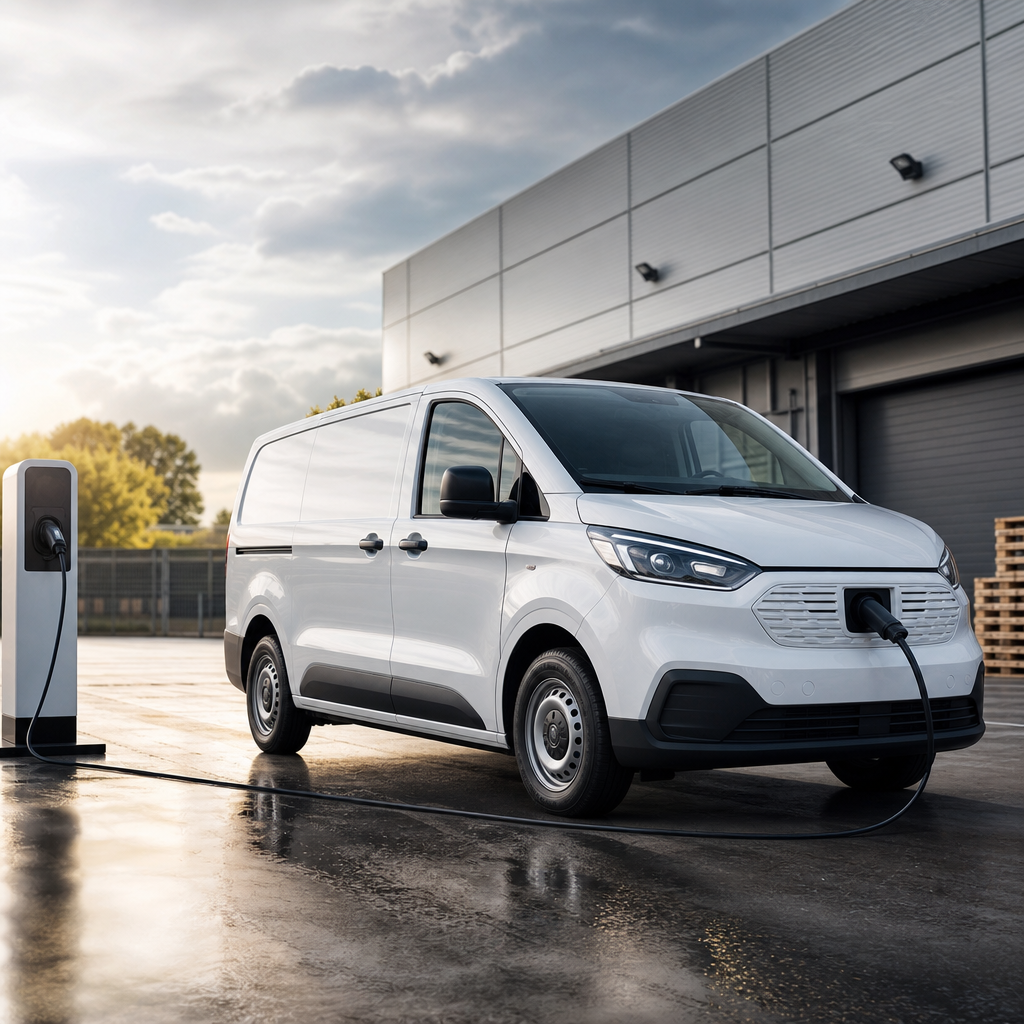
The ideal scenario for many businesses is workplace charging. Installing dedicated charging points at your depot or office allows vans to be charged overnight when electricity tariffs are often cheaper. A standard 7kW AC wallbox can fully charge a 50kWh battery van (like a smaller Peugeot e-Partner) in about 7-8 hours, ready for the next day's work. For larger fleets, or faster turnaround, investing in more powerful 22kW AC or even DC rapid chargers might be worthwhile. The UK government’s Workplace Charging Scheme (WCS) can provide grants of up to £350 per charging socket for businesses.
Public charging will be essential for longer journeys, unexpected detours, or if workplace charging isn't feasible. The UK has a rapidly expanding network of public charge points, ranging from 7kW slow chargers to 350kW ultra-rapid units. Key rapid charging standards are CCS (Combined Charging System) and CHAdeMO, though CCS is becoming the dominant standard in Europe. Accessing these networks often requires a mix of apps, RFID cards, and sometimes direct payment. Planning routes that incorporate rapid charging stops can ensure minimal downtime.
Finally, consider home charging if your drivers take their vans home. A 7kW home wallbox is recommended for convenience and speed compared to a standard 3-pin plug. Drivers can also benefit from cheaper overnight electricity tariffs, which can significantly reduce running costs.
Payload and Practicality: Balancing Capacity with Battery Weight
This is a critical consideration often overlooked by newcomers to electric vans. While EVs excel in torque delivery and quiet operation, the heavy battery pack often reduces the available payload compared to an equivalent diesel van.
For instance, a diesel Ford Transit Custom 300 might offer a payload of over 1,000kg. A directly comparable electric version, like the E-Transit Custom (though newer and not yet widely available on the used market), or a used Stellantis medium van (Vauxhall Vivaro-e, Peugeot e-Expert), might only have a payload ranging from 700-900kg, depending on the battery size. A larger battery (offering more range) invariably means less payload.
Businesses that routinely transport heavy tools (e.g., plumbers, builders), bulky materials, or large volumes of goods need to scrutinise the Gross Vehicle Weight (GVW) and the unladen weight of any prospective EV van. Ensure the actual payload capacity (GVW minus unladen weight) is sufficient for your daily operations without risking overloading – a serious legal and safety concern. Don't just assume an EV version of your current diesel van will have the same practical capacity.
The Financial Case: Grants, Tax Benefits, and Running Cost Savings
While the upfront cost of an electric van (even used) can sometimes be higher than a diesel equivalent, the long-term financial benefits are substantial and often outweigh the initial outlay.
- Grants: While the government's Plug-in Van Grant (PiVG) applies to new vans, its existence has helped populate the used market. More directly relevant for used buyers are grants like the Workplace Charging Scheme (WCS) for charge point installation and potentially local authority grants for clean air zones.
- Tax Benefits:
- Road Tax (VED): Electric vans are currently exempt from Vehicle Excise Duty.
- Benefit-in-Kind (BIK): For company vans, the BIK rate for EVs is significantly lower than for fossil fuel vehicles, offering substantial savings for employees and employers.
- Capital Allowances: Businesses can claim 100% first-year allowance for new zero-emission vans, accelerating tax relief, which helps reduce the total cost of ownership over time and influences residual values of used EVs.
- Running Cost Savings:
- Fuel Costs: Electricity is significantly cheaper per mile than diesel, especially when charging off-peak. A rough comparison often sees electricity costing around 5p-10p per mile, versus 15p-25p for diesel.
- Maintenance: EVs have fewer moving parts, no oil changes, and benefit from regenerative braking which reduces wear on conventional brake pads and discs. This translates to lower service and maintenance costs.
- Urban Access Charges: This is a huge win for businesses operating in urban areas. Electric vans are exempt from charges like the London ULEZ, Congestion Charge, and various Clean Air Zones (CAZ) across the UK, potentially saving thousands of pounds annually.
Top Used EV Van Models and Essential Pre-Purchase Checks
The used electric van market in the UK is maturing, offering a decent selection of reliable models.
Popular Models to Look For:
- Stellantis Medium Vans: This platform includes the Vauxhall Vivaro-e, Peugeot e-Expert, Citroën ë-Dispatch, and Fiat E-Scudo. They share common powertrains (50kWh or 75kWh battery) and offer good payloads and practical cargo space in various lengths. The smaller variants like the Vauxhall Combo-e, Peugeot e-Partner, Citroën ë-Berlingo, and Fiat E-Doblò are also excellent compact choices.
- Renault Kangoo Z.E. / Master Z.E.: Earlier pioneers, these models are often found at lower price points. The Kangoo Z.E. is great for light urban duties, while the Master Z.E. offers a larger capacity but with more limited range.
- Maxus eDeliver 3 / eDeliver 9: Maxus has quickly established itself with strong value propositions. The eDeliver 3 is a compact-to-medium option, while the eDeliver 9 offers a larger panel van with competitive range and payload figures.
- Ford E-Transit Custom: While just beginning to appear on the used market, if you find one, it's a strong contender, leveraging Ford's renowned Transit practicality with electric power.
Essential EV-Specific Pre-Purchase Checks:
- Battery Health Certificate (SOH): This is paramount. Ask the seller for a 'State of Health' certificate, which indicates the battery's remaining capacity relative to its original design. This directly impacts range and resale value. Some manufacturers offer this, or a dealer may be able to provide it.
- Charging Port Condition: Inspect the charging ports for any damage, corrosion, or signs of misuse. Ensure the correct charging cables (Type 2 and ideally a 3-pin granny charger) are included.
- Service History: A full-service history is crucial, especially ensuring all high-voltage system checks have been carried out by qualified technicians. Software updates are also important for optimal performance.
- Battery Warranty: Many EV batteries come with an 8-year/100,000-mile warranty (whichever comes first) for a minimum State of Health (e.g., 70%). Check if any of this warranty is still valid.
- Range Test Drive: Conduct a real-world test drive to get a feel for the actual range and how it performs under your expected driving conditions. Pay attention to the dashboard's estimated range after a full charge.
- Tyres: Due to the instant torque of electric motors and heavier weight, EV tyres can wear differently. Check for even tyre wear and ensure they are suitable for an EV (often low rolling resistance tyres).
Conclusion
Embracing a used electric van for your UK business is a strategic move that aligns with environmental goals, navigates increasingly strict urban regulations, and offers substantial long-term financial benefits. By carefully assessing your daily range needs, planning your charging infrastructure, understanding payload compromises, and leveraging the generous financial incentives, you can make an informed decision. With a growing array of reliable used models and specific EV checks, finding the perfect electric workhorse for your business has never been easier.
Start your search for the ideal used electric van today on CarsLink.ai and power your business into a greener, more efficient future.