Powering Your Business: A UK Buyer's Guide to Used Electric Vans
The landscape of commercial transport in the UK is undergoing a silent revolution. As businesses increasingly prioritise sustainability, cost-efficiency, and compliance with urban emission zones, electric vans are no longer a niche choice but a compelling necessity. And for many, the smart money is on used electric vans. Offering a more accessible entry point into zero-emission motoring, a second-hand electric van can be a shrewd investment, provided you know what to look for.
At CarsLink.ai, we understand that investing in a commercial vehicle is a significant decision. This guide aims to equip UK businesses with the knowledge to confidently navigate the used electric van market, ensuring your next workhorse is both green and genuinely economical.
The Business Case for Used Electric Vans in the UK
The transition to an electric van offers a multitude of tangible benefits that directly impact your bottom line and public image:
- ULEZ and Clean Air Zone (CAZ) Compliance: This is perhaps the most immediate and impactful benefit for businesses operating in or around major UK cities. Electric vans are automatically exempt from daily charges in London's Ultra Low Emission Zone (ULEZ), as well as Clean Air Zones popping up in cities like Birmingham, Bristol, and Sheffield. For a business making frequent deliveries or service calls in these areas, avoiding £12.50 or more per day quickly adds up to thousands of pounds in annual savings.
- Significantly Lower Running Costs:
- "Fuel" Costs: Electricity is considerably cheaper per mile than petrol or diesel, especially if you can charge predominantly at your depot using off-peak tariffs. While public rapid charging costs more, it’s still generally more economical than conventional fuel.
- Maintenance: Electric vans have fewer moving parts than internal combustion engine (ICE) vehicles. There's no engine oil to change, no spark plugs, no clutch to replace, and no diesel particulate filter (DPF) issues to contend with. This translates to simpler, less frequent, and generally cheaper servicing.
- Road Tax (VED): Electric vans are currently exempt from Vehicle Excise Duty (VED), providing another annual saving.
- Enhanced Brand Image: Demonstrating a commitment to sustainability can be a powerful marketing tool. An electric van with your branding sends a clear message to environmentally conscious customers, potentially opening doors to new contracts and tenders that prioritise green credentials.
Navigating Range, Payload, and Battery Health in Used EV Vans
When evaluating a used electric van, three critical factors – range, payload, and battery health – demand close scrutiny to ensure it meets your operational needs.
- Understanding Range: The manufacturer's stated WLTP (Worldwide Harmonised Light Vehicles Test Procedure) range is a useful guide, but real-world range can vary significantly. Factors like load weight, driving style, speed, terrain, and crucially, external temperature, all influence how far your van will go on a single charge. Before committing, meticulously assess your typical daily routes. Does the van's realistic range cover your longest day with a comfortable buffer, accounting for potential detours or delays? Consider older models (e.g., early Nissan e-NV200s or Renault Kangoo Z.E.s) which may have WLTP ranges closer to 100-120 miles, sufficient for urban last-mile delivery but less suitable for longer hauls. Newer models often boast 170-200+ miles.
- Payload Capacity: Electric vans are inherently heavier than their ICE counterparts due to the weight of the battery pack. This can, in turn, reduce the available payload. Always check the Gross Vehicle Weight (GVW) and the kerb weight to calculate the true payload. Different battery sizes within the same model range can also affect payload – a larger battery might offer more range but slightly less carrying capacity. Ensure the van can comfortably handle your typical tools, equipment, or goods without exceeding its legal limit.
- Battery Health (State of Health - SOH): This is paramount for a used EV. Batteries degrade over time and with use, meaning an older van will likely not achieve its original range.
- How to Check SOH: A reputable dealer should be able to provide a battery health certificate or display the State of Health (SOH) via diagnostic tools. Some specialist apps (e.g., Leaf Spy for Nissan e-NV200) can also give an indication. Aim for an SOH of 80% or above for good peace of mind.
- Battery Warranty: Many electric vans come with an extended battery warranty, typically 8 years or 100,000 miles, covering significant degradation (often below 70% SOH). Crucially, check if this warranty is transferable to a second owner and how much time/mileage is left. This provides a vital safety net against premature battery failure. A comprehensive service history is also a good indicator of overall vehicle care, even if it doesn't directly measure SOH.
Mastering Commercial EV Charging in the UK
Understanding and planning your charging strategy is fundamental to the successful integration of an electric van into your business operations.
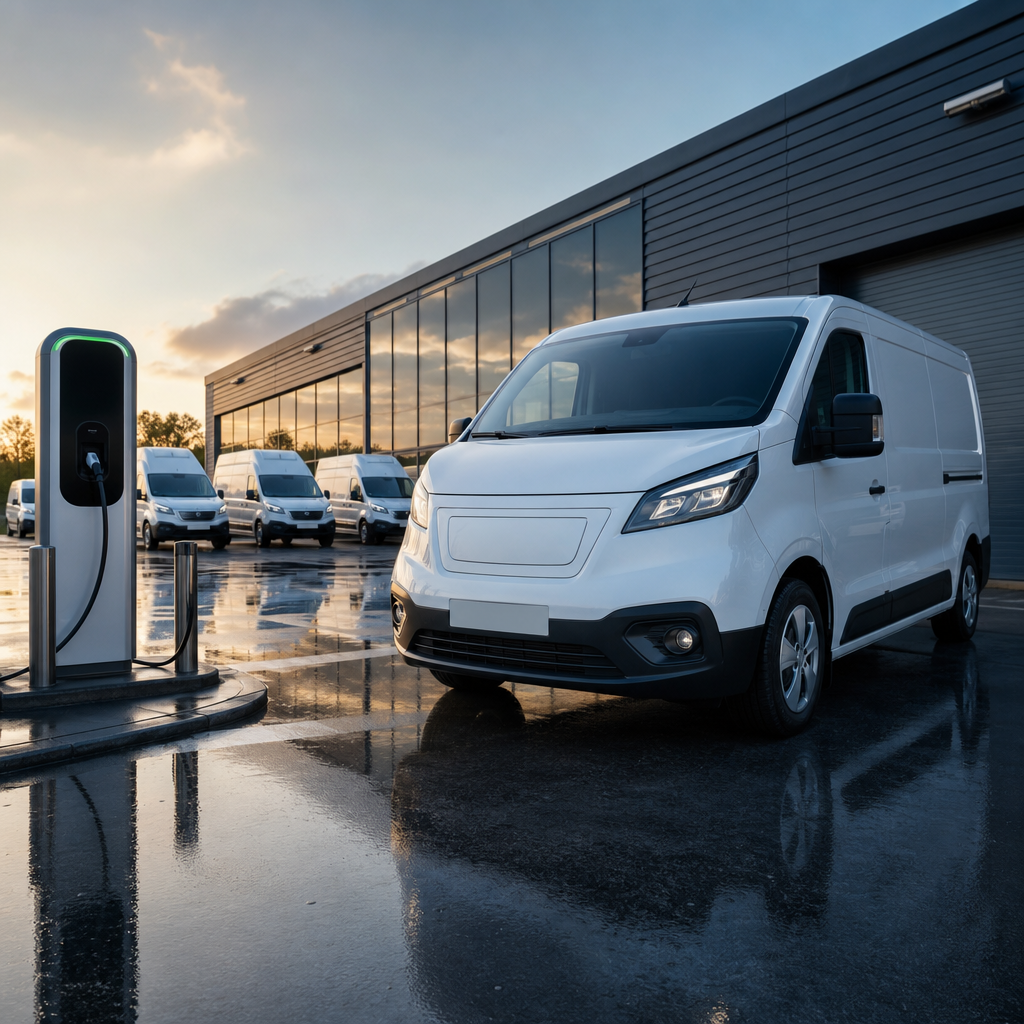
- Depot/Workplace Charging: For most businesses, this will be your primary charging method and the key to significant cost savings.
- Slow Charging (3-pin plug / Type 2, 3.7kW): A standard 3-pin plug will charge a van, but it's very slow (often 12+ hours for a full charge). A dedicated 3.7kW Type 2 wallbox is more practical for overnight charging.
- Fast Charging (Wallbox, 7kW/11kW/22kW): A 7kW wallbox is the sweet spot for many, typically charging a medium-sized van overnight (6-8 hours). If your premises have three-phase electricity, 11kW or 22kW charging can significantly speed this up, especially if you need to top up during the day. The UK government's Workplace Charging Scheme (WCS) can offer grants towards the installation of charge points at your business premises.
- Cost Efficiency: Utilise smart charging features and off-peak electricity tariffs (like Economy 7 or 10) to charge when electricity is cheapest, dramatically reducing your per-mile costs.
- Public Charging: While depot charging is preferred, public networks are essential for longer journeys or unexpected top-ups.
- Rapid Chargers (50kW+ DC): These can add significant range in under an hour and are found at motorway service stations, major retail parks, and dedicated charging hubs. Be aware they are more expensive per kWh than home/depot charging.
- Network Access: The UK has a growing number of public charging networks (e.g., BP Pulse, Gridserve, InstaVolt, Shell Recharge, Osprey). You'll likely need multiple apps or RFID cards to access them. Tools like Zap-Map are invaluable for locating available charge points and planning routes.
- Installation Considerations: Consult with a qualified electrician to assess your business premises' existing electrical supply. Upgrades may be required, and planning for future expansion (e.g., charging multiple vans) should be factored in.
Popular Used Electric Van Models in the UK Market
The used electric van market in the UK is becoming increasingly diverse. Here are some popular options across different size categories:
- Small Electric Vans (Urban & Last-Mile Delivery):
- Nissan e-NV200: A long-standing pioneer, the e-NV200 offers robust reliability and is a common sight in urban areas. Used models, particularly with the larger 40kWh battery (introduced from 2018), offer a WLTP range of around 124 miles, perfect for city work. Older 24kWh models will be cheaper but have significantly less range. Look for models with rapid charging capability (CHAdeMO connector).
- Renault Kangoo Z.E.: Another early entrant, similar in scope to the e-NV200. Beware of older models with battery lease agreements – ensure the battery is owned outright for simplicity.
- Stellantis Small Vans (Peugeot e-Partner, Citroën e-Berlingo, Vauxhall Combo-e, Toyota Proace City Electric): These are essentially the same van under different badges, offering a much more modern experience. With a 50kWh battery, they boast a WLTP range of around 171 miles. Expect higher used prices due to their newer tech and greater capability.
- Medium Electric Vans (Versatile Workhorses):
- Stellantis Medium Vans (Vauxhall Vivaro-e, Peugeot e-Expert, Citroën e-Dispatch, Fiat E-Scudo, Toyota Proace Electric): Again, a family of highly capable vans. Available with 50kWh (143 miles WLTP) or 75kWh (205 miles WLTP) battery options, they offer excellent practicality, comfortable cabins, and competitive payloads. These are becoming very popular on the used market and represent a strong option for many businesses.
- Mercedes-Benz eVito: A premium choice, the eVito offers Mercedes-Benz build quality and comfort. Older models with a 41kWh battery have a more limited range (around 93 miles WLTP), focusing on pure urban use. Newer eVito models boast significantly improved range.
When reviewing specific models, always check for varying battery sizes, trim levels (which can affect standard features like charging speed), and cargo space configurations (e.g., panel van vs. crew van).
Conclusion
The used electric van market presents a compelling opportunity for UK businesses to reduce running costs, comply with ever-tightening urban emission regulations, and project a greener image. By carefully considering your operational needs, diligently checking battery health and warranty, and planning your charging infrastructure, you can confidently invest in a second-hand electric van that genuinely powers your business forward.
At CarsLink.ai, we're here to help you find the right electric van to future-proof your fleet. Start browsing our extensive listings today and take the first step towards a cleaner, more cost-effective commercial future.