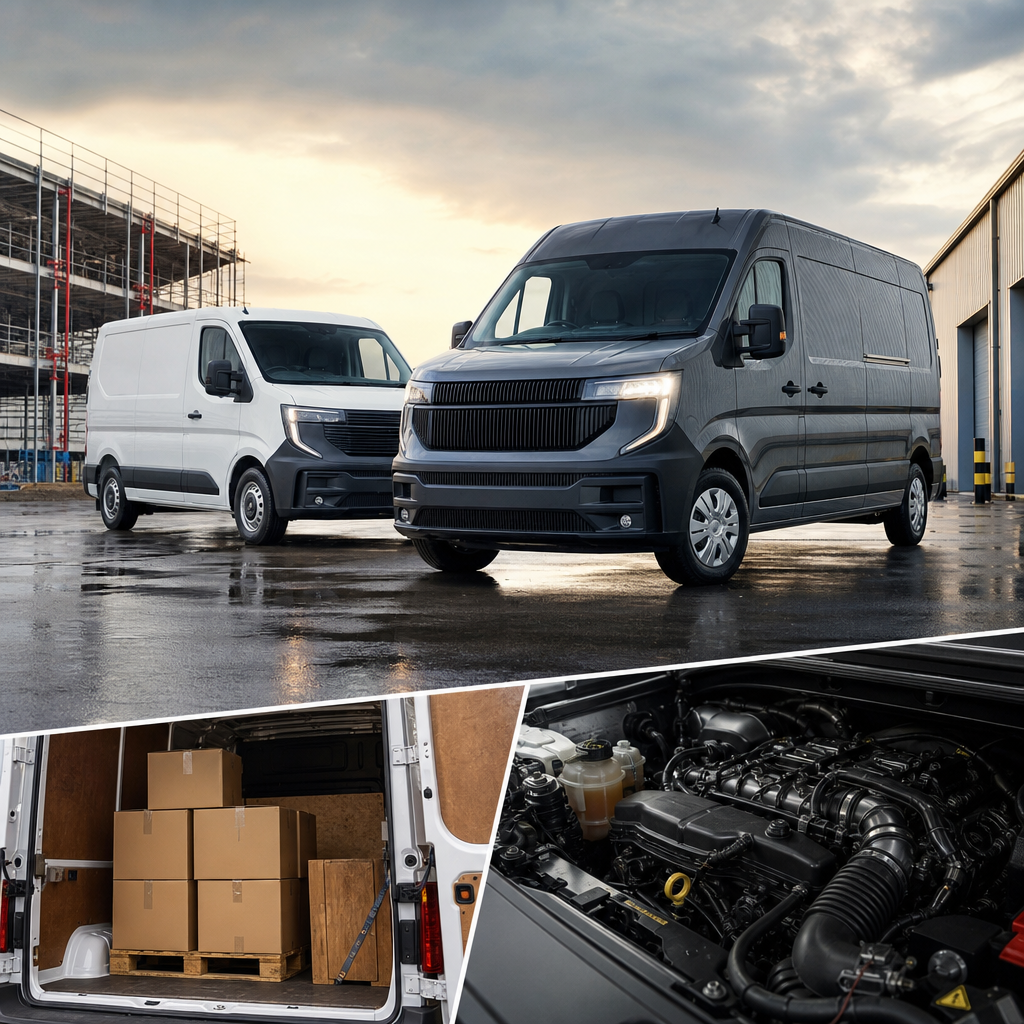
Maximising Your Mile-Muncher: The Most Fuel-Efficient Used Vans for UK Businesses
In today's challenging economic climate, every penny counts for UK businesses. With rising fuel costs continuing to bite, the efficiency of your fleet, or even your sole workhorse van, has moved from a desirable perk to a crucial factor in maintaining profitability. For many tradespeople, delivery drivers, and service providers, a van is more than just transport – it's an indispensable tool. Choosing a used van renowned for its fuel economy, and then maintaining and driving it efficiently, can translate into significant savings over its lifetime, directly impacting your bottom line.
This guide from CarsLink.ai will delve into the world of fuel-efficient used vans available in the UK, highlighting top models, key factors affecting real-world consumption, and practical tips to ensure your mile-muncher truly goes the extra mile.
Top Contenders: Used Vans That Go Further
When searching for a fuel-efficient used van, certain models consistently stand out for their impressive MPG figures, offering a compelling blend of practicality and economy.
1. Ford Transit Custom EcoBlue: The Ford Transit Custom has been the undisputed king of the UK van market for years, and its EcoBlue diesel engines are a major reason why. Available in various power outputs (e.g., 105PS, 130PS, 170PS), these engines were designed with efficiency and emissions in mind. Many EcoBlue models can achieve well over 40 MPG in mixed driving, making them a superb choice for businesses of all sizes. They're robust, comfortable, and benefit from an enormous support network, meaning plenty of used examples are available with a proven track record. Look for models with 'EcoBlue' badging, often paired with six-speed manual gearboxes or the efficient E-Z automatic transmission.
2. Vauxhall Vivaro / Peugeot Expert / Citroën Dispatch (and Toyota Proace): These vans, all built on the same Stellantis platform (previously PSA), share a common strength: excellent fuel economy. Their 1.5-litre and 2.0-litre BlueHDi (Vauxhall calls them 'EcoTec' or 'CDTi') diesel engines are known for their efficiency and refinement. Many variants, especially the 1.5-litre models, can easily exceed 45 MPG. They offer a comfortable ride, decent load capacity for their compact exterior dimensions, and come in multiple body lengths. With all four brands offering essentially the same capable vehicle, there's a vast pool of used options to choose from, often at competitive prices.
3. Volkswagen Transporter: While often commanding a premium, the Volkswagen Transporter’s reputation for quality, reliability, and strong residual values is well-earned. Crucially, its TDI diesel engines are also notably fuel-efficient, especially the smaller 2.0-litre units. Expect 35-40+ MPG from many models, a respectable figure for a van of its calibre. The Transporter's robust build means it handles high mileage well, and its comfortable, car-like driving experience can reduce driver fatigue on long journeys. If you're willing to invest a little more upfront for a van that holds its value and sips fuel, a used Transporter is a strong contender.
4. Smaller Vans: Citroën Berlingo / Peugeot Partner / Vauxhall Combo: For businesses that don't need the full capacity of a mid-sized van, these compact models offer outstanding fuel efficiency, often pushing into the 50s MPG. Their smaller 1.5-litre BlueHDi diesel engines are incredibly frugal, making them ideal for urban deliveries or light trade work where every drop of fuel counts. They’re surprisingly practical, too, with clever load-through bulkheads and decent payload capacities for their class.
Driving Factors: What Really Affects Your Van's MPG
While choosing an inherently efficient van is a great start, several real-world factors significantly influence how much fuel you actually use.
1. Driving Style: This is perhaps the biggest variable. Aggressive acceleration and harsh braking are massive fuel guzzlers. Smooth, anticipatory driving – looking ahead, easing off the accelerator early, and maintaining momentum – can improve fuel economy by 10-15% or more. Speed also plays a role; aerodynamic drag increases exponentially with speed, meaning cruising at 70 mph uses considerably more fuel than 60 mph on the motorway. Excessive idling, such as waiting with the engine running, also wastes fuel for zero miles travelled.
2. Typical Payload: The heavier your van, the more fuel it will consume. An engine has to work harder to move increased mass. If your business regularly carries near-maximum payloads, expect your real-world MPG to be noticeably lower than the advertised figures, which are typically recorded with a light load. Consider your average payload when choosing a van; opting for an overly large van "just in case" could mean you're carrying around unnecessary weight and burning more fuel on every journey.
3. Engine Size and Technology: While smaller engines generally promise better fuel economy, this isn't always true under load. A small engine constantly straining to move a heavy van might use more fuel than a slightly larger, less stressed engine doing the same job. Modern diesel engines with technologies like turbocharging, common rail injection, and AdBlue (Selective Catalytic Reduction) systems are designed to be highly efficient and clean. Look for vans with start/stop technology, which automatically shuts off the engine when stationary in traffic, and modern six-speed manual or efficient automatic transmissions.
Boosting Your Van's Economy: Practical Tips
Even with the most efficient van, there's always room to optimise. Implementing these practical tips can further reduce your fuel bill:
1. Regular Maintenance is Key: A well-maintained engine runs more efficiently. Stick to your van's service schedule. Clogged air filters restrict airflow to the engine, making it work harder. Dirty fuel filters can impede fuel delivery. Fresh oil reduces internal friction. Regular checks of spark plugs (for petrol vans) and fuel injectors also ensure optimal combustion. Think of it as keeping your van fit and healthy – a healthy van performs better and consumes less.
2. Correct Tyre Pressure: Under-inflated tyres increase rolling resistance, forcing the engine to use more power to move the van. This can significantly impact fuel economy and also affect handling and tyre wear. Check your tyre pressures weekly, ideally when the tyres are cold. Refer to your van's manual or the sticker inside the driver's door jamb for the correct pressures, noting that these often differ for unloaded and fully loaded conditions.
3. Route Optimisation and Driving Habits:
- Plan Ahead: Use navigation apps with live traffic updates to avoid congestion, roadworks, and unnecessary detours. Fewer stops and starts mean less fuel consumed.
- Reduce Weight: Every kilogramme matters. Regularly clear out your van of unnecessary tools, equipment, and rubbish. Don't carry around what you don't need.
- Improve Aerodynamics: Roof racks, ladder racks, and external pipe carriers create drag. If not needed for a job, consider removing them. Even keeping windows closed at speed can make a difference.
- Driver Training: Consider eco-driving training for your drivers. Learning techniques like gentle acceleration, early gear changes, and coasting can yield substantial long-term savings.
- AdBlue Levels: For modern diesel vans, ensure the AdBlue tank is topped up. While not directly affecting MPG, it's crucial for emissions compliance and the smooth running of the SCR system.
True Costs: Looking Beyond the Forecourt Price Tag
When investing in a used van, it’s vital to look beyond just the initial purchase price and consider the entire cost of ownership. Fuel efficiency plays a huge role in this 'Total Cost of Ownership' (TCO).
- Purchase Price vs. Running Costs: A van with a slightly higher purchase price but significantly better MPG could save you thousands over a few years. For example, a van doing 20,000 miles a year at 35 MPG will use approximately 2,600 litres of fuel. If a 45 MPG van does the same mileage, it uses about 2,020 litres – a saving of 580 litres annually. At £1.50 per litre, that's £870 per year, or £2,610 over three years. This quickly offsets a small difference in the upfront cost.
- Insurance and Servicing: These are ongoing costs. Research insurance premiums for specific models and engine types, as they can vary. Similarly, check typical servicing costs. Newer, more complex engines might have higher servicing fees, but reliable models generally balance this out with fewer unexpected repairs.
- Road Tax (VED): For vans, Road Tax is usually a flat rate, though older models might fall under different schemes. It's a minor cost but still part of the equation.
- Depreciation: How much value the van loses over time. Highly sought-after, fuel-efficient models often depreciate slower, meaning you'll get more back when you eventually sell or trade in.
- Uptime: A reliable, well-maintained, and efficient van is less likely to break down, ensuring your business operations aren't disrupted. Downtime costs money in lost earnings and potential reputation damage.
Conclusion
Choosing the right used van for your UK business is a critical decision, and in today's economic climate, fuel efficiency must be at the forefront of your considerations. By focusing on models known for their frugality, understanding the real-world factors that impact MPG, and adopting smart driving and maintenance habits, you can significantly reduce your operational costs.
Remember, a van isn't just an expense; it's an investment in your business. By taking a holistic view of ownership costs, prioritising fuel economy, and looking for a quality used vehicle on platforms like CarsLink.ai, you can ensure your chosen mile-muncher truly works as hard as you do, driving your business forward without draining your budget.