Heavy Lifting on a Budget: Your UK Guide to Used Van Payloads & Towing Capacity
For businesses across the UK, a van isn't just a vehicle; it's the backbone of operations. From plumbers and electricians to couriers and landscapers, choosing the right used van can directly impact efficiency, safety, and profitability. However, many buyers, keen to find a bargain, often overlook two of the most critical specifications: payload and towing capacity. Getting these wrong can lead to serious legal issues, costly repairs, and even dangerous situations on the road.
At CarsLink.ai, we understand that an informed decision is a smart decision. This comprehensive guide will demystify van payload and towing capacity, helping you navigate the complexities of UK regulations and find a used workhorse perfectly suited to your business needs.
Understanding Payload Limits: Staying Legal and Safe
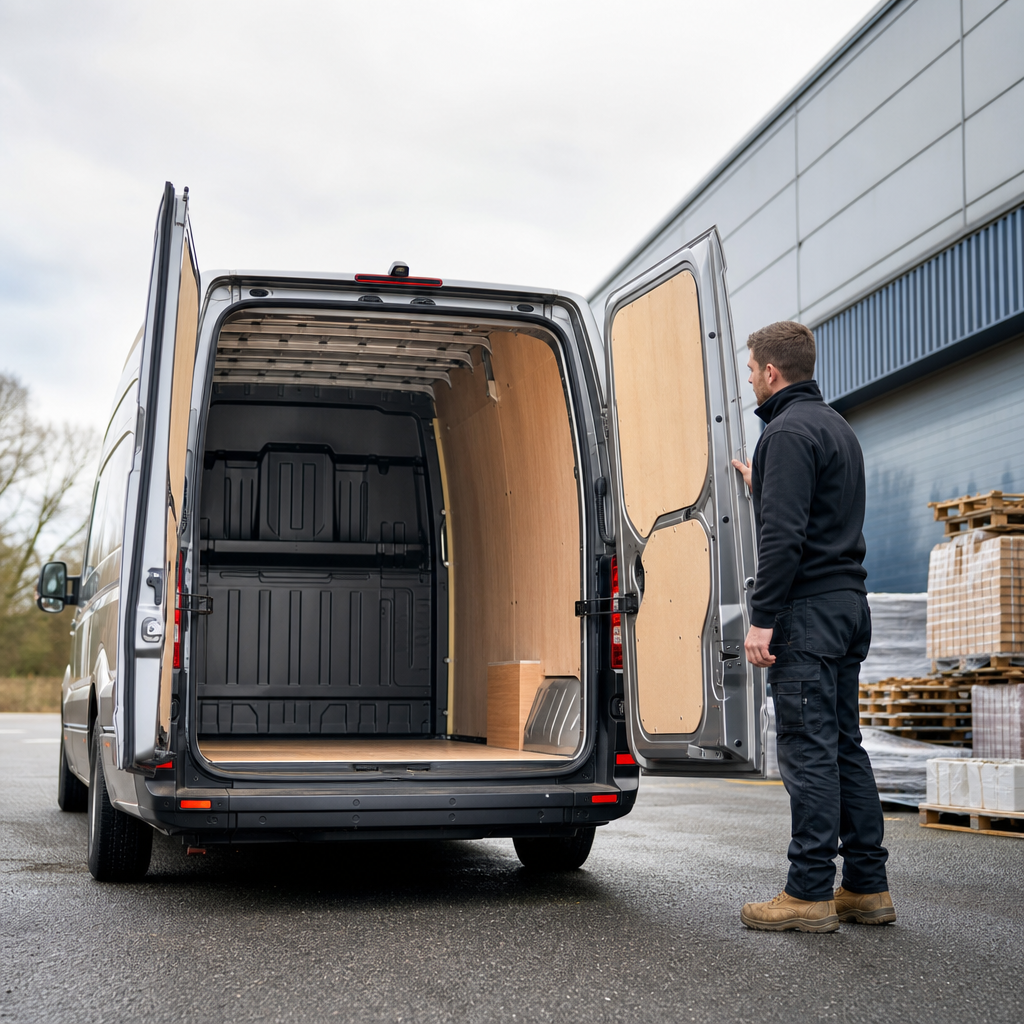
Payload is arguably the most fundamental metric for any commercial vehicle. Simply put, it's the maximum weight your van can legally carry. This isn't just about your tools or goods; it includes the weight of the driver, any passengers, fuel, fluids, and even any aftermarket modifications like ply-lining, racking systems, or roof bars.
Gross Vehicle Weight (GVW) / Maximum Authorised Mass (MAM): Every van has a Maximum Authorised Mass (MAM), also known as Gross Vehicle Weight (GVW), which is the total allowable weight of the vehicle and its load. The payload is calculated by subtracting the van's 'kerb weight' (its weight with a full tank of fuel but no driver or load) from its MAM. This figure is crucial and can typically be found on the van's V5C registration document or on a manufacturer's plate, often located in the driver's door shut or under the bonnet.
The Legal Ramifications of Overloading: Overloading a van is a serious offence in the UK, carrying severe penalties. The Driver and Vehicle Standards Agency (DVSA) conducts roadside checks, and if your van is found to be over its MAM, you could face:
- Hefty fines (starting from £100 and rising significantly for severe overloading).
- Penalty points on your licence.
- An immediate prohibition notice, meaning your vehicle cannot move until the excess load is removed.
- Even vehicle impoundment in extreme cases.
- Crucially, overloading can invalidate your insurance in the event of an accident, leaving you personally liable for damages.
Practical Considerations: When assessing a used van's payload, think realistically about your typical day. A plumber might carry heavy tools, a boiler, copper pipes, and fittings, which quickly adds up. A Ford Transit Custom L1 H1 might offer a payload of around 1,000-1,200kg. If your average loaded weight (including you) frequently exceeds this, you need a higher capacity van. Remember that built-in storage and internal modifications, while practical, eat into your available payload. Always factor these in.
Decoding Towing Capacity: Braked vs. Unbraked
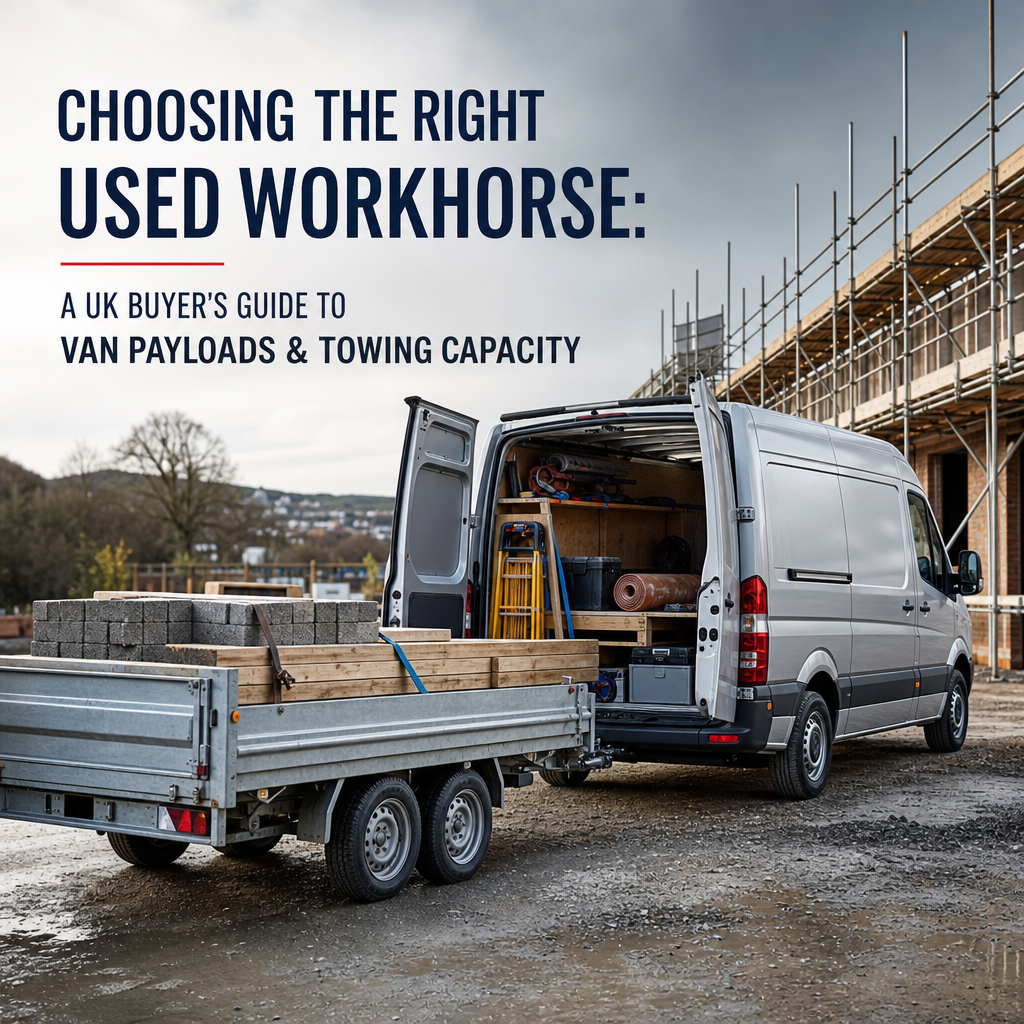
If your business requires hauling trailers – be it for plant machinery, building materials, or even mobile workshops – understanding towing capacity is paramount.
What is Towing Capacity? This is the maximum weight your van can safely tow. It's almost always split into two categories:
- Braked Towing Capacity: This applies to trailers equipped with their own braking system, which is standard on most medium to heavy trailers. This capacity is significantly higher as the trailer's brakes assist in stopping the combined weight.
- Unbraked Towing Capacity: This refers to trailers without their own braking system (e.g., small box trailers, lightweight garden trailers). By law in the UK, unbraked trailers are limited to a maximum weight of 750kg or half the towing vehicle's kerb weight, whichever is lower. Van manufacturers will specify a precise unbraked limit, typically much lower than the braked capacity.
Legal Requirements and Your Licence: Your driving licence category dictates what you can tow.
- If you passed your driving test on or after 1 January 1997, you're generally allowed to drive a van up to 3,500kg MAM and tow a trailer of up to 750kg. For anything heavier, you'll need to pass an additional B+E driving test.
- If you passed before 1 January 1997, you generally have 'grandfather rights' allowing you to drive a vehicle and trailer combination up to 8,250kg MAM, though this is subject to specific conditions and is changing, so it's always best to check current DVLA guidance.
Key Towing Considerations:
- Never Exceed the Limit: Do not assume a van can tow a certain weight just because it has a tow bar. Always verify the specific van's rated towing capacity (found on the VIN plate or V5C).
- Trailer Weight: Remember to factor in the weight of the trailer itself, not just its cargo. A large plant trailer might weigh 800-1,000kg even when empty.
- Nose Weight: The downward force exerted by the trailer coupling on the tow bar is called nose weight. This is important for stability and must be within the manufacturer's specified limits for both the van and the tow bar.
- Total Train Weight: This is the combined MAM of the van and the maximum loaded weight of the trailer. This must not exceed the maximum permissible 'train weight' specified by the van manufacturer.
For example, a large van like a Mercedes Sprinter might boast a braked towing capacity of up to 3,500kg, making it suitable for a digger on a plant trailer. In contrast, a smaller van like a Vauxhall Combo might only safely tow 1,200kg (braked).
Matching Your Van to Your Specific Needs
The key to a successful used van purchase lies in a thorough self-assessment of your operational demands. Don't buy based purely on price or immediate availability.
Assess Your Workflow Realistically:
- What do you actually carry? Are you a lightweight courier delivering parcels, or a builder moving bags of cement, heavy tools, and aggregates?
- How often are your loads heavy? If you only occasionally carry heavy items, you might compromise slightly, but if it's daily, you need robust capacity.
- Do you tow regularly? If so, what is the fully loaded weight of your trailer? Include tools, materials, and machinery.
Calculate Realistic Needs: It's not enough to guess. If possible, weigh your typical loaded goods and equipment. Add your own weight and any regular passengers. This will give you a solid figure for your required payload. Do the same for your trailer.
Future-Proofing: Consider your business's growth. Will you be carrying more or heavier items in a year or two? Investing in a slightly higher capacity now could save you from needing to upgrade sooner.
Van Sizes and Their Capabilities:
- Small Vans (e.g., VW Caddy, Ford Transit Connect): Ideal for urban deliveries, small tools, and lighter loads. Payloads typically 500-800kg, towing often limited to 1,000-1,200kg braked.
- Medium Vans (e.g., Ford Transit Custom, Vauxhall Vivaro): The popular all-rounders for many trades. Offer a great balance of capacity and manoeuvrability. Payloads generally 900-1,450kg, towing usually 1,800-2,800kg braked.
- Large Vans (e.g., Mercedes Sprinter, Ford Transit, VW Crafter): Designed for heavy-duty work, high volume, and substantial payloads. Payloads often 1,000-2,000kg+, towing up to 3,500kg braked.
It's vital to differentiate between payload and volume. A van might have vast cargo space, but a low payload limit if it's built lightly. Conversely, a small van might have a surprisingly high payload for dense, heavy items.
Key Used Van Models Known for Robust Carrying and Towing Abilities
While it's crucial to check the specific variant's plate, some used van models consistently stand out for their robust carrying and towing prowess:
Large Vans (High Payload & Towing Champions):
- Ford Transit: The UK's evergreen workhorse. Available in countless configurations (panel van, chassis cab, dropside), offering payloads often exceeding 1,500kg and braked towing capacities up to 3,500kg for certain models. Highly versatile and durable.
- Mercedes-Benz Sprinter: Known for its premium build quality, comfortable cab, and strong engines. Sprinters are highly capable, with payloads and towing figures often rivalling the Transit, making them popular for heavy haulage and conversions.
- Volkswagen Crafter / MAN TGE: These two vans share a platform and offer a refined driving experience combined with serious capabilities. Strong engines and robust chassis make them excellent choices for demanding jobs.
- Fiat Ducato / Peugeot Boxer / Citroën Relay: These triplets (and their previous Vauxhall Movano counterpart) are often competitively priced in the used market and excel in offering high volume and impressive payloads for their segment.
Medium Vans (Excellent All-Rounders):
- Ford Transit Custom: The UK's best-selling van for good reason. It blends car-like driving dynamics with impressive practicality, offering payloads typically between 1,000kg and 1,450kg, and braked towing capacities often up to 2,800kg.
- Vauxhall Vivaro / Renault Trafic / Nissan NV300: These vans (which have shared platforms over various generations) are solid, dependable choices. They offer payloads in the 1,000kg to 1,200kg range and braked towing capabilities often between 1,800kg and 2,500kg.
Remember, even within a specific model range, there can be significant variations in capacity based on wheelbase, roof height, engine choice, and specific chassis configurations. Always verify the exact model's specifications.
Used Van Health Check: Spotting Overloading Stress
A van that has been consistently pushed beyond its limits will inevitably show signs of stress and premature wear. When inspecting a used van, especially one intended for heavy work, a keen eye for these red flags can save you significant repair bills down the line.
What to Look For:
- Suspension:
- Sagging: Even when empty, a van that has been overloaded might sit noticeably lower at the rear.
- Worn Components: Inspect shock absorbers for leaks. Look for cracked or flattened leaf springs (common on heavier vans) and worn suspension bushes. Uneven tyre wear patterns can also indicate suspension issues.
- Brakes: Overloading puts immense strain on a van's braking system.
- Excessive Wear: Check brake discs for deep scoring or lipping on the edges. Brake pads should have plenty of material left.
- Performance: A soft brake pedal or juddering during a test drive could suggest warped discs or worn components.
- Tyres:
- Load Rating: Crucially, check the load index (a two or three-digit number followed by a letter, e.g., 104/102T) on the tyre sidewall. This indicates the maximum load each tyre can carry. Ensure it meets or exceeds the van's requirements.
- Wear Patterns: Uneven wear (e.g., more wear in the centre from over-inflation, or on the edges from under-inflation when heavily loaded) is a warning sign.
- Cracks/Bulges: Any cracks or bulges in the sidewalls suggest severe stress or damage.
- Chassis and Bodywork:
- Stress Cracks: Look for fine cracks or distortions around load-bearing areas, particularly near the rear axles, around the chassis rails, or where the load floor meets the side panels. Check the integrity of the towing hitch attachment points.
- Load Floor: A warped or damaged load floor can indicate heavy impacts or consistent overloading.
- Engine and Gearbox: While general wear and tear contribute, overloading exacerbates issues. Listen for excessive engine strain, particularly under acceleration. Test the clutch for slipping in manual vans. Overheating or excessive fluid leaks could also be aggravated by heavy use.
- Towing Hitch: If fitted, inspect the tow bar for any signs of bending, excessive rust, or damage to its mounting points, indicating heavy or improper towing.
Service History: A full, well-documented service history is invaluable. Look for records of frequent brake or suspension component replacements, which might hint at a life of hard labour or overloading. A pre-purchase inspection by an independent mechanic is always a wise investment. Remember, a van with high motorway mileage can often be in better mechanical shape than a lower-mileage van that has consistently carried maximum loads in stop-start urban traffic.
Conclusion
Choosing the right used van isn't just about finding a good deal; it's about investing in a safe, efficient, and legally compliant tool for your business. By thoroughly understanding payload and towing capacities, assessing your specific needs, and knowing what signs of wear to look for, you can make an informed decision that will serve you well for years to come.
Don't compromise on capacity. Take the time to do your homework, inspect thoroughly, and match your requirements precisely. Your business, your safety, and your wallet will thank you. Start your search for the perfect capable workhorse today on CarsLink.ai.