Braking Point: Essential Checks & Maintenance for Your Used UK Van's Braking System
Your van is more than just a vehicle; it’s a vital tool for your business, a mobile workshop, or the backbone of your daily operations. Whether it’s a nimble Ford Transit Connect, a sturdy Vauxhall Vivaro, or a behemoth Mercedes Sprinter, it works tirelessly, often under considerable strain. While engine health and payload capacity often take centre stage, there’s one critical system that deserves meticulous attention: your brakes. They are, quite simply, your primary safety feature, responsible for bringing hundreds, if not thousands, of kilograms of metal, cargo, and sometimes even passengers, to a safe halt.
For used vans, the importance of a robust braking system is even more pronounced. Previous life and unknown maintenance history can mean hidden wear and tear. This comprehensive guide from CarsLink.ai will equip you with the knowledge to recognise potential issues, perform crucial DIY checks, and understand when professional intervention is necessary, ensuring your van remains safe, reliable, and compliant on the UK's roads.
1. Recognising the Warning Signs: Your Van's Brake SOS
Your van's braking system is surprisingly communicative when something isn't quite right. Learning to interpret these signals can prevent minor issues from escalating into dangerous and costly repairs.
Noises:
- Squealing: Often the first audible warning sign, a high-pitched squeal when braking, particularly at low speeds, usually indicates your brake pad wear indicators doing their job. These small metal tabs are designed to rub against the disc when the pads are worn down to a critical level, prompting you to get them checked. Ignoring this can lead to far more serious problems.
- Grinding: A much more ominous sound. If you hear a harsh, metallic grinding noise when you press the pedal, it typically means the brake pads are completely worn away, and the metal backing plates are now scraping directly against the brake discs. This causes rapid damage to the discs and severely compromises braking performance.
- Clicking/Clunking: Less common, but can indicate loose brake callipers, worn calliper pins, or issues with the mounting hardware. It might be noticeable when you first apply or release the brakes.
Vibrations:
- Pulsating Pedal/Steering Wheel: If you feel a pulsation or vibration through the brake pedal or the steering wheel when braking, it's often a sign of warped brake discs. This happens when discs overheat unevenly, causing their surface to become non-uniform. The brake pads then hit these uneven surfaces, leading to the vibrating sensation. It's particularly noticeable at higher speeds.
- Pulling to one side: If your van consistently pulls to one side when you brake, it suggests an imbalance in the braking force. This could be due to a seized calliper on one side, unevenly worn pads, or a faulty brake hose preventing proper fluid flow.
Dashboard Lights:
- Brake Warning Light (often an exclamation mark inside a circle, or "BRAKE"): This is a critical indicator. It can signal low brake fluid, an engaged handbrake (check this first!), or a more serious fault within the braking system. Do not ignore this light; pull over safely and investigate.
- ABS Light (Anti-lock Braking System): If this light illuminates, it means there's a fault with your van's ABS. While your regular brakes should still function, the anti-lock feature, which helps prevent wheel lock-up during harsh braking, will be disabled. This reduces your van's safety margin, especially in adverse conditions.
Performance Issues: A spongy brake pedal that feels like it’s sinking to the floor, or a noticeable increase in stopping distance, are unequivocal signs that your brakes require immediate professional attention.
2. DIY Brake Checks: Getting Hands-On with Your Van's Stopping Power
While professional servicing is essential, there are several visual checks you can perform yourself to monitor your van's braking health. Always ensure your van is parked on a level surface, the handbrake is engaged, and for wheel removal, use appropriate axle stands for safety.
1. Inspecting Brake Pads:
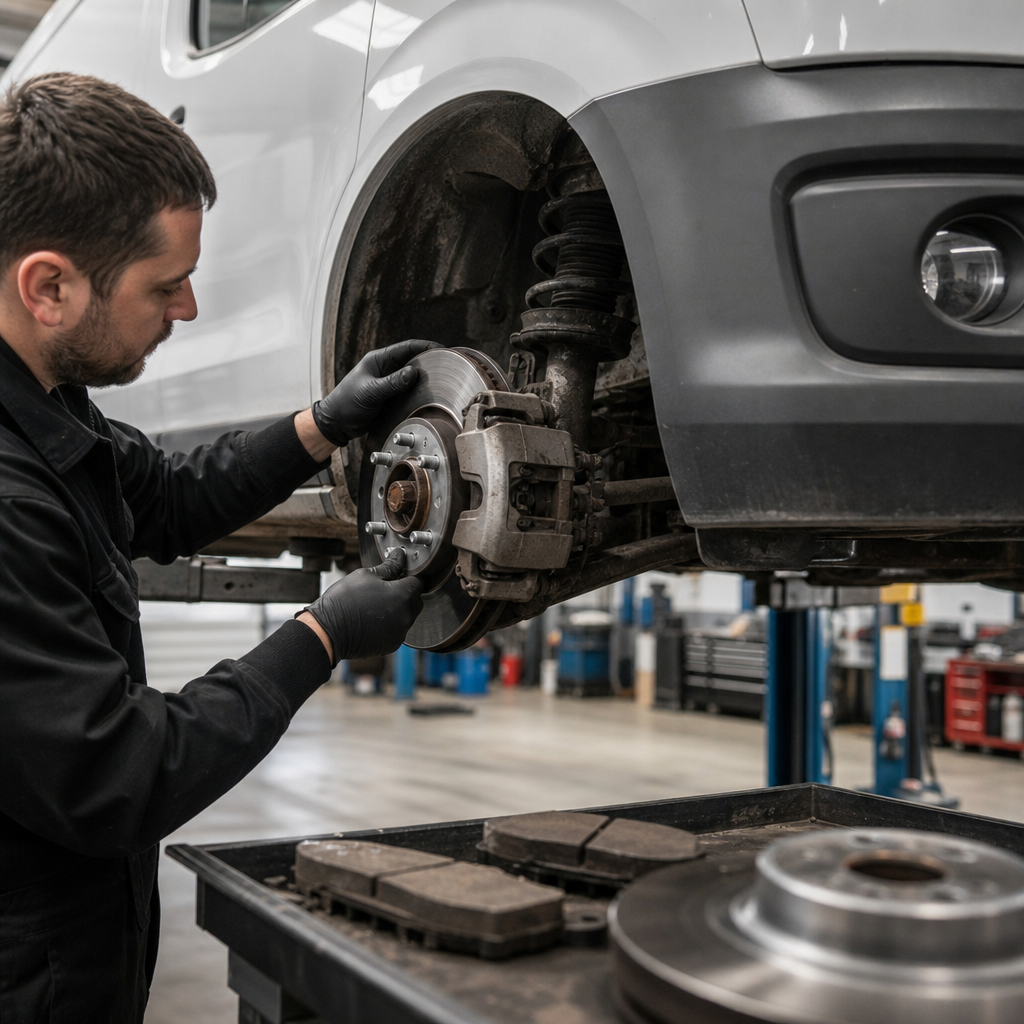
- Visual Check: For most vans, you can often get a decent view of the outer brake pad by looking through the wheel spokes. If not, you'll need to jack up the van safely and remove the wheel.
- Thickness: Look at the thickness of the friction material on the pad. Generally, if the material is less than 3-4mm thick (roughly the thickness of a 20p coin), it’s time for replacement. Compare it to the thickness of the metal backing plate; if it’s thinner, it’s likely worn.
- Even Wear: Check for uneven wear across the pad or between pads on the same axle. Uneven wear can indicate a sticking calliper, which needs addressing.
2. Inspecting Brake Discs:
- Surface Condition: Examine the disc surface for deep grooves, scoring, or cracks. A healthy disc should be relatively smooth. Deep scores, like those made by a record player needle, suggest severe pad wear or foreign objects have damaged the disc.
- Lip on the Edge: Feel the outer edge of the disc. If there’s a noticeable lip (a raised edge), it indicates significant wear, and the disc may be approaching its minimum thickness limit.
- Discolouration: Look for blue or purple discolouration on the disc, which is a sign of severe overheating. This can lead to disc warping and reduced braking efficiency.
3. Checking Brake Fluid Levels:
- Locate Reservoir: The brake fluid reservoir is typically a small, translucent plastic container located under the bonnet, often near the driver's side bulkhead. It will have "MAX" and "MIN" markings.
- Check Level: The fluid level should always be between these two marks. A low level can indicate a leak in the system, or, more commonly, that your brake pads are severely worn. As pads wear, the callipers extend further, drawing more fluid into the lines, thus lowering the level in the reservoir.
- Fluid Colour: While checking the level, take note of the fluid colour. Fresh brake fluid is typically clear or light amber. If it looks dark brown or black, it's old and contaminated, and due for a change.
3. The Professional Touch: Servicing, Replacement & Longevity
While DIY checks are invaluable for ongoing monitoring, regular professional servicing is non-negotiable for the long-term health and safety of your van's braking system.
Why Professional Servicing? Mechanics have specialised tools and expertise to conduct a thorough inspection beyond what’s visible to the naked eye. They can:
- Dismantle and Inspect: Remove wheels, callipers, and pads for a detailed examination of all components.
- Lubricate Components: Ensure calliper slides and pins are well-lubricated to prevent seizing, which can lead to uneven wear and reduced braking performance.
- Check Hoses and Lines: Inspect brake hoses for cracks, bulges, or leaks, and metal brake lines for corrosion.
- Test Master Cylinder and ABS: Diagnose issues with the master cylinder, which generates hydraulic pressure, and the anti-lock braking system.
- Bleed Brakes: Remove air from the hydraulic lines, which can cause a spongy pedal.
When to Replace Components:
- Brake Pads: The lifespan of brake pads varies wildly depending on your van's make, model, how heavily it's loaded, and your driving style. For a heavily used UK van, you might expect pads to last anywhere from 20,000 to 40,000 miles. A high-mileage delivery van constantly in stop-start traffic, for instance, will wear through pads much faster than a van used primarily for longer motorway journeys.
- Brake Discs: Discs typically last longer than pads, often needing replacement every second pad change, or when they are significantly worn, scored, or warped. Manufacturers specify a minimum thickness; once exceeded, they must be replaced.
- Brake Hoses: These flexible hoses degrade over time and should be inspected regularly and typically replaced every 5-7 years, or immediately if any signs of cracking or bulging are present.
Remember, brakes are a critical part of your van's MOT test. Failing to maintain them will result in a failed inspection, leading to costly retests and downtime.
4. The Lifeblood of Your Brakes: Understanding Brake Fluid
Often overlooked, brake fluid is arguably the most crucial component of your van's hydraulic braking system. It's the medium that transmits the force from your foot on the pedal to the brake callipers, pressing the pads against the discs.
Why is it so crucial? Brake fluid is specially formulated to be non-compressible and to have an extremely high boiling point. This high boiling point is vital because braking generates immense heat. If the fluid boils, it turns into gas bubbles, which are compressible. When you press the pedal, you’re then compressing gas rather than moving fluid, resulting in a dangerously spongy pedal and a dramatic loss of braking power – a phenomenon known as "vapour lock." Imagine descending a steep hill with a heavy load; old, contaminated fluid could easily boil, leaving you with little to no braking.
When does it need changing? Brake fluid is hygroscopic, meaning it readily absorbs moisture from the atmosphere through the brake hoses and seals. Over time, this absorbed water significantly lowers the fluid's boiling point. Even worse, water in the system can lead to internal corrosion of vital brake components.
For these reasons, brake fluid should be changed proactively, typically every two years, regardless of mileage. This relatively inexpensive service is a small price to pay for maintaining optimal braking performance and preventing premature failure or corrosion of expensive ABS pumps and callipers. Always ensure your mechanic uses the correct DOT specification fluid for your van (e.g., DOT 4 or DOT 5.1).
5. Heavy Loads & Towing: Extra Stress, Extra Care
If your used van frequently carries heavy loads or tows a trailer, its braking system is under significantly more stress than a lightly-laden vehicle. This demanding usage requires even more vigilant maintenance and a thoughtful driving approach.
Increased Wear and Tear: More weight means more kinetic energy has to be dissipated as heat during braking. This leads to higher temperatures in the pads and discs, causing them to wear down much faster. The harder they work, the quicker they degrade. A Mercedes Sprinter regularly towing a heavy plant trailer, for example, will put substantially more strain on its braking system than the same van making light deliveries around town, meaning its pads and discs will need checking and replacing more frequently.
Impact on Performance:
- Longer Stopping Distances: Simply put, more weight takes longer to stop. Even with a perfectly functioning braking system, your stopping distances will increase significantly.
- Brake Fade: Prolonged heavy braking, especially on descents, can cause the brakes to overheat excessively. This leads to "brake fade," a temporary but dangerous reduction in braking power, where the pedal feels hard but the van isn't slowing down effectively.
What You Can Do:
- Anticipate Braking: Look further ahead and anticipate traffic. Gently releasing the accelerator earlier allows for engine braking and less reliance on the friction brakes.
- Gear Down: On long descents, downshift your gears to use engine braking. This dramatically reduces the workload on your friction brakes and prevents overheating.
- Frequent Checks: If you regularly carry heavy loads, inspect your brake pads and discs more often than recommended for standard use. Don't wait for the warning signs.
- Consider Upgrades: For consistently heavy-duty applications, some vans can benefit from upgraded, heavy-duty brake pads or discs that are designed to withstand higher temperatures and provide better wear resistance. Discuss this option with a specialist.
- Maintain Trailer Brakes: If you tow, ensure your trailer's braking system (if equipped) is in perfect working order. This significantly reduces the load on your van's brakes.
Conclusion
Your used van is an investment, and its braking system is an investment in safety. By understanding the warning signs, performing regular DIY checks, adhering to professional servicing schedules, keeping an eye on your brake fluid, and acknowledging the demands of heavy loads, you can ensure your van remains a dependable workhorse on UK roads. Neglecting your brakes isn't just a financial risk; it's a direct threat to your safety and the safety of others. Stay vigilant, stay safe, and keep your van stopping as reliably as it starts.
Looking for your next reliable workhorse? Browse our extensive range of used vans right here on CarsLink.ai!