Beyond the Gimmick: Assessing Battery Health in Used Electric Vehicles for UK Buyers
The UK's roads are seeing an ever-increasing number of electric vehicles (EVs), and with this surge comes a thriving used EV market. Offering impressive savings, lower running costs, and a greener footprint, a second-hand EV can be a fantastic purchase. However, for many prospective buyers, one looming question often overshadows the excitement: "What about the battery?" Concerns about battery degradation, replacement costs, and true remaining range are perfectly understandable.
Fear not. While the battery is undoubtedly the most critical component of an EV, assessing its health is far from a dark art. With the right knowledge and tools, you can confidently evaluate a used EV's battery condition, ensuring you make an informed decision and drive away with peace of mind. At CarsLink.ai, we're here to guide you through demystifying EV battery health.
Understanding 'State of Health' (SoH) and Typical Battery Degradation
At the heart of battery assessment is the concept of State of Health (SoH). Simply put, SoH represents the usable capacity remaining in an EV battery relative to its original design capacity when new. A brand-new battery has an SoH of 100%. Over time, through cycles of charging and discharging, and influenced by various environmental and usage factors, this capacity will gradually diminish. This process, known as degradation, is entirely normal and expected; it’s not a fault, but a characteristic of lithium-ion battery technology.
For a used EV, understanding its SoH is crucial as it directly impacts the vehicle's real-world range. A car with 80% SoH will have approximately 80% of its original maximum range.
So, what's considered typical? Most modern EV batteries are remarkably durable, often engineered to outlast the rest of the car. For many popular EVs in the UK, such as the Tesla Model 3/Y, Hyundai Kona Electric, Kia e-Niro, and VW ID.3, which feature sophisticated active thermal management systems (liquid cooling and heating for the battery pack), degradation rates are generally very low. It's not uncommon to see these vehicles retain 90% or more SoH after 5-7 years and 80,000 miles.
Older models, particularly the early generations of the Nissan Leaf (pre-2018), used passive air-cooling for their battery packs. While still reliable, these often exhibit higher degradation, especially if subjected to frequent rapid charging in warmer climates. Even so, many first-generation Leafs from 2013-2017 are still on the road with 70-80% SoH, providing perfectly adequate range for city driving or shorter commutes. Similarly, the Renault Zoe, particularly the earlier R240 and Q210 models, also saw varied degradation depending on usage, but newer models with active cooling have fared much better.
A general rule of thumb is that an SoH of 70% or above after 8-10 years is often considered good, and most manufacturers provide a warranty against degradation falling below a certain threshold (usually 70%) within a specified period or mileage.
Tools and Diagnostic Services for True Battery Condition
While you can usually find the estimated range displayed on an EV's dashboard, this rarely provides a precise SoH percentage. To get a clearer picture of a battery's true condition, you'll need to delve a little deeper.
Onboard Displays (Limited Information): Some newer EVs will display an approximate SoH percentage within their infotainment system's menus, but this is still not universal. The main dashboard typically shows the remaining range, which is dynamically calculated based on recent driving history and ambient temperature – useful for day-to-day driving but not a definitive battery health indicator.
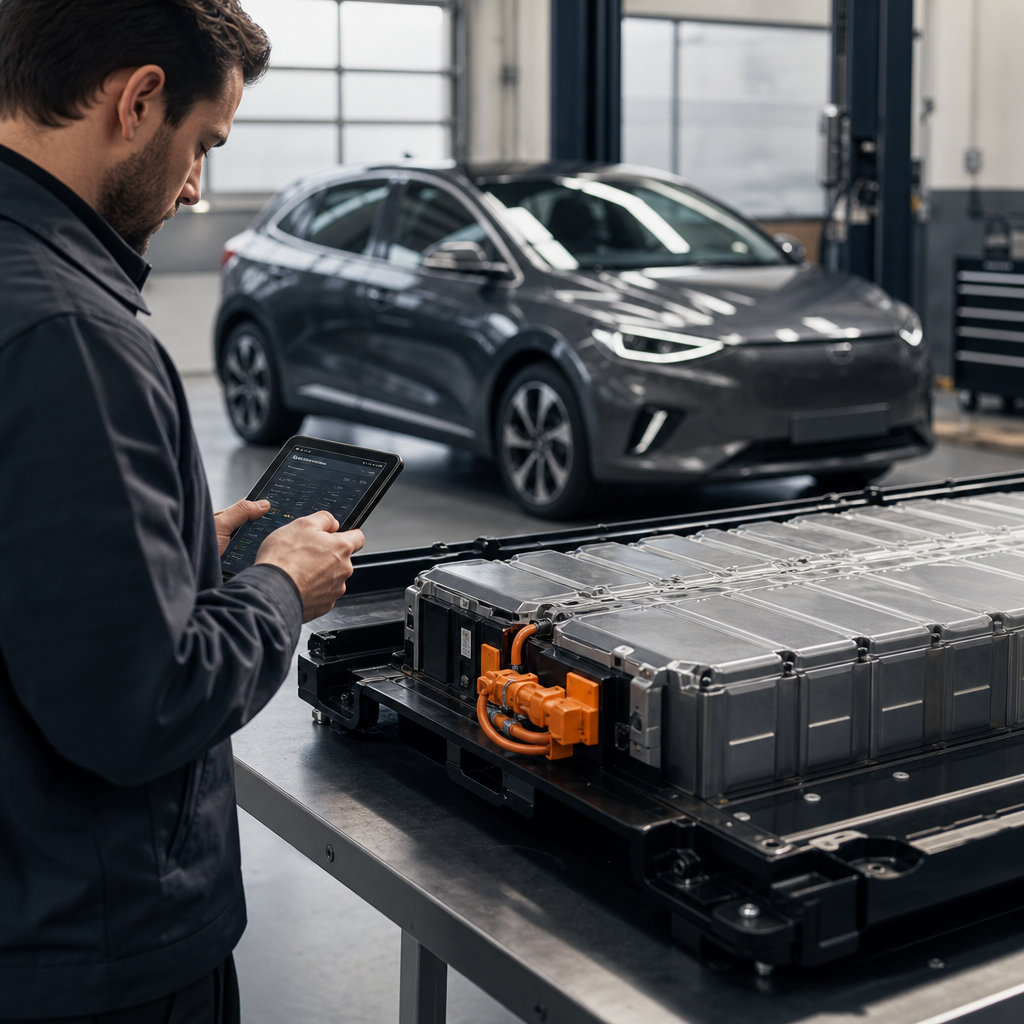
OBD-II Dongles and Apps: This is a popular and relatively inexpensive method for independent assessment. You can purchase a generic Bluetooth OBD-II (On-Board Diagnostics) dongle that plugs into the car's diagnostic port (usually found under the dashboard). Paired with a compatible smartphone app, these tools can read a wealth of information directly from the car's computer, including, crucially, the battery's SoH.
- Nissan Leaf: "Leaf Spy Pro" is the gold standard for Leaf owners, providing detailed SoH, battery temperature, cell voltages, and more.
- Other EVs: Apps like "Car Scanner ELM OBD2" or "Torque Pro" (for Android) can often retrieve battery data for a wide range of EVs, though the level of detail varies by manufacturer and model.
- Caveat: While these tools provide valuable insights, their accuracy can vary, and they require some interpretation. They are best used as a strong indicator rather than a definitive, certified report.
Manufacturer Diagnostic Services: For the most accurate and definitive assessment, taking the car to a franchised dealer is highly recommended. Most manufacturers offer a dedicated "battery health check" service, often for a nominal fee. During this service, the dealer will connect specialised diagnostic equipment to the car, which can read the battery's SoH with precision. Some manufacturers, such as Nissan, also offer a formal "battery health certificate" or report based on this diagnostic, which can be invaluable for a used car purchase.
Specialist Independent Garages: As the EV market matures, a growing network of independent garages specialising in EVs is emerging across the UK. Many of these specialists are equipped with manufacturer-level diagnostic tools and expertise to provide comprehensive battery health assessments, often at a competitive price compared to a main dealer.
Warranty Implications for Used EV Batteries
One of the strongest arguments for buying a used EV, particularly one that's a few years old, is the robust manufacturer battery warranty that often accompanies it. This warranty is a critical safety net for buyers, providing protection against significant battery degradation.
Most EV manufacturers offer a separate, long-term warranty specifically for the high-voltage battery pack. This typically covers 8 years or 100,000 miles (or 160,000 kilometres), whichever comes first. Crucially, this warranty usually guarantees that the battery will retain at least 70% of its original capacity (SoH) within that period. If the battery degrades below this threshold prematurely, the manufacturer is obliged to repair or replace it at no cost to the owner.
Key points for used EV buyers:
- Transferability: The vast majority of these manufacturer battery warranties transfer automatically to subsequent owners, meaning you, as the second or third owner, are still covered. Always double-check this for peace of mind, but it’s standard practice.
- What it covers: The warranty covers battery defects and degradation below the specified SoH threshold. It does not cover damage caused by accidents, misuse, or unauthorised modifications.
- Examples:
- Tesla: 8 years/100,000-150,000 miles (depending on model/battery size) for 70% retention.
- Nissan: 8 years/100,000 miles guaranteeing 9 out of 12 "bars" of capacity on the dashboard display (roughly equivalent to 70% SoH).
- Hyundai/Kia: 8 years/100,000 miles for 70% retention.
- VW/Audi/Skoda: 8 years/100,000 miles for 70% retention.
Before purchasing, always ask to see the car's service history and, if possible, verify the warranty status with a franchised dealer using the vehicle's VIN (Vehicle Identification Number). This step can save you considerable anxiety and potential costs down the line.
Factors That Influence Battery Longevity
While battery degradation is inevitable, several factors can influence the rate at which it occurs. Understanding these can help you evaluate a used EV's past life and predict its future performance.
Charging Habits:
- Frequent DC Rapid Charging: While convenient, frequent use of DC rapid chargers (especially above 50kW) can generate more heat and put greater strain on the battery compared to slower AC home charging. While modern EVs are designed to manage this, a car that has spent its life solely rapid charging might show slightly more degradation.
- Charging to 100% vs. 80-90%: For daily use, it's generally recommended to charge lithium-ion batteries to around 80-90%. Regularly charging to 100% and letting the car sit for extended periods at that state of charge (particularly for older battery chemistries or LFP cells) can cause additional stress. Conversely, frequently allowing the battery to drop below 20% (deep discharges) can also be detrimental. A well-cared-for battery will have spent most of its life within the 20-80% charge window.
Environmental Conditions:
- Extreme Heat: Batteries degrade faster in very hot climates. While the UK's temperate climate generally mitigates this risk, prolonged summer heatwaves or cars imported from hotter regions could have seen accelerated degradation.
- Extreme Cold: While cold weather temporarily reduces an EV's range and charging speed, it generally has less long-term impact on battery degradation than heat.
Driving Style: Aggressive driving (hard acceleration and braking) leads to greater temperature fluctuations within the battery. While typically a minor factor compared to charging habits and thermal management, consistently spirited driving can contribute to slightly faster degradation.
Battery Thermal Management System: This is arguably one of the most significant factors.
- Active Cooling/Heating: EVs with sophisticated liquid-cooled and heated battery packs (e.g., Tesla, Hyundai, Kia, VW, most newer Renault Zoe models) are much better at maintaining optimal operating temperatures. This translates to significantly slower degradation rates and better performance in varied conditions.
- Passive Cooling: Older Nissan Leaf models primarily relied on passive air-cooling. While sufficient for many, this design made them more susceptible to degradation, especially with frequent rapid charging in warmer weather. This difference is why you often see more varied SoH readings in the used Leaf market compared to, say, a used Kona Electric of similar age.
Conclusion
Purchasing a used electric vehicle is a smart, sustainable, and increasingly popular choice. While concerns about battery health are valid, they should not be a deterrent. By understanding what 'State of Health' means, utilising available diagnostic tools and professional services, and knowing your warranty entitlements, you can approach the used EV market with confidence.
Remember to leverage OBD-II tools, ask for full service histories, and don't hesitate to request a manufacturer battery health check. With strong warranties providing long-term peace of mind and modern EV batteries proving incredibly robust, a well-chosen used electric car offers fantastic value and a greener way to drive. At CarsLink.ai, we encourage you to look beyond the perceived gimmick and discover the enduring quality of a pre-loved EV.