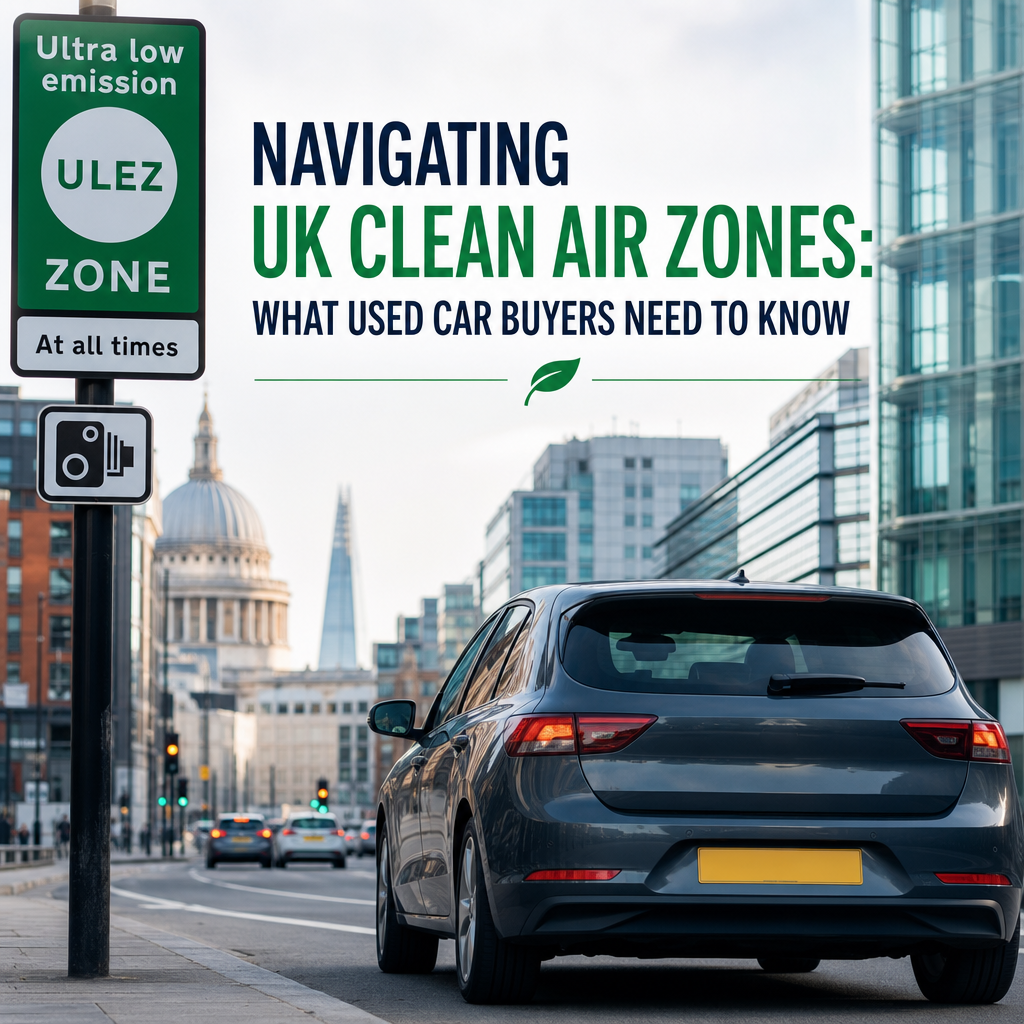
Navigating UK Clean Air Zones: What Used Car Buyers Need to Know
The landscape of driving in the UK is continually evolving, particularly concerning environmental regulations. For anyone in the market for a used car, understanding Clean Air Zones (CAZs) and London's Ultra Low Emission Zone (ULEZ) isn't just a recommendation – it's an absolute necessity. These zones, designed to tackle air pollution, can significantly impact your driving costs and choices. At CarsLink.ai, we believe informed buyers are happy buyers, so let's cut through the jargon and explain what you need to know before your next used car purchase.
Understanding UK Clean Air Zones (CAZs) and ULEZ
At their core, Clean Air Zones are designated areas in UK towns and cities where drivers of older, more polluting vehicles are charged a daily fee to enter or drive within the zone. The overarching goal is simple: improve air quality by discouraging the use of vehicles that emit higher levels of nitrogen dioxide (NO2) and particulate matter, which are harmful to public health.
While the principle is consistent, the specifics can vary:
- Charging CAZs: These are the most relevant for private car owners. They come in different classes (A, B, C, D), with D being the most stringent, typically applying to buses, coaches, taxis, HGVs, vans, and sometimes private cars. Most CAZs that affect private cars fall under Class C or D.
- London's Ultra Low Emission Zone (ULEZ): While similar in principle, ULEZ is distinct to London and operates under specific Transport for London (TfL) rules. It's often cited as the blueprint for other zones due to its broader reach and impact.
- Low Emission Zones (LEZ): Primarily found in Scotland (Glasgow, Edinburgh, Dundee, Aberdeen), these also aim to restrict polluting vehicles. For private cars, enforcement in cities like Glasgow and Edinburgh began in June 2024.
The common thread across all these zones is their focus on vehicle Euro emission standards. Generally, compliant vehicles for private cars are Euro 4 for petrol models (typically registered from 2006 onwards) and Euro 6 for diesel models (typically registered from September 2015 onwards). However, always verify, as registration dates are just a guide.
Key Cities and Their Emission Standards
Several UK cities have active CAZs or LEZs that private car owners need to be aware of. While the emission standards for compliance are broadly similar, the operating hours, charges, and exact geographical boundaries differ.
- London ULEZ: This zone was significantly expanded in August 2023 to cover all London boroughs. Non-compliant cars face a daily charge of £12.50. You need a Euro 4 petrol or Euro 6 diesel vehicle to avoid the charge.
- Birmingham Clean Air Zone (CAZ): Operating 24/7, 365 days a year, this Class D zone charges non-compliant cars £8 per day. Like London, it requires Euro 4 petrol or Euro 6 diesel.
- Bristol Clean Air Zone (CAZ): A Class C zone, it also operates 24/7 and charges non-compliant vehicles £9 per day. Standards are Euro 4 petrol or Euro 6 diesel.
- Newcastle/Gateshead (Tyne and Wear CAZ): This Class C zone, located across central Newcastle and Gateshead, charges non-compliant taxis, buses, coaches, and HGVs. Private cars are not currently charged, but it's crucial to be aware the zone exists and rules can change.
- Sheffield Clean Air Zone (CAZ): This Class C zone, covering the city centre, applies charges to the most polluting taxis, vans, buses, coaches, and lorries. As with Newcastle/Gateshead, private cars are currently exempt from charges.
- Bradford Clean Air Zone (CAZ): A Class C zone, it charges non-compliant HGVs, buses, coaches, vans, and private hire vehicles. Private cars are also currently exempt from charges here.
- Glasgow Low Emission Zone (LEZ): Enforced for private cars from June 2024, the Glasgow LEZ covers the city centre. Non-compliant vehicles (Euro 4 petrol, Euro 6 diesel are compliant) will be issued a penalty charge.
- Edinburgh Low Emission Zone (LEZ): Also enforced for private cars from June 2024, the Edinburgh LEZ covers the city centre. Non-compliant vehicles will face penalty charges.
It's vital to remember that "exempt" or "not charged" for private cars in some zones doesn't mean they don't exist. Always verify the latest information for any city you plan to drive in, as regulations can and do evolve.
Checking Your Vehicle's Compliance Before You Buy
This is arguably the most critical step for any used car buyer. Never assume a vehicle is compliant based on its age or appearance alone. Always, always check.
- The Official Government Checker: Your first port of call should always be the official government website: www.gov.uk/check-clean-air-zone-charges. Simply enter the vehicle's registration number, and the system will tell you if it's subject to charges in any UK CAZ or ULEZ. This is the definitive answer and should be trusted above all else.
- V5C Logbook: While the government checker is superior, your V5C registration document (logbook) can provide clues. Look for the Euro emission standard, often noted in section D.2 or D.5, or infer it from the CO2 and NOx emissions figures. However, these figures don't always directly correlate with the exact Euro standard as easily as the official checker.
- Vehicle Manufacturer: If you're struggling to find information, contacting the vehicle's manufacturer with the VIN (Vehicle Identification Number) can sometimes provide the definitive Euro standard, especially for older imports or specialist vehicles.
- Ask the Seller/Dealership: While a reputable dealer or private seller should be transparent about a vehicle's compliance, always perform your own independent check using the government website. It's your responsibility to verify.
A quick check can save you hundreds, if not thousands, in unexpected charges or the hassle of trying to resell a non-compliant vehicle later down the line.
Smart Strategies for Used Car Buyers
With CAZs and LEZs becoming a permanent fixture, adopting a strategic approach to buying a used car is essential.
- Prioritise Compliant Vehicles: If you live in or regularly travel to cities with CAZs/LEZs, making a compliant vehicle your priority is a no-brainer. Focus your search on petrol cars typically registered from 2006 onwards (Euro 4) or diesel cars registered from September 2015 onwards (Euro 6). This widens your options for city travel without incurring daily charges.
- Future-Proof Your Purchase: Regulations can tighten. While a Euro 4 petrol or Euro 6 diesel might be compliant today, it's wise to consider something even newer if your budget allows. For instance, opting for a Euro 6 petrol or a newer diesel will give you more longevity against potential future tightening of standards. Electric vehicles (EVs) and many plug-in hybrids are currently exempt from all CAZ/ULEZ charges, offering ultimate peace of mind in this regard.
- Evaluate Your Driving Habits Honestly: If you rarely, if ever, venture into a CAZ city, a non-compliant vehicle might still be a viable, and potentially cheaper, option. However, factor in the cost of an occasional charge (£8-£12.50 per day) if plans change, or the potential resale difficulty if you move to a CAZ area.
- Factor in Potential Costs: A few trips a month into a CAZ with a non-compliant car can quickly add up. For example, 5 trips into London's ULEZ with a non-compliant vehicle would cost £62.50 in charges alone, equivalent to a monthly payment on some finance deals. Factor these 'running costs' into your budget alongside fuel, insurance, and tax.
- Understand Exemptions and Discounts: Some zones offer temporary or permanent exemptions for specific vehicle types (e.g., historic vehicles over 40 years old, emergency vehicles) or for specific users (e.g., disabled drivers, residents in certain zones for a limited period). Always check the specific council's website for details, as these are highly localised and often temporary.
Staying Informed and Finding Support
The world of CAZs is dynamic, with new zones being introduced, boundaries expanding, and regulations evolving. Staying informed is key to avoiding future surprises.
- Official Government and Council Websites: The most reliable source of information is always the official government website (www.gov.uk/clean-air-zones) and the specific city council websites (e.g., TfL for London ULEZ, Birmingham City Council for its CAZ). These sites provide maps, charge details, and the latest updates.
- CarsLink.ai Blog and Resources: We're committed to keeping our buyers informed. Keep an eye on our blog for the latest news, guides, and practical advice on navigating the UK automotive landscape, including CAZs.
- Automotive News Outlets: Major automotive publications and news channels often report on proposed changes or new zones well in advance, giving you time to prepare.
- Reputable Dealerships: Trustworthy used car dealerships should be knowledgeable about CAZ compliance for the vehicles they sell. Don't hesitate to ask them specific questions.
- Sign Up for Alerts: Some local councils offer email newsletters or alert services that can keep you updated on any changes to their CAZ or LEZ.
Conclusion
Navigating the UK's Clean Air Zones might seem complex initially, but with a bit of research and diligence, you can make an informed used car purchase that avoids unexpected charges and future headaches. By understanding the purpose of these zones, knowing the emission standards, checking compliance diligently, and adopting smart buying strategies, you'll be well-equipped to find the perfect used car that fits your needs, budget, and travels, both today and tomorrow. Happy hunting from the team at CarsLink.ai!