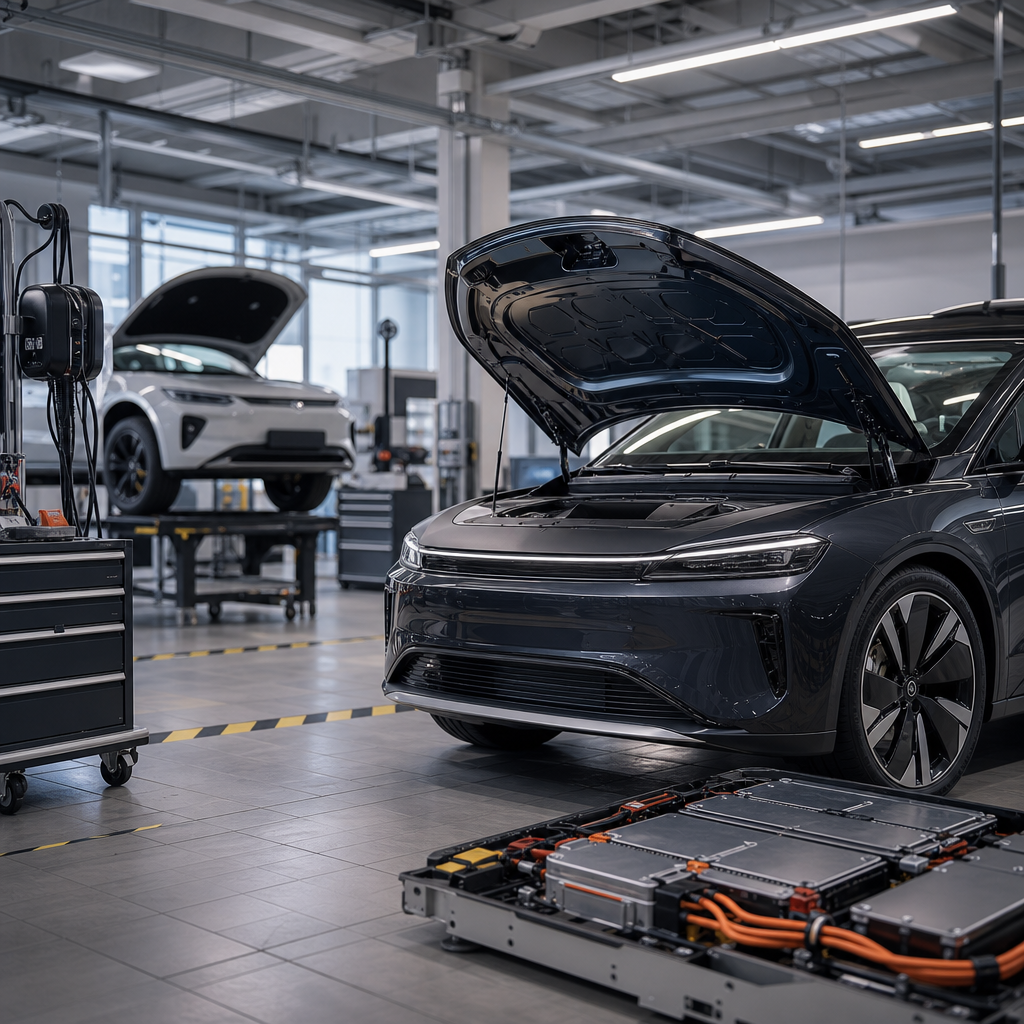
Future-Proofing Your Workshop: Adapting UK Dealerships for EV Servicing & Repair
The electric vehicle (EV) revolution is no longer a distant whisper; it’s a roaring reality transforming the UK automotive landscape. With ambitious government targets for phasing out petrol and diesel vehicle sales, and a rapidly growing parc of EVs already on our roads, dealerships are facing an unprecedented paradigm shift. While the excitement around EV sales is palpable, the crucial question for many workshops remains: are we ready to service and repair them?
Ignoring this evolution isn't an option. Future-proofing your workshop for EV servicing and repair isn't just about compliance; it's about securing your business's long-term viability, retaining customer loyalty, and tapping into new, profitable revenue streams. This article delves into the critical areas UK dealerships must address to successfully navigate the transition, from fundamental maintenance shifts to advanced diagnostics and new aftersales opportunities.
The Fundamental Shift: From ICE to EV Maintenance
The most immediate difference between an internal combustion engine (ICE) vehicle and an EV lies in its very mechanics. Gone are the days of regular oil changes, spark plug replacements, exhaust system repairs, and complex gearboxes. An EV, by design, has significantly fewer moving parts. This drastically alters the maintenance schedule and the skills required to keep these vehicles running optimally.
Instead of traditional mechanical wear and tear, the focus shifts to different components. Battery health and thermal management systems become paramount, as does the intricate software that governs every aspect of the vehicle's operation. While brakes might last longer due to regenerative braking, they still require inspection and fluid changes. Tyres, conversely, may wear more quickly due to the instant torque delivery and heavier vehicle weight. Diagnostics move from identifying mechanical rattles to pinpointing electrical anomalies within high-voltage systems. Workshops must understand that the EV era demands a proactive, diagnostic-led approach, prioritising software updates and system checks over routine component replacement, a significant departure from the established ICE service model.
Essential Tools & Advanced Diagnostics for the EV Era
Transitioning to EV servicing necessitates a significant investment in specialised tools and advanced diagnostic equipment. Standard workshop kit simply won't suffice for working safely and effectively on high-voltage systems. Safety is paramount, demanding CAT III or CAT IV rated insulated tools for working on circuits up to 1000V, including spanners, screwdrivers, and multimeters designed for high-voltage measurement.
Beyond basic hand tools, dealerships must procure dedicated EV lifting equipment capable of handling the substantial weight and often different jacking points of battery-laden vehicles, sometimes requiring specific battery lifting tables. Personal Protective Equipment (PPE) goes beyond safety glasses and overalls; dielectric gloves, face shields, and arc-flash protection are non-negotiable for technicians working with live high-voltage components.
On the diagnostic front, generic scan tools may offer limited functionality. Workshops will require manufacturer-specific or advanced multi-brand EV diagnostic tools capable of deep-level system analysis, reading battery cell voltages, monitoring thermal management parameters, and performing crucial software updates. An oscilloscope becomes indispensable for analysing electrical waveforms, whilst thermal imaging cameras can quickly identify overheating components or potential battery degradation hotspots. Expect initial investments ranging from £10,000 for fundamental safety equipment and basic diagnostic capability, up to £50,000 or more for comprehensive tooling, advanced diagnostics, and charging infrastructure.
Training Your Team: Upskilling for High-Voltage Systems
Investment in equipment is futile without a highly trained workforce. Comprehensive training programmes are arguably the most critical component of future-proofing your workshop. Technicians who have spent their careers on ICE vehicles need to be thoroughly retrained, not just in basic EV maintenance, but in the intricacies of high-voltage (HV) systems.
The UK's Institute of the Motor Industry (IMI) offers a clear framework for this, with accredited qualifications such as the IMI Level 2, 3, and 4 Awards in Electric/Hybrid Vehicle Repair & Maintenance. These programmes cover essential areas including:
- High-Voltage Safety: Understanding risks, safe working procedures, and emergency protocols.
- Battery Isolation & De-energisation: The critical first step before any work on an HV system.
- Component Identification & Function: Familiarity with motors, inverters, DC-DC converters, and thermal management systems.
- EV-Specific Fault Finding: Diagnosing issues in complex electrical architectures, often involving software.
- Battery Health & Repair: Understanding degradation, diagnostic techniques, and, in some cases, module replacement.
Continuous professional development (CPD) will be vital as EV technology evolves rapidly. Dealerships should consider manufacturer-specific training for brands they represent, ensuring technicians are up-to-date with proprietary systems, such as those found in a Nissan Leaf or a BMW iX. Investing in your team's expertise not only ensures safety and compliance but also builds confidence and job satisfaction amongst your technicians.
Safety & Workshop Optimisation for EVs
Working with high-voltage electricity introduces a new dimension of safety protocols that must be rigorously adhered to. The Health and Safety Executive (HSE) provides clear guidelines, emphasising the need for robust risk assessments and dedicated procedures. Workshops must establish clear, designated EV work zones, often cordoned off with appropriate signage, indicating the presence of high-voltage systems.
Critical safety measures include:
- Emergency Shutdown Procedures: Clearly documented and understood processes for quickly de-energising a vehicle in an emergency.
- Spill Kits: Specifically designed for battery coolants and electrolytes, which can be corrosive.
- Fire Suppression Systems: EVs present a different type of fire risk (thermal runaway), requiring specific extinguishing agents.
- Charging Infrastructure: Safe, appropriately rated charging points within the workshop for vehicle top-ups during repairs.
Workshop layout also needs optimising. Adequate ventilation is crucial, especially when working on or near batteries. Secure, fire-rated storage areas for damaged high-voltage batteries, should your dealership undertake such repairs, will become a regulatory necessity. Furthermore, clear segregation between EV and ICE work areas minimises risks and confusion. Integrating these safety and layout considerations from the outset will prevent costly retrofits and ensure the well-being of your staff and customers.
Unlocking New Revenue Streams in EV Aftersales
Whilst the traditional revenue streams from routine ICE servicing might diminish, the EV era presents a wealth of new, profitable opportunities in the aftersales market. Dealerships that proactively identify and embrace these can not only offset lost revenue but potentially enhance their overall profitability.
Beyond the fundamental maintenance tasks like tyre rotation, brake fluid changes, and cabin filter replacements, consider these emerging avenues:
- Battery Health Checks & Certification: Offering detailed battery diagnostic reports, crucial for used EV valuations and peace of mind for buyers.
- Software Updates & Feature Unlocks: Many EV features are software-defined, presenting opportunities for upgrades and customisation.
- Charging Infrastructure Sales & Installation: Partnering with home charger suppliers or offering installation services for residential and commercial customers.
- Tyre Management for EVs: Educating customers on specific EV tyres and managing wear patterns due to instant torque and vehicle weight.
- Air Conditioning & Thermal Management Servicing: These systems are critical for battery temperature regulation and occupant comfort in EVs, requiring specialised attention.
- Used EV Inspections & Reconditioning: Becoming a certified centre for pre-purchase inspections and light refurbishment of used EVs.
- Accessory Fitting: From bespoke charging solutions to advanced infotainment systems compatible with EVs.
- High-Voltage Battery Repair/Replacement: As vehicles age, this will become a significant service item, requiring specialised skills and equipment.
By diversifying your service offerings and positioning your dealership as an EV expert, you can attract new customers, build loyalty, and establish a competitive edge in a rapidly evolving market.
Conclusion
The transition to an EV-dominated automotive landscape is inevitable, and for UK dealerships, adapting workshops for EV servicing and repair is no longer an option but a strategic imperative. From understanding the fundamental shift in maintenance needs and investing in specialist tools, to implementing rigorous training programmes and optimising workshop safety, every aspect of your operation requires careful consideration.
Crucially, by embracing new aftersales opportunities, dealerships can not only future-proof their businesses but also unlock significant new revenue streams. The dealerships that plan, invest, and adapt now will be the ones that thrive, ensuring their relevance, profitability, and customer loyalty long into the electric future. The time to electrify your workshop is now.