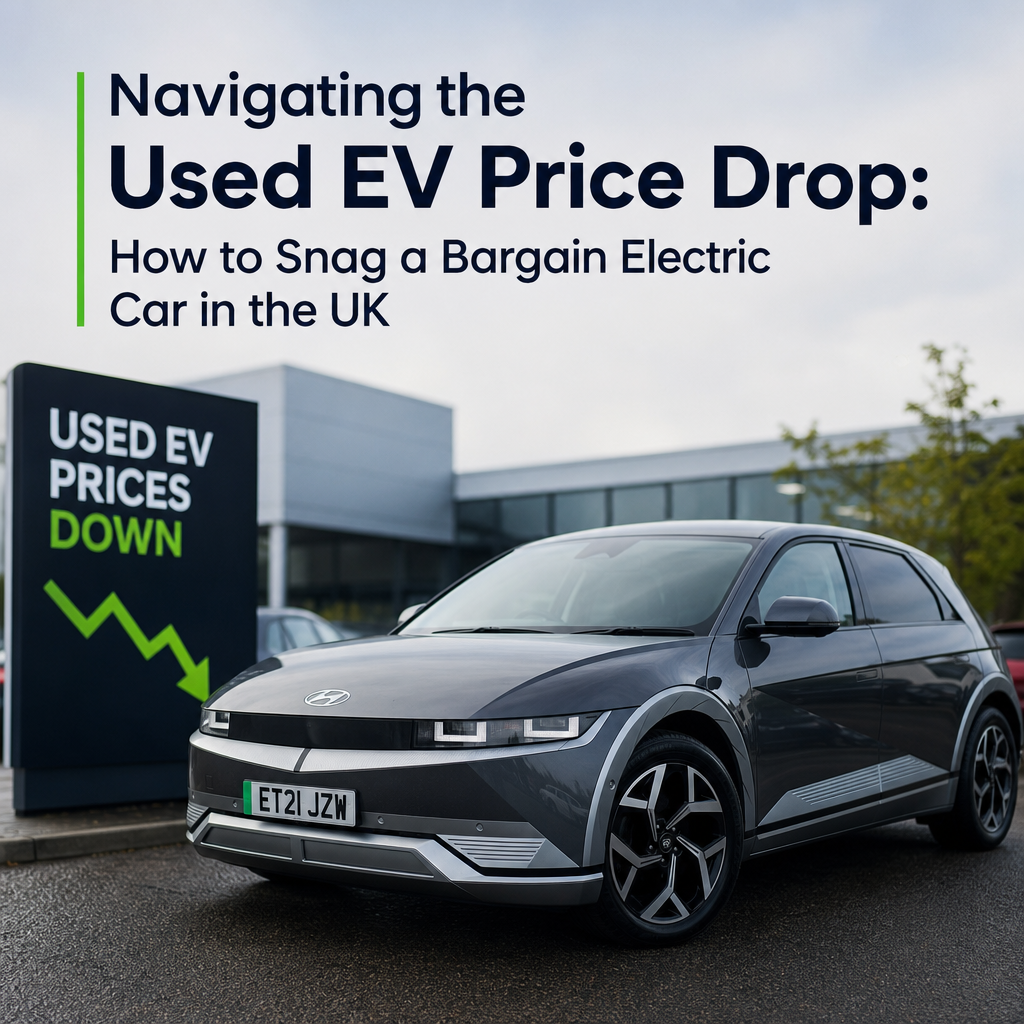
Navigating the Used EV Price Drop: How to Snag a Bargain Electric Car in the UK
The automotive landscape is undergoing a monumental shift, and nowhere is this more evident than in the electric vehicle (EV) market. For years, the upfront cost of a new EV was a significant barrier for many UK drivers. However, as production ramps up and the market matures, we’re seeing a fascinating – and highly advantageous – trend emerge: a noticeable softening, and in some cases, a significant drop, in used EV prices.
For the savvy buyer, this represents an unprecedented opportunity. Suddenly, owning an electric car, with all its benefits of lower running costs, environmental credentials, and silent, smooth driving, is more attainable than ever. But buying a used EV isn't quite the same as picking up a second-hand petrol or diesel car. There are specific considerations, from battery health to charging infrastructure, that need careful attention.
Here at CarsLink.ai, we’re committed to helping you make an informed and astute purchase. This guide will walk you through understanding the current market dynamics, what to scrutinise when inspecting a used EV, which models offer the best value, and how to future-proof your electric investment. Get ready to plug into a brilliant bargain.
Understanding the Used EV Market: Why Prices Are Fluctuating
The recent adjustments in used EV prices aren't a sign of trouble; rather, they're a natural evolution of a rapidly developing market. Several key factors are at play:
Firstly, increased supply is a major driver. Carmakers have significantly ramped up EV production to meet ambitious sales targets and the looming 2035 ban on new petrol and diesel car sales in the UK. This influx of new vehicles eventually trickles down to the used market as early adopters upgrade or fleets refresh.
Secondly, technological advancements are accelerating. Newer models boast longer ranges, faster charging capabilities, and improved infotainment systems. While fantastic for new car buyers, this can make slightly older models appear less competitive, gently pushing down their values on the used market. Think of it like the smartphone market: last year's flagship model is still excellent but no longer commands top price.
Thirdly, the cost of living crisis has impacted consumer spending across the board. While the allure of lower running costs for an EV remains strong, the initial purchase price of a new car has become a tougher sell for many, pushing more buyers towards the used market. This shift in demand dynamics influences pricing.
Finally, changes to government grants for new EVs have also played a role. The winding down of incentives like the Plug-in Car Grant has made new EVs less affordable for some, indirectly increasing the appeal, and thus the supply, in the used sector as buyers seek more budget-friendly options. This confluence of factors creates a fertile ground for used EV bargains, making now an opportune moment to explore the market.
Key Factors to Assess: Battery Health and Warranty Status
When buying a used EV, the battery is paramount. It's the most expensive component, and its health directly impacts the car's range and resale value. Don't get caught out – a thorough assessment is crucial.
Battery Health: Every EV battery degrades over time, gradually losing a small percentage of its original capacity. This is known as State of Health (SOH). Most manufacturers guarantee their batteries for typically 8 years or 100,000 miles (whichever comes first) to retain at least 70% of their original capacity.
- Checking SOH: The best way to ascertain battery health is through a diagnostic report from a main dealer. They can provide an official SOH reading. Alternatively, some independent garages specialising in EVs can perform this, or you can use an OBD-II dongle with specific apps (like Leaf Spy for Nissan Leafs) to get an indication.
- Service History: A full-service history is vital. It shows proper maintenance, including any software updates that can optimise battery management. Ask about the previous owner’s charging habits; while modern battery management systems are robust, excessive, exclusive reliance on rapid DC charging can theoretically accelerate degradation slightly compared to slower AC charging, though this concern is less prominent than it used to be.
Warranty Status: Beyond battery health, understand the broader warranty coverage.
- Manufacturer Battery Warranty: As mentioned, this is usually 8 years/100,000 miles. Ensure the vehicle you're considering still falls within this timeframe and mileage. This provides peace of mind against significant battery degradation.
- General Car Warranty: Check if any of the original manufacturer's warranty remains on other components (motor, electronics, etc.). If buying from a dealer, enquire about their used car warranty, which can offer additional protection.
- Extended Warranties: Some dealers or third-party providers offer extended warranties for used EVs, which might be worth considering for high-value purchases.
Always perform a pre-purchase inspection, ideally by an EV specialist, and take an extended test drive to evaluate the real-world range based on the dashboard’s estimated range.
Top Value Used EV Models Offering Best Bang for Your Buck
The used EV market is maturing, and certain models are now reaching a sweet spot in terms of affordability and usability. Here are some top contenders offering excellent value:
Nissan Leaf (First and Second Generation): The original mass-market EV, early Leafs (pre-2018) can be incredibly cheap, ideal for city dwellers or those with short commutes. Just be mindful of their typically smaller battery capacities (24kWh, 30kWh) and the CHAdeMO rapid charging port, which is becoming less common than CCS. Second-generation Leafs (from 2018 onwards) offer improved range (40kWh, 62kWh e+ models) and updated technology, representing a great all-rounder for a reasonable outlay.
Renault Zoe: Another early trailblazer, the Zoe is a fantastic urban runabout. Older models (22kWh, 41kWh) are now very affordable, providing good range for daily commutes. Later models (52kWh) are also now appearing on the used market with more impressive range. Do check if the battery was on a lease agreement with older models; while less common now, it's a critical distinction to make as battery ownership adds to the vehicle's value.
Hyundai Kona Electric / Kia e-Niro: These Korean cousins were game-changers when launched, offering genuinely impressive range (64kWh battery often quoted at 270+ miles WLTP) in a compact SUV package. Early models (2018-2020) are now much more accessible and offer CCS rapid charging, making them excellent long-distance capable EVs that won’t break the bank.
BMW i3: For those seeking something a bit different and with a premium feel, the BMW i3 is a standout. Its carbon fibre construction, distinctive design, and agile handling make it unique. Early models (60Ah, 94Ah, 120Ah battery options, roughly 22kWh to 42kWh usable) offer decent range for urban and suburban use. Some even come with a Range Extender (REX) petrol engine for ultimate peace of mind on longer journeys – though these are technically not pure EVs.
MG ZS EV / MG5 EV: MG's electric offerings, particularly the first-generation ZS EV and MG5 EV estate, represent superb value. They offer practical space, generous standard kit, and respectable range (44.5kWh or 50.3kWh battery) at prices that significantly undercut rivals. As newer versions are released, these earlier models are becoming very attractive second-hand buys for families on a budget.
When considering any model, look for a good condition, full-service history, and critically, that diagnostic battery health report.
Future-Proofing Your Purchase: Evolving Charging Infrastructure
While snagging a bargain is exciting, it's essential to consider how your chosen used EV will integrate with the rapidly evolving charging infrastructure in the UK.
Charging Port Type: This is perhaps the most critical compatibility factor.
- CCS (Combined Charging System): This is the dominant rapid charging standard in the UK and Europe. Most modern EVs use it, and new public rapid chargers are almost exclusively CCS. If you plan on any long-distance travel, a car with a CCS port is highly recommended.
- CHAdeMO: Predominantly used by older Nissan Leafs and some Mitsubishi models. While there are still many CHAdeMO chargers, their numbers are declining relative to CCS. If you buy a CHAdeMO-only car, plan your rapid charging stops carefully.
- Type 2: This is the universal standard for AC charging (home wallboxes, public slow/fast chargers). All EVs will have a Type 2 port for AC charging.
Charging Speed: Understand your car's maximum DC rapid charging rate. Some older EVs might only charge at 50kW, while newer ones can handle 100kW, 150kW, or even 250kW+. Faster charging means less time waiting, but remember the car can only charge as fast as the charger can deliver and its battery management system allows.
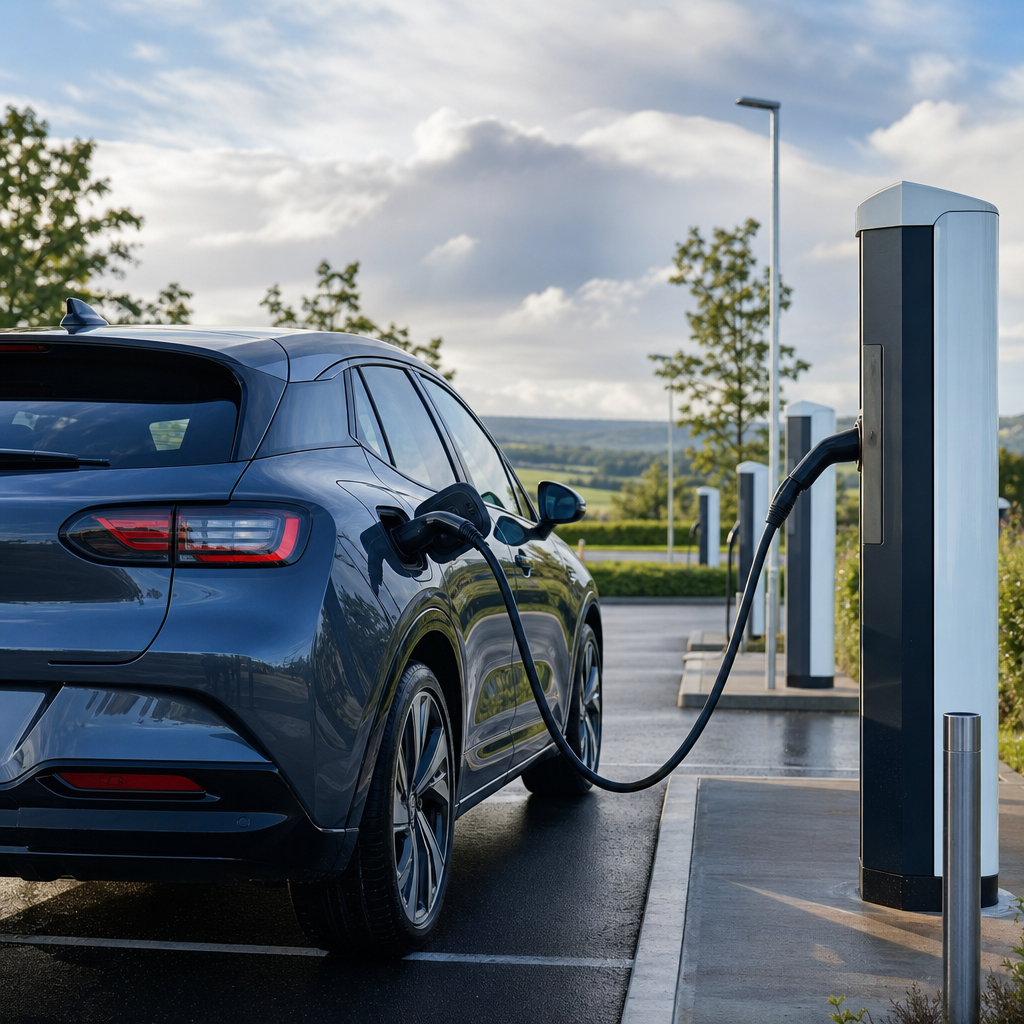
Home Charging: For most EV owners, home charging is the most convenient and cost-effective solution.
- Off-Street Parking: This is almost essential for installing a dedicated home wallbox. Check if you qualify for any OZEV (Office for Zero Emission Vehicles) grants towards the cost of installation.
- Electricity Tariff: Consider switching to an EV-friendly electricity tariff with cheaper off-peak rates for overnight charging.
Public Charging Network: Research the public charging networks in your area and along routes you frequently travel. Reliability and availability vary. While networks like InstaVolt, BP Pulse, Gridserve, and Shell Recharge are expanding, range anxiety is often more about charger anxiety. Having a backup plan and an app like Zapmap is invaluable.
Ultimately, your charging needs depend on your driving habits. If you primarily do short local trips and can charge at home, an older, shorter-range EV might be perfectly fine. If regular long journeys are on the cards, prioritising a car with CCS and a decent rapid charging capability is a wise move.
Conclusion: Plug Into Your Future Today
The used EV market in the UK is currently a buyer's paradise, offering an unparalleled opportunity to transition to electric driving without the hefty upfront cost typically associated with new EVs. By understanding the market forces at play, meticulously checking battery health and warranty, identifying top-value models, and considering future charging needs, you can make a smart, sustainable, and satisfying purchase.
The journey to an all-electric future is well underway, and with falling used prices, there's never been a better time to get behind the wheel of an EV. Do your homework, ask the right questions, and soon you could be enjoying the silent, smooth, and cost-effective motoring that an electric car brings, all while knowing you snagged a brilliant bargain. Happy motoring!