Chain Reaction: Essential Checks for Your Used Motorcycle's Drive Train in the UK
Buying a used motorcycle in the UK can be an exhilarating experience. The open road beckons, and the prospect of finding a reliable two-wheeled companion at a great price is incredibly appealing. However, it's all too easy to get swept up in the aesthetics – the gleaming paintwork, the aftermarket exhaust, the shiny chrome. While these elements contribute to a bike's appeal, the true heart of its performance and safety lies in its mechanical components, particularly the drive train.
For chain-driven motorcycles, the chain and sprockets are the unsung heroes, silently working away to transmit power from the engine to the rear wheel. A neglected or worn drive train isn't just a minor inconvenience; it's a significant safety hazard and a potential money pit. Here at CarsLink.ai, we believe in empowering buyers with the knowledge to make informed decisions. So, let's delve into the essential checks for your used motorcycle's drive train, ensuring your "chain reaction" on the road is one of joy, not mechanical distress.
The Unseen Powerhouse: Why Your Drive Train is Crucial
Think of your motorcycle's chain and sprocket system as the direct link between the engine's power and the road. Every bit of horsepower generated by the engine is channelled through this often-overlooked trio: the front sprocket (countershaft sprocket), the chain itself, and the rear sprocket. Their health directly impacts everything from acceleration and top speed to fuel economy and overall ride comfort.
A healthy drive train ensures smooth power delivery, efficient fuel consumption, and predictable handling. Conversely, a worn or poorly maintained system can lead to a host of problems. At best, you'll experience a clunky ride, reduced fuel efficiency, and a general lack of refinement. At worst, a severely worn chain can snap, potentially locking up the rear wheel or whipping dangerously, causing significant damage to the swingarm, engine casing, or even leading to a serious accident. Imagine being on the M1, filtering through traffic, and your chain decides to give up – it's a terrifying thought. Beyond the immediate safety implications, a neglected drive train can compromise the bike's roadworthiness, potentially leading to issues during an MOT test or, worse still, a roadside inspection. It's a critical component that demands your full attention during any pre-purchase inspection.
Hands-On Inspection: Identifying Wear and Neglect
Inspecting a motorcycle's drive train is a practical process that requires a good visual assessment and some hands-on checks. Ideally, you’ll want the bike on a paddock stand or centre stand to allow the rear wheel to spin freely.
1. Visual Inspection: The Initial Scan
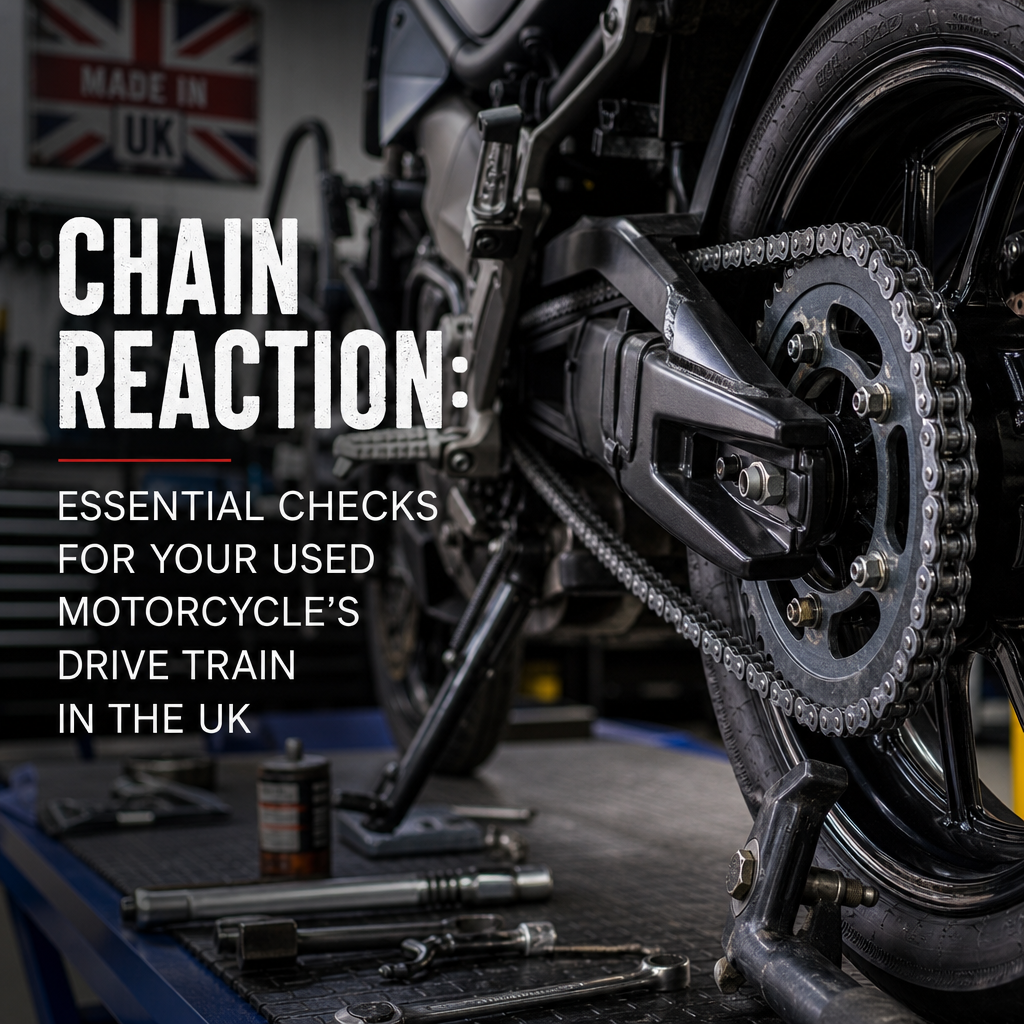
- Sprockets: Start by examining both the front and rear sprockets. Look closely at the teeth. New or healthy sprocket teeth have a symmetrical, slightly rounded profile. Worn teeth, however, will appear "hooked" or "shark-finned." This is particularly noticeable on the rear sprocket, where the trailing edge of each tooth gets worn down. Also, check for any chips, bends, or missing teeth. Discolouration or excessive rust on the sprocket teeth can indicate poor maintenance.
- Chain Condition: Scrutinise the chain links themselves. Look for signs of rust – light surface rust is often cosmetic, but deep pitting or widespread corrosion suggests neglect and weakens the chain. Pay close attention to the O-rings or X-rings (the small rubber seals between the inner and outer plates of each link). These seals retain the internal lubrication. If they are cracked, perished, missing, or visibly bulging, the internal grease has likely escaped, leading to premature wear and stiff links.
- Cleanliness: A drive train caked in old, gritty grease, or conversely, bone dry, is a red flag. A well-maintained chain will be visibly clean and lightly lubricated, free from excessive dirt or rust.
2. Physical Inspection: Getting Tactile
- Chain Slack: This is a crucial check. With the bike on its stand and the rear wheel off the ground, measure the vertical free play (slack) in the lower run of the chain, halfway between the sprockets. Consult the bike's owner's manual or a sticker on the swingarm for the manufacturer's recommended slack (typically between 20-35mm, but it varies wildly by model). Too much slack means a stretched chain that could jump off, while too little slack puts undue stress on wheel bearings and gearbox output shaft, leading to premature wear.
- Checking for Tight Spots: Slowly rotate the rear wheel by hand, observing the chain's slack. If the slack varies significantly at different points of rotation, it indicates "tight spots." These are usually caused by seized or stiff links, often due to perished O-rings and lack of lubrication. A chain with tight spots will accelerate wear on the sprockets and lead to an uneven, jerky ride.
- The "Pull Away" Test: This is one of the most definitive indicators of a stretched chain. Grip the chain at the rear of the rear sprocket (around the 3 o'clock position) and try to pull it away from the sprocket teeth. On a healthy chain, you should barely be able to move it. If you can pull the chain far enough away to reveal more than half of a sprocket tooth, the chain is severely stretched and needs replacing.
- Side-to-Side Play: With the chain still on the rear sprocket, try to wiggle individual links from side to side. Excessive lateral play also points to a worn-out chain.
Red Flags: Identifying a Neglected Drive Train
Beyond the specific inspection points, certain overarching signs scream "future costs." Be wary of:
- Excessive, deep rust: Not just surface rust, but rust that has pitted the metal, particularly on the chain's inner plates or rollers.
- Visibly hooked sprocket teeth: As mentioned, these look like shark fins. The more pronounced the hook, the more worn the sprockets are. Remember, if one is worn, the others likely are too.
- The chain pulling significantly away from the rear sprocket: This is a definitive sign of a chain that's well past its service life.
- Missing or clearly perished O/X-rings: These rubber seals are vital. If they're gone or cracked, the chain's internal lubrication is compromised.
- Audible noises: Listen for squealing, grinding, or a pronounced clunking when rocking the bike back and forth or rotating the wheel. These can indicate severely dry, rusty, or seized links.
- Consistent re-tensioning: If the seller admits to needing to adjust the chain tension frequently, it's a sign the chain is "stretching" (wearing out) rapidly.
- Evidence of poor lubrication: A dry, caked-on, or overly greasy chain indicates a lack of proper cleaning and regular, correct lubrication.
If you spot several of these issues, it's a strong indicator that the drive train has been neglected and is nearing the end of its life, if not already past it.
Cost Implications and Negotiation Tactics
Discovering a worn drive train isn't necessarily a deal-breaker, but it certainly has financial implications that you should factor into your offer.
Cost of Replacement: A full chain and sprocket kit (front, rear, and chain) for a typical middleweight motorcycle in the UK can range from £100 to £300+, depending on the bike's model, the brand (e.g., DID, RK, JT), and the quality (standard, heavy-duty, O-ring, X-ring). For a high-performance or larger capacity bike, these costs can climb even higher.
Labour costs to fit a new drive train at a local garage typically range from £50 to £100 per hour, and the job usually takes 1 to 2 hours. This means you're looking at an additional £50 to £200 for fitting.
Therefore, the total cost for a full chain and sprocket replacement, fitted by a professional, could easily be £150 to £500 or more. This is a significant sum, particularly if you're buying a budget-friendly used bike.
Negotiation Tactics: This is where your meticulous inspection pays dividends. If you've identified significant wear:
- Be Factual and Specific: Don't just say "the chain looks a bit worn." Instead, state: "I've noticed the rear sprocket teeth are quite hooked, and the chain can be pulled significantly away from the sprocket, indicating it's severely stretched. The O-rings are also perished in several places, suggesting a full chain and sprocket kit is required."
- Quantify the Cost: Have an estimated cost in mind. "A new DID X-ring chain and JT sprockets, fitted by my local mechanic, will set me back approximately £250-£300."
- Propose a Price Adjustment: Use this information as leverage. "Considering this essential maintenance, would you be willing to reduce your asking price by, say, £200, or at least contribute towards the repair?" A reasonable seller might be open to negotiation.
- Emphasise Safety (Subtly): You can also frame it from a safety perspective, which might make the seller more receptive. "While the bike looks great, the worn drive train is a significant safety concern and would need immediate attention before I could ride it confidently on the road."
- Get a Quote: If unsure, consider getting a quick quote from a trusted local garage for a full chain and sprocket replacement. This gives you solid figures for your negotiation.
- Be Prepared to Walk Away: If the seller is unwilling to budge on a clearly neglected component, and the bike's price doesn't justify the additional expense, be prepared to walk away. There are always other bikes out there.
Conclusion: Ride with Confidence
A motorcycle's drive train is its lifeline. By conducting a thorough inspection for wear, rust, tight spots, and proper tension, you're not just looking at a few metal parts; you're assessing the bike's safety, reliability, and future running costs. Don't let the excitement of a new-to-you bike blind you to the crucial details. Take your time, get hands-on, and use your findings to make an informed decision and negotiate a fair price. A well-inspected, well-maintained drive train ensures that your used motorcycle journey on the UK's roads will be filled with the joyous "chain reaction" of power, performance, and peace of mind.