Beyond the Bike: Essential Rider Safety Gear for UK Used Motorcycle Owners
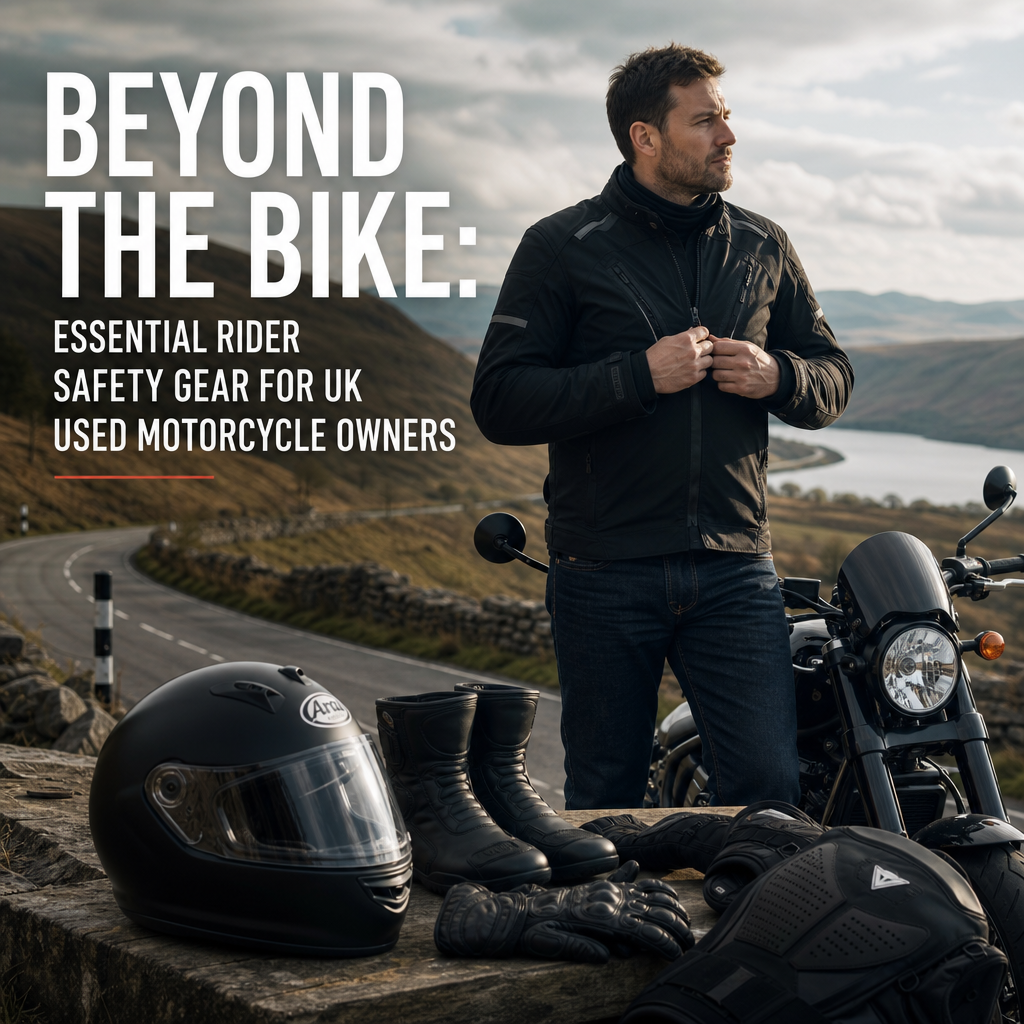
The thrill of acquiring a used motorcycle is undeniable. Whether it's the roar of the engine, the wind in your face, or the freedom of the open road, two-wheeled adventure beckons. But before you swing your leg over that gleaming (or perhaps a little battle-scarred) machine, it's crucial to remember that your safety extends far beyond the bike itself. Investing in the right rider safety gear isn't just a recommendation; it's a non-negotiable commitment to your well-being on UK roads.
Here at CarsLink.ai, we understand the excitement of a new-to-you bike, but we also champion responsible riding. This guide will walk you through the essential safety gear you need, helping you make informed choices that protect you every mile of your journey.
The Uncompromising Importance of a Quality Helmet
Let's start with the undisputed king of protective gear: the helmet. It's the one piece of equipment you simply cannot ride without, legally or sensibly. Your brain is irreplaceable, and a high-quality helmet is your first and most vital line of defence.
When choosing a helmet, fit is paramount. It should be snug, encompassing your head without any pressure points, and when you try to move it from side to side or up and down, your skin should move with it – not the helmet itself. If it feels too loose, it won't offer adequate protection in a crash. Always try before you buy, ideally at a specialist motorcycle gear shop where experts can guide you.
In the UK, helmets must meet ECE 22.05 standards (still widely available and legal) or the newer, more stringent ECE 22.06 standard. The ECE 22.06 certification represents improved testing protocols, including oblique impacts, providing a higher level of confidence. Beyond this, consider the SHARP (Safety Helmet Assessment and Rating Programme) rating system, a UK government initiative. SHARP awards helmets a star rating from 0 to 5, based on independent impact tests. A 4 or 5-star SHARP rating should be your target.
While there are various types – full-face (offering the most comprehensive protection), modular/flip-up (convenient but potentially less protective in the chin bar area), and open-face (minimal protection, typically for cruisers or scooters) – a full-face helmet is generally recommended for maximum safety on UK roads, given the varied conditions and speeds.
A critical point for used bike owners: Never buy a used helmet. Helmets are designed for a single impact. Even if it looks pristine, you have no way of knowing if it's been dropped or involved in a collision, compromising its structural integrity. Furthermore, internal padding compresses over time to fit a specific head, and hygiene can be a concern. Brands like Shoei, Arai, AGV, and HJC are well-regarded for their quality and safety. Look for features like Pinlock-ready visors (for anti-fogging) and good ventilation for comfort.
CE Ratings: Your Guardian Angels for Jackets, Trousers, Gloves, and Boots
While your helmet protects your head, the rest of your body needs robust defence against abrasion, impact, and the elements. This is where CE ratings become your trusted guide. The CE mark signifies that a product meets European safety standards, and for motorcycle gear, this is particularly important.
The EN 17092:2020 standard categorises protective clothing into classes based on their protective capabilities:
- Class AAA: The highest level of protection, offering superior abrasion and impact resistance, typically found in racing suits or heavy-duty touring gear.
- Class AA: A good balance of protection and comfort, suitable for most touring and urban riding.
- Class A: Offers the lowest level of protection against abrasion and impact, designed for urban riding where comfort and flexibility are prioritised over maximum defence.
- Class B: Provides protection against abrasion but does not include impact protectors.
- Class C: Comprises impact protectors only, often found in base layers.
Always aim for at least Class AA for jackets and trousers if your budget allows, and definitely Class AAA for more aggressive riding.
Beyond the garment's overall rating, individual armour components (shoulders, elbows, knees, hips, back) also have CE ratings under EN 1621-1 (for limb protectors) and EN 1621-2 (for back protectors). These are further divided into Level 1 and Level 2, with Level 2 offering superior impact absorption. Look for gear that includes Level 2 armour, especially for critical areas like the back, shoulders, and elbows. Materials like D3O and Sas-Tec are excellent examples of modern, flexible, and highly protective armour.
Gloves are vital for protecting your hands, which are often the first point of contact in a fall. They should be CE-rated (EN 13594:2015), offer good abrasion resistance (leather is excellent), and have hard knuckle protection. Similarly, boots are crucial for ankle and foot protection. Look for CE-certified boots (EN 13634:2017) that offer ankle support, crush resistance, and a sturdy sole. They should extend above the ankle.
Whether you opt for traditional leather, known for its superb abrasion resistance, or modern textile gear (e.g., Gore-Tex, Cordura) offering waterproofing and breathability, ensure it carries the appropriate CE markings. A snug fit that keeps the armour in place without restricting movement is essential for all garments.
Budgeting for Protection: Don't Skimp on Safety
It's a common trap: you've just spent a significant chunk of change on your used motorcycle, and now you're looking to save pennies on gear. Resist this urge! Your safety gear is an investment in you, and it's far more vital than the latest exhaust or fancy paint job. Skimping here could literally cost you dearly in medical bills, lost earnings, and long-term recovery.
Here’s a realistic look at typical costs for a full set of new, decent quality gear:
- Helmet: Expect to pay £150 for a good entry-level ECE 22.06, 4-star SHARP rated full-face, ranging up to £800+ for premium brands.
- Jacket: A CE Class AA textile jacket might start around £150-£200, with high-end leather or GORE-TEX options reaching £600+.
- Trousers: Similar to jackets, textile options can start from £100, with more protective or waterproof versions exceeding £400.
- Gloves: Decent CE-rated gloves will set you back £40-£80, with advanced touring or racing gloves going up to £200+.
- Boots: CE-certified motorcycle boots typically range from £80 for urban styles to £400+ for high-performance track or touring boots.
A complete, good quality starter set can easily total £500-£1000 or more. While this may seem substantial, consider it an integral part of your motorcycle purchase. Look out for sales, end-of-season clearances, or package deals from reputable retailers. While buying used gear (other than helmets) might be tempting to save money, scrutinise its condition carefully for any damage, weakened stitching, or compromised armour. If in doubt, buy new. Your health is worth every penny.
See and Be Seen: Enhancing Visibility on UK Roads
One of the most common refrains after a motorcycle accident is, "Sorry, mate, I didn't see you." (The infamous "SMIDSY"). UK roads, with their often-challenging weather, varied lighting conditions, and busy traffic, demand that motorcyclists do everything possible to maximise their visibility to other road users.
High-Visibility (Hi-Vis) Gear: This is your first line of defence. Fluorescent colours (yellow, green, orange) are incredibly effective in daylight conditions, especially overcast UK skies, as they stand out against natural backdrops. For night-time riding, retro-reflective materials are crucial, as they bounce light directly back to the source (e.g., car headlights), making you glow in the dark.
Many modern jackets and helmets incorporate hi-vis elements, but a dedicated hi-vis vest worn over your jacket is a simple, effective, and often affordable addition. Look for gear that meets EN ISO 20471 for professional high-visibility clothing. Even a bright, light-coloured helmet can significantly improve your profile on the road.
Effective Lighting: Your motorcycle’s lighting system is critical. Ensure all standard lights – headlight (on dipped and main beam), tail light, and indicators – are clean, fully functioning, and bright. Replace dim or failing bulbs immediately. Consider upgrading to brighter, road-legal LED bulbs where possible, or installing auxiliary LED running lights (DRLs) to make your presence undeniable during the day. Some riders also use brake light modulators, which flash briefly before settling into a steady beam, to grab attention when slowing down (always check local regulations on flashing lights).
Beyond gear, your riding position on the road is key. Don't hug the kerb; ride in a position that gives you a good view of the road ahead and allows other drivers to see you clearly in their mirrors. Actively scan the road, anticipate potential hazards, and make eye contact with drivers whenever possible.
Conclusion
Owning a used motorcycle is a fantastic way to experience the freedom and exhilaration of two-wheeled travel. However, that freedom comes with a significant responsibility to protect yourself. By investing wisely in a high-quality, CE-rated helmet, protective clothing, gloves, and boots, and by actively enhancing your visibility on the road, you are making an invaluable commitment to your safety.
Think of your gear not as an accessory, but as an integral part of your motorcycle. It’s the difference between a minor tumble and a life-altering injury. So, before you hit that open road, ensure you’re clad in the best protection you can afford. Ride safe, stay seen, and enjoy every kilometre of your journey with peace of mind.