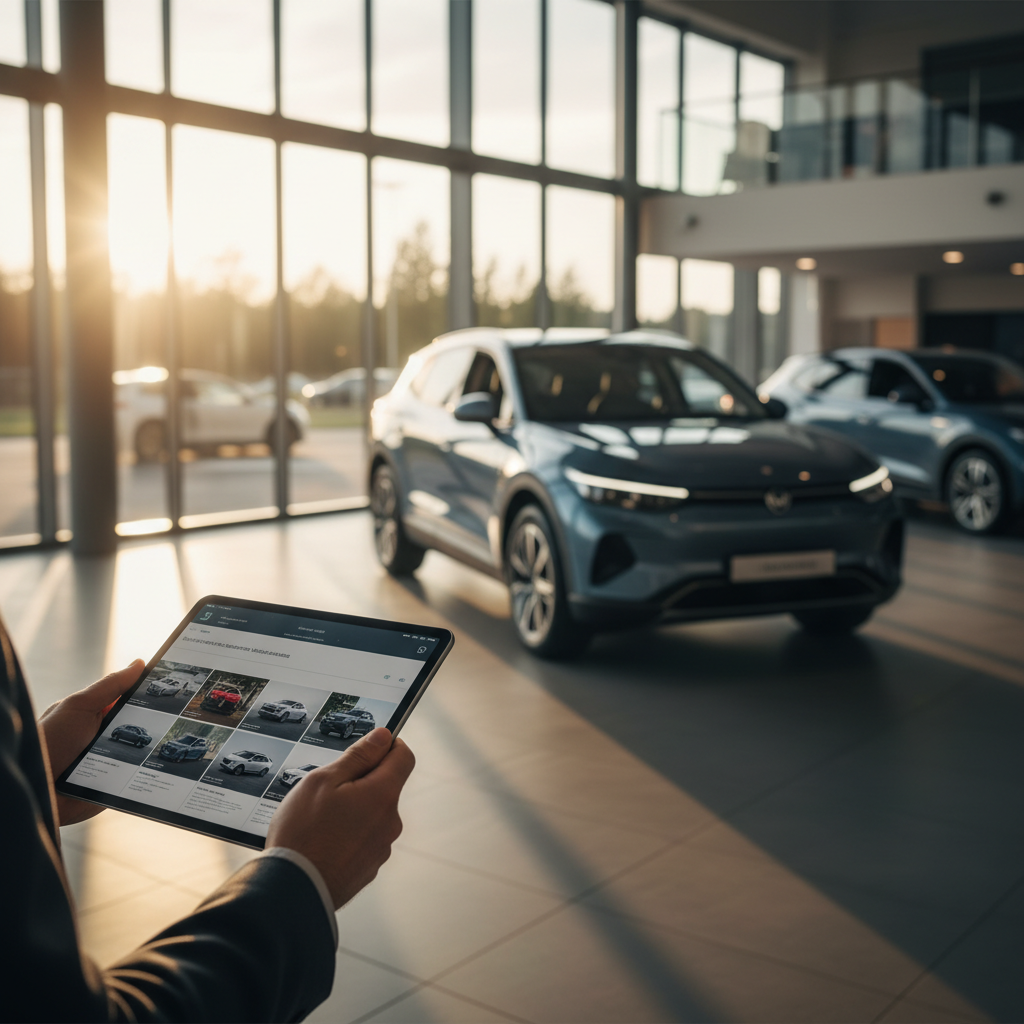
What Makes a Vehicle Listing Generate Buyer Clicks
A high-quality vehicle listing combines comprehensive photography (minimum 20-30 images covering exterior, interior, and mechanical details), accurate specification data, transparent pricing, and descriptive text that addresses buyer questions before they arise. Research across UK dealer platforms shows that listings with complete photo sets receive 3-4 times more enquiries than those with fewer than ten images, while transparent disclosure of vehicle history and condition builds the trust necessary to convert browsers into serious buyers.
The distinction between listings that generate clicks and those that scroll past unnoticed comes down to information density and presentation quality. Buyers in 2026 expect dealer-grade professionalism regardless of business size, and the rise of AI-powered search platforms means your listing must satisfy both human readers and machine learning algorithms simultaneously.
Photography Standards That Drive Engagement
Professional-quality photography remains the single most influential factor in listing performance. Buyers form judgements within three seconds of viewing a listing, and image quality determines whether they continue scrolling or click through to your full details.
Your primary hero image should show the vehicle at a three-quarter front angle in natural daylight, with the entire vehicle in frame and no distracting background elements. This angle showcases both front design and side profile, giving buyers immediate visual confirmation of body style and condition. Avoid cropped images, artificial studio backgrounds, or photos taken in poor lighting conditions.
A complete photo set should include exterior shots from all four corners, close-ups of any cosmetic imperfections, full interior cabin views from multiple angles, boot or load space capacity, engine bay condition, wheel and tyre condition, and detailed shots of the dashboard displaying mileage. For vehicles with notable features (panoramic sunroof, upgraded sound system, tow bar), dedicated images highlighting these elements significantly increase engagement.
Consistency matters. If you operate a multi-vehicle dealership, maintain uniform photography standards across your entire stock. Mixed quality signals inconsistent professionalism and undermines buyer confidence in your operation.
Writing Vehicle Descriptions for Human and AI Readers
Your vehicle description must serve two audiences simultaneously: human buyers scanning for key information and AI search algorithms extracting structured data. The most effective descriptions begin with a concise summary paragraph containing make, model, year, mileage, fuel type, transmission, and key selling points.
Structure your description in logical sections. Start with specification overview (technical details buyers use to filter options), move to condition assessment (honest disclosure of wear, service history, previous owners), then highlight standout features (factory options, recent maintenance, unique attributes), and conclude with practical information (viewing location, finance availability, part-exchange consideration).
Avoid marketing clichés that provide no information value. Phrases like 'great condition for age', 'must be seen', or 'drives beautifully' tell buyers nothing concrete. Instead, write 'full service history with eight stamps', 'new tyres fitted March 2026', or 'recent cambelt replacement at 78,000 miles'. Specific, verifiable statements build credibility.
For platforms optimised for natural language search, including how AI search is changing vehicle discovery for UK buyers, write descriptions that answer common buyer questions directly. If someone asks 'is this car good for motorway driving', your description should address fuel economy at speed, cabin noise levels, and cruise control availability.
Pricing Transparency and Value Communication
Price presentation significantly influences click-through rates. Display your asking price prominently without requiring buyers to enquire for details. Hidden pricing suggests negotiation games or above-market positioning, both of which deter serious buyers who are comparing multiple options.
If your price sits above market average for comparable vehicles, justify the premium within your listing. Recent major service work, low mileage relative to age, single previous owner, or comprehensive warranty coverage all support higher pricing when explicitly stated. Buyers will pay more when they understand what additional value they receive.
For dealers offering finance options, including indicative monthly payment figures (with clear APR disclosure and 'subject to status' caveats) increases engagement from buyers who think in monthly budgets rather than total purchase price. However, ensure your finance presentation complies with FCA advertising requirements, particularly regarding representative APR and deposit assumptions.
Transparency extends to additional costs. If you charge administration fees, delivery charges, or documentation fees, state these clearly rather than surprising buyers during negotiation. The temporary loss of a price-sensitive enquiry is preferable to the reputational damage of perceived hidden charges.
Specification Accuracy and Completeness
Incomplete or inaccurate specification data represents the fastest way to lose buyer trust. When your listing states 'manual transmission' but the vehicle actually has an automatic gearbox, or claims 'full leather interior' when only the front seats are leather, buyers question everything else you have written.
Verify every specification field against the vehicle's V5C registration document, service book, and physical inspection. Pay particular attention to engine size (1.6 vs 1.8 litre variants often exist within the same model range), trim level (base, SE, GT specifications carry different equipment), and factory-fitted options versus aftermarket additions.
For technical specifications that matter to enthusiasts (particularly motorcycles and performance cars), include details that mainstream platforms often omit: exact power output, torque figures, 0-60 acceleration, kerb weight, and specific option codes for desirable packages. Buyers searching for these details are typically serious purchasers rather than casual browsers.
Structured data fields (dropdown menus for transmission type, fuel type, body style) must be completed accurately because these fields feed into search filters and AI matching algorithms. A correctly specified vehicle appears in relevant searches; an incorrectly specified vehicle remains invisible to its ideal buyer.
Service History and Condition Disclosure
Full service history documentation converts cautious browsers into confident buyers. Photograph the service book showing all stamps, or if service history is digital, include screenshots from manufacturer portals showing completed service intervals. For vehicles with incomplete history, state this explicitly and adjust pricing accordingly rather than hoping buyers will not notice.
Condition disclosure should be honest and detailed. Minor cosmetic imperfections (small parking scuffs, light alloy wheel kerbing, interior wear consistent with mileage) are expected on used vehicles, and buyers appreciate dealers who acknowledge these rather than discovering them during viewing. Photograph any damage and reference it in your description.
For mechanical condition, recent work adds value when documented. 'New front brake pads and discs fitted January 2026' or 'four new tyres (Michelin Pilot Sport 4) fitted with 6mm tread remaining' provides concrete reassurance. Include invoices or receipts in your photo set when available.
MOT history matters increasingly to informed buyers. While you cannot alter the historical record, you can address any advisory notices from previous tests in your description. If an advisory for 'slight oil leak' was subsequently repaired, state this explicitly with supporting documentation.
Optimising Listings for AI Search Platforms
Traditional classified platforms rely on filter-based search (buyers select make, model, price range, location from dropdown menus). AI-powered search platforms interpret natural language queries, matching buyer intent against listing content rather than rigid specification fields.
To optimise for AI search, write descriptions that answer questions buyers actually ask. Instead of 'excellent family car', write 'spacious seven-seater with ISOFIX points on all rear seats, large boot accommodates double pushchair, and economical 1.5 diesel engine achieves 55mpg on school run and motorway journeys'. The second version matches queries like 'family car for three children' or 'economical seven seater for long journeys'.
Include contextual information that helps AI understand your vehicle's use case. 'Low mileage (32,000 miles over five years) indicates primarily weekend use' or 'single company owner with full main dealer history suggests well-maintained motorway commuter vehicle' provides semantic context that pure specification data cannot convey.
For more detailed guidance on this evolving area, see how to write vehicle descriptions that convert in AI search engines, which covers the specific linguistic patterns that improve AI matching accuracy.
Mobile Optimisation and Load Speed
Over 70 per cent of vehicle searches now occur on mobile devices, yet many dealer listings remain optimised primarily for desktop viewing. Mobile buyers scroll quickly, abandon slow-loading pages within seconds, and struggle with listings that require excessive zooming or horizontal scrolling.
Your listing images must load quickly on mobile connections. Compress photos to balance quality with file size (typically 150-300KB per image achieves this balance). Ensure your listing platform serves appropriately sized images to mobile devices rather than forcing phones to download full-resolution desktop versions.
Text formatting matters on small screens. Break descriptions into short paragraphs (three to four lines maximum), use bullet points for specification lists, and employ clear subheadings that allow mobile users to scan for relevant sections. Dense blocks of continuous text perform poorly on mobile devices.
Contact mechanisms must work seamlessly on mobile. Click-to-call phone numbers, pre-populated enquiry forms, and integrated mapping for viewing locations remove friction from the buyer journey. Every additional step required to contact you increases the likelihood buyers will move to the next listing instead.
For comprehensive mobile optimisation strategies, refer to how to optimise vehicle listings for mobile buyers, which addresses platform-specific considerations and testing methodologies.
Location and Viewing Information
Clear location information helps buyers assess whether your vehicle sits within practical viewing distance. State your town or city explicitly rather than relying solely on postcode, and for rural locations, reference the nearest major town ('15 miles south of Manchester' or 'between Cambridge and Ely on A10').
Viewing arrangements should be straightforward. State your opening hours, whether appointments are required, and typical response time to enquiries. Buyers value dealers who respect their time; vague 'contact us to arrange viewing' statements without further detail suggest disorganised operations.
For dealers operating from home addresses or industrial estates without retail frontage, provide clear directions and parking information. Buyers hesitate to visit locations they cannot easily find or where parking appears problematic.
If you offer delivery services, state the coverage area and any associated costs. National delivery availability significantly expands your potential buyer pool, particularly for specialist or rare vehicles where buyers expect to travel or arrange transport.
Building Trust Through Verification and Credentials
Buyer confidence increases when listings demonstrate dealer legitimacy and accountability. Include your full business name, Companies House registration number (if applicable), and any trade body memberships (Motor Ombudsman, Independent Garage Association, RMI).
For platforms that support dealer verification, complete all available verification steps. Verified status signals that you have provided identification documents, business registration proof, and contact information that the platform has confirmed. This small badge significantly influences buyer trust, particularly for first-time visitors to your business.
Warranty and after-sales support information belongs in your listing. State clearly whether the vehicle includes any remaining manufacturer warranty, whether you provide a dealer warranty (and its terms), and your policy on post-sale support. Even basic commitments ('all vehicles undergo pre-sale inspection' or '30-day mechanical breakdown support included') differentiate professional dealers from private sellers.
For guidance on building ongoing buyer relationships beyond the initial sale, see how to build direct relationships with vehicle buyers, which covers communication strategies and long-term customer value.
Common Listing Mistakes That Reduce Click-Through Rates
Several recurring errors significantly harm listing performance. Stock photos or manufacturer publicity images instead of actual vehicle photos immediately signal either laziness or attempt to conceal condition issues. Buyers skip these listings entirely.
Inconsistent information between title, description, and specification fields creates confusion and suggests carelessness. If your title says '2022 Ford Focus' but the specification panel shows '2021', buyers question which is correct and whether other details are equally unreliable.
Overuse of capital letters, excessive exclamation marks, or aggressive sales language ('AMAZING DEAL!!!', 'WON'T LAST LONG!!!') appears unprofessional and desperate. Let the vehicle's genuine attributes sell themselves through clear, factual presentation.
Missing basic information forces buyers to enquire for details they expect to find in listings (exact mileage, service history status, number of previous owners). Each missing detail increases the likelihood they will move to a more complete listing rather than taking time to contact you.
For broader listing best practices, including platform-specific optimisation, see vehicle listing best practices for maximum visibility, which provides comprehensive guidance across multiple advertising channels.
Measuring and Improving Listing Performance
Track which listings generate enquiries and which accumulate views without conversion. Most dealer platforms provide basic analytics showing view counts, enquiry rates, and average time spent on listing pages. Use this data to identify patterns.
Compare your high-performing listings against low-performing ones. Often the difference comes down to photo quality, description completeness, or pricing relative to market rates. Apply lessons from successful listings to improve underperforming stock.
A/B testing works for vehicle listings just as for other marketing. Try different primary photos, rewrite descriptions with different emphasis, or adjust pricing by small increments. Monitor whether changes improve enquiry rates over a two-week period.
Buyer feedback provides direct insight into listing effectiveness. When buyers enquire or visit, ask what caught their attention in your listing and whether any information was missing that they expected to find. Use this feedback to refine your listing template.
Frequently Asked Questions
How many photos should a vehicle listing include?
A minimum of 20-30 photos provides comprehensive coverage for most vehicles. Include exterior shots from all angles, multiple interior views, boot or cargo space, engine bay, wheels, dashboard showing mileage, and close-ups of any features or imperfections. Motorcycles typically require 15-25 photos, while commercial vans benefit from 25-35 images showing load area configuration and any specialist equipment.
Should I include the vehicle's faults in my listing?
Yes, transparent disclosure of known faults builds trust and qualifies buyers appropriately. Minor cosmetic issues (small scratches, light interior wear) should be photographed and mentioned in the description. Mechanical issues must be disclosed clearly, with explanation of whether they affect usability or simply represent future maintenance items. Buyers appreciate honesty and adjust their expectations and offers accordingly, whereas discovering undisclosed faults during viewing damages your reputation and wastes everyone's time.
How important is listing description length?
Description length matters less than information density. A concise 200-word description covering all key points (specification, condition, history, features, location) outperforms a 500-word description padded with marketing clichés and repetition. Aim for comprehensive coverage of buyer questions in the shortest practical format. Mobile buyers particularly appreciate scannable, well-structured descriptions over lengthy prose.
Does pricing strategy affect how many people click my listings?
Pricing directly influences both search visibility and click-through rates. Vehicles priced within 5-10 per cent of market average for their specification and condition generate the most enquiries. Significantly overpriced listings receive views from browsers but few serious enquiries, while underpriced listings may generate high enquiry volume but attract bargain hunters rather than quality buyers. Research comparable vehicles thoroughly and price competitively based on your vehicle's specific condition and history.
How often should I update my vehicle listings?
Update listings whenever material information changes (price reduction, new MOT, recent service work, mileage increase if demonstrator). For listings that have been live for several weeks without generating enquiries, refresh the description and consider changing the primary photo to present the vehicle differently. Some platforms reward recently updated listings with improved search placement, making periodic refreshes worthwhile even without substantive changes.