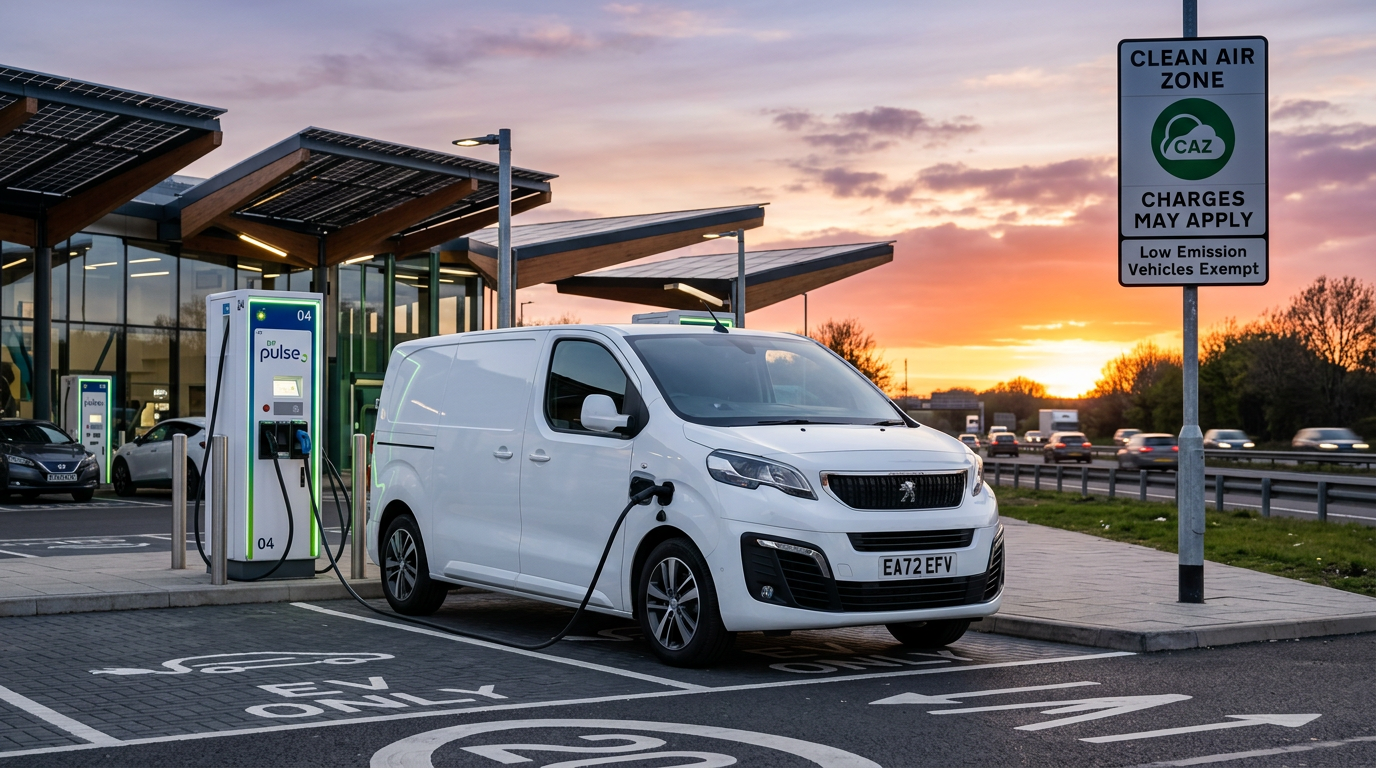
As we move through 2026, the UK’s van market has reached a tipping point. With the expansion of Clean Air Zones (CAZ) across major cities and the tightening of London’s ULEZ standards, the demand for capable, second-hand electric commercial vehicles has never been higher.
Among the frontrunners in the mid-size segment is the Peugeot e-Expert. Sharing its platform with siblings from Citroën, Vauxhall, and Fiat, the e-Expert has become a staple for UK businesses. Whether you are a sole trader looking to dodge daily daily charges or a fleet manager transitioning to a greener ledger, this guide explores why a used e-Expert is a smart buy in 2026.
The 2026 Context: Why Buy a Used e-Expert Now?
By mid-2026, the earliest e-Expert models (launched in 2020/2021) have reached the five-year mark. This is the "sweet spot" for value. Depreciation has leveled off, yet most used units benefit from the remainder of Peugeot’s 8-year/100,000-mile battery warranty.
Furthermore, with the 2024 facelift models now appearing on the used market, buyers have a choice between the affordable original design and the refreshed, higher-tech versions. At CarsLink.ai, we’ve seen a 30% increase in searches for mid-size electric vans this year, driven largely by the cost-effectiveness of the Stellantis platform.
Key Specifications: Battery and Range
When browsing used electric vans for sale, the first question is always: "How far will it go?" The e-Expert was originally launched with two battery options, both of which remain relevant in 2026.
Range Expectations in 2026
| Battery Size | WLTP Range (New) | Real-World Expectation (Loaded) | Typical Charging Time (100kW DC) |
|---|---|---|---|
| 50kWh | 143 miles | 95 - 110 miles | 30 mins (0-80%) |
| 75kWh | 205 miles | 140 - 160 miles | 45 mins (0-80%) |
Note: In 2026, remember that battery health (SOH) is vital. A well-maintained 75kWh unit should still retain over 90% of its original capacity.
Body Styles and Payload
The e-Expert is versatile. It’s available in three lengths: Compact (the rare short-wheelbase), Standard (MWB), and Long (LWB).
- Load Volume: Ranges from 4.6m³ in the Compact to 6.6m³ in the Long version (with the Moduwork load-through flap).
- EV Van Payload UK: This is where the e-Expert shines. Because the UK government allows CAT B (standard car) licence holders to drive alternatively-fuelled vehicles up to 4.25 tonnes (subject to training), the e-Expert often offers a payload exceeding 1,000kg, rivaling its diesel counterparts.
Most used models you find will be the Panel Van, but keep an eye out for Crew Vans if you need to transport a team of six, though be aware this significantly reduces your remaining payload.
What to Check When Buying a Used e-Expert
Buying an electric van requires a different checklist than a traditional diesel. Here is what to look for in 2026:
1. Battery Health Certificate
Do not buy a used e-Expert without a State of Health (SOH) report. Peugeot dealers can provide this. A van with 60,000 miles should ideally show an SOH of 92% or higher.
2. Charging Ports and Cables
Check the Type 2 and CCS port for any signs of scorching or physical damage. Ensure the vehicle comes with both the 3-pin "granny cable" and the Type 2 public charging cable, as these can cost £200+ to replace.
3. Suspension and Tyres
Electric vans are heavy. The 75kWh battery alone adds significant weight. Check the inner sidewalls of the tyres for uneven wear and listen for "clunking" from the front suspension bushings during the test drive—a common wear point for heavy EVs.
4. The "Moduwork" Feature
Many e-Experts come with the Moduwork pack. Check that the outer passenger seat folds up correctly and the bulkhead flap opens. This allows you to carry pipes or ladders up to 4 metres long in the LWB model.
Running Costs: VED, Insurance, and Maintenance
One of the biggest draws of the used Peugeot e-Expert in 2026 is the reduced overhead.
- Road Tax (VED): While the exemption for EVs has evolved, electric vans still benefit from lower rates compared to high-emission Euro 6 diesels.
- Maintenance: With no oil changes, timing belts, or DPF filters to worry about, servicing costs are typically 40% lower. Your main expenses will be cabin filters, brake fluid, and tyres.
- ULEZ/CAZ: The e-Expert is 100% compliant with all UK Clean Air Zones, saving operators up to £12.50 per day in London alone.
Driver Comfort and Technology
The e-Expert feels more like a car than a traditional commercial vehicle. Most mid-trim (Professional) and high-trim (Asphalt) models include:
- Apple CarPlay and Android Auto.
- Rearview camera (essential for the LWB).
- Pre-conditioning: Use the app to warm the cabin while the van is still plugged in, preserving your driving range on frosty UK mornings.
Is it Right for Your Business?
The e-Expert is perfect if:
- You cover less than 120 miles a day (75kWh model).
- You work primarily in urban environments with frequent stops.
- You have access to depot or home charging.
The e-Expert might struggle if:
- Your business involves constant heavy-load motorway towing (which decimates EV range).
- You lack "off-street" charging and rely solely on the public UK network, which can impact your profit margins.
Final Verdict
The Peugeot e-Expert remains the benchmark for the "Goldilocks" van—not too big, not too small, but just right for the majority of UK trades. In 2026, buying a used model represents a fantastic way to future-proof your business against rising emissions costs without the stinging price tag of a brand-new vehicle.
At CarsLink.ai, we recommend the 75kWh 'Professional' trim as the best all-rounder for value, range, and equipment.
Ready to make the switch?
Find your next commercial vehicle with CarsLink.ai. We connect UK van buyers with the best local deals on used electric vans. Browse our latest Peugeot e-Expert stock today and get your business ready for the zero-emission future.