Understanding the Used Motorcycle Market in the UK
The used motorcycle market in the UK offers significant value compared to buying new, with bikes typically depreciating 15-20% in the first year alone. However, purchasing a used bike requires careful inspection to avoid inheriting expensive mechanical problems, accident damage, or outstanding finance. Unlike cars, motorcycles experience more extreme operating conditions, higher engine speeds, and greater exposure to weather, making thorough pre-purchase checks essential for both safety and financial protection.
Buyers often underestimate the complexity of motorcycle inspection. A bike that looks pristine in photographs may hide crash damage, neglected maintenance, or component wear that costs thousands to rectify. The good news is that most serious issues reveal themselves through systematic inspection, and knowing what to look for puts you in control of the buying process.
Essential Documentation and History Checks
Before examining the physical motorcycle, verify its paperwork and history. The V5C registration document must show the seller as the registered keeper, with their name matching photo identification. Check the Vehicle Identification Number (VIN) on the document against the stamped number on the bike's frame, typically found on the steering head or frame downtube. Any discrepancy indicates potential cloning, theft, or identity fraud.
Run an HPI check or equivalent vehicle history report to uncover outstanding finance, insurance write-off markers, mileage discrepancies, and stolen vehicle records. Approximately one in four used vehicles has hidden history that affects value or legality. The MOT history, available free through the government website, reveals recorded mileage at each test and provides insight into how the bike has been maintained. Sudden mileage jumps or decreases suggest odometer tampering or incomplete records.
Service history proves how well the previous owner maintained the motorcycle. A full service history with stamped books, dated receipts, and records of major services demonstrates responsible ownership. Pay particular attention to valve clearance checks, chain and sprocket replacements, brake fluid changes, and coolant services, as these indicate whether the bike received proper mechanical attention beyond basic oil changes. For more detailed guidance on interpreting service records, see our comprehensive guide to verifying service history.
Frame and Structural Inspection
The motorcycle's frame forms its structural foundation, and damage here compromises safety regardless of how well other components function. Examine the frame carefully for cracks, especially around welds, the steering head, swingarm pivot points, and footpeg mounts. Paint that appears fresher in certain areas, mismatched colours, or overspray on components that should be unpainted often indicates accident repair.
Check frame alignment by standing directly in front of or behind the bike and sighting down its length. The front and rear wheels should align perfectly. Misalignment, visible as the rear wheel tracking to one side of the front, suggests bent forks, a twisted frame, or improper repair after a crash. Even minor misalignment affects handling and tyre wear.
Inspect the swingarm for cracks, damage, and smooth movement through its full range of travel. The swingarm bearings should feel tight without play when you grab the rear wheel and attempt to rock it side to side. Excessive play indicates worn bearings that require replacement. Similarly, check the steering head bearings by applying the front brake and rocking the bike forward and back. Any clunking or looseness means the bearings need adjustment or replacement.
Engine and Mechanical Assessment
Start your engine inspection with the bike cold. A seller who insists the bike is already warmed up may be hiding cold-start problems, worn piston rings, or valve seal issues that produce smoke only when cold. Listen to the engine before starting it by turning it over slowly using the kick-starter or by rotating the rear wheel in gear. You should hear smooth, regular compression pulses without grinding, rattling, or irregular resistance.
When the engine starts, it should fire immediately without excessive cranking, stumbling, or backfiring. Let it idle and listen for unusual noises. Valve train clatter that disappears as the engine warms indicates normal thermal expansion, but persistent rattling, knocking, or grinding suggests serious wear or damage. Blue smoke from the exhaust indicates burning oil due to worn piston rings or valve seals. Black smoke suggests overly rich fuel mixture, while white smoke may indicate coolant entering the combustion chamber through a damaged head gasket.
Check the oil condition through the sight glass or dipstick. Oil should appear translucent amber or brown, not black, milky, or containing metallic particles. Milky oil indicates water contamination from a failed head gasket or cracked engine case. Metallic particles suggest internal wear. The oil level should sit within the specified range; overfilling can indicate someone attempting to hide oil consumption.
Examine the coolant in the expansion tank. It should be clean and the correct colour for the specified coolant type. Brown, rusty, or oily coolant indicates poor maintenance or internal engine problems. Check for oil leaks around the engine cases, cylinder head, valve cover, and gearbox. Small seepage on older bikes is common, but active dripping or wet oil patches indicate failing gaskets or seals that need attention.
Transmission and Drive System Evaluation
The gearbox should shift smoothly through all gears with the clutch fully disengaged. Test this with the engine running and the bike on its centre stand or paddock stand. False neutrals, grinding, or difficulty engaging gears indicate worn selector forks, damaged gear dogs, or clutch problems. The clutch should engage progressively without slipping, grabbing, or chattering. Slipping occurs when the engine revs increase without corresponding acceleration, indicating worn friction plates.
For chain-driven motorcycles, inspect the drive chain carefully. It should have consistent tension along its length, typically 25-30mm of vertical play at the tightest point when measured midway between the sprockets. Excessive slack, tight spots that vary as you rotate the wheel, or a kinked chain indicate wear or damage. Check the sprockets for hooked, worn, or broken teeth. Worn sprockets and chains must be replaced as a set.
Shaft-drive motorcycles require less frequent maintenance but still need inspection. Check for oil leaks around the final drive unit and ensure the oil level is correct. Listen for whining, grinding, or clunking from the final drive during a test ride, as these indicate bearing or gear wear.
Suspension and Steering Components
Compress the front forks fully and release them. They should extend smoothly without sticking, making noise, or leaking oil from the fork seals. Oil on the fork stanchions or lower legs indicates failed seals that allow contamination and reduce damping performance. Check for damage to the fork stanchions, as even minor scratches or pitting can damage seals and require expensive replacement.
Test the rear shock absorber similarly by compressing the rear suspension. It should move smoothly through its travel and return to position without bouncing excessively. Look for oil leaks around the shock body and reservoir. Many motorcycles use linkage systems for the rear suspension; check all pivot points for wear, damage, and proper lubrication.
Inspect the steering head bearings by lifting the front wheel off the ground and turning the handlebars from lock to lock. Movement should be smooth and consistent without notches, tight spots, or looseness. Notchy steering often results from impact damage or worn bearings that create indentations in the bearing races.
Brake System Inspection
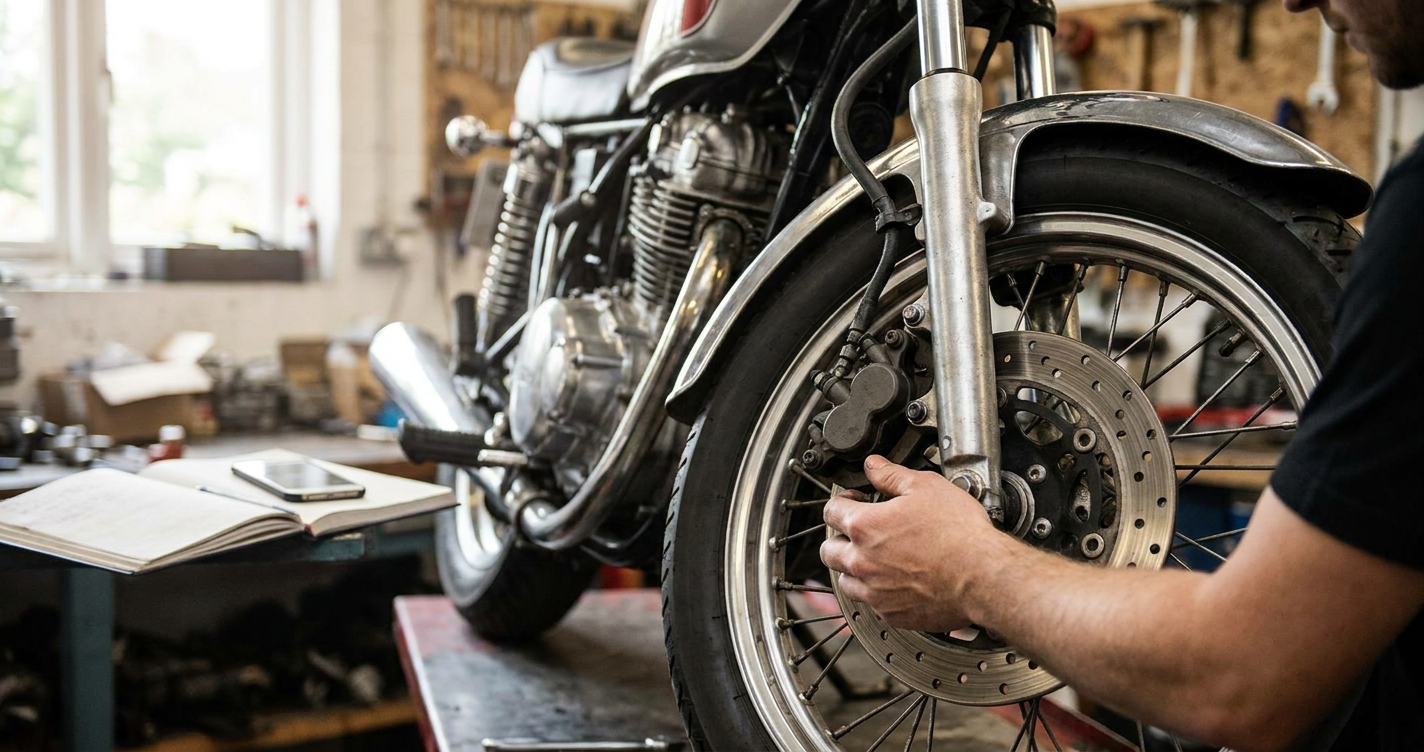
Brakes are your primary safety system and deserve careful attention. Examine the brake pads through the caliper inspection windows. Pads with less than 2mm of friction material remaining need replacement. Check the brake discs for excessive wear, warping, or scoring. Measure the disc thickness if possible and compare it to the manufacturer's minimum specification, usually stamped on the disc.
Test the brake lever and pedal feel. They should feel firm and progressive, not spongy or requiring excessive travel before engaging. Spongy brakes indicate air in the system or contaminated brake fluid. Check the brake fluid level and condition in the reservoirs. Fluid should be clear or light amber, not dark brown or black. Contaminated fluid reduces braking performance and should be flushed.
During the test ride, apply the brakes progressively at various speeds. They should provide strong, even stopping power without pulsing, grabbing, or pulling to one side. Pulsing indicates warped discs, while pulling suggests uneven pad wear, contaminated pads, or seized caliper pistons.
Tyres and Wheels Assessment
Tyres represent your only contact with the road and require thorough inspection. Check the tread depth across the entire width of both tyres. UK legal minimum is 1mm across three-quarters of the tread width, but replace tyres before reaching this limit for safety. Look for uneven wear patterns that indicate suspension problems, incorrect pressures, or misalignment.
Examine the tyre sidewalls for cracks, bulges, or damage. Check the manufacture date stamped on the sidewall as a four-digit code (week and year). Tyres older than five years deteriorate regardless of tread depth and should be replaced. Ensure both tyres are the correct size and speed rating for the motorcycle, as specified in the owner's manual.
Inspect the wheel rims for cracks, dents, or damage, particularly around the spoke nipples on wire wheels or the rim edges on cast wheels. Spin each wheel and watch for wobbles or lateral movement. Excessive runout indicates a bent rim or wheel bearing problems. Check spoke tension on wire wheels by tapping each spoke with a small tool; they should produce a consistent tone without loose or broken spokes.
Electrical System and Controls
Test all electrical components systematically. The battery should hold charge and provide strong cranking power. Headlights, tail lights, brake lights, indicators, and instrument lights must all function correctly. Check that the horn works and produces adequate volume. Test the kill switch, starter button, and any other handlebar controls.
Inspect the wiring harness for damage, improper repairs, or modifications. Electrical tape covering sections of the harness, melted insulation, or amateur wiring jobs indicate potential reliability problems. Check that all connectors are properly seated and protected from weather.
Modern motorcycles include sophisticated electronics. Ensure the instrument cluster displays correctly without warning lights remaining illuminated after startup. Test any electronic rider aids, traction control systems, or ABS functions if equipped. For specific models with advanced systems, such as those covered in our used Honda CBR buying guide, verify that all electronic features operate as intended.
The Critical Test Ride
A thorough test ride reveals issues that static inspection cannot detect. The engine should pull smoothly through the rev range without hesitation, misfiring, or flat spots. Acceleration should feel strong and progressive. Listen for unusual noises at different engine speeds and loads.
Test the handling on various road surfaces. The motorcycle should track straight without pulling to either side when you briefly release the handlebars on a straight, level road. Steering should feel light and responsive, not heavy or vague. The suspension should absorb bumps without harshness or bottoming out, and the bike should feel stable during cornering.
Pay attention to vibrations. Some vibration is normal for certain engine configurations, but excessive or unusual vibrations indicate problems with engine balance, worn engine mounts, or wheel balance issues. Note any changes in vibration at specific engine speeds, as these can indicate failing components.
Avoiding Common Buying Mistakes
Many buyers focus exclusively on cosmetic condition while overlooking mechanical issues. A bike with perfect paint may hide serious problems, while a cosmetically tired example with excellent mechanical condition offers better value. Prioritise mechanical soundness over appearance.
Beware of bikes sold without keys, especially if the seller claims to have lost them. This often indicates a stolen motorcycle or one with damaged ignition components. Similarly, avoid bikes without proper documentation or with suspicious VIN numbers.
Don't rush the buying process. Sellers who pressure you to decide immediately or refuse to allow proper inspection are hiding something. Take your time, bring a knowledgeable friend, and walk away from any deal that feels wrong. For additional perspective on avoiding pitfalls, our guide on essential checks when buying a used motorcycle provides complementary insights.
Understanding Fair Market Value
Research current market values before viewing motorcycles. Check multiple sources including dealer listings, private sales, and valuation guides. Prices vary significantly based on condition, mileage, service history, and included accessories. A bike priced well below market value deserves extra scrutiny, as it may have hidden problems.
Factor in immediate costs beyond the purchase price. Budget for any needed repairs, replacement consumables like tyres or brake pads, insurance, road tax, and potential MOT work. A cheaper bike requiring extensive work often costs more overall than a properly maintained example at a higher initial price.
Buying from Dealers versus Private Sellers
Dealer purchases include consumer protection under the Consumer Rights Act, providing recourse if serious faults emerge shortly after purchase. Dealers typically offer warranties, finance options, and part-exchange possibilities. However, dealer prices generally exceed private sale values to cover business overheads.
Private sales offer lower prices but provide minimal legal protection. You buy the motorcycle as seen, with limited recourse if problems appear. Private purchases require more diligent inspection and verification. Regardless of source, connecting directly with sellers through platforms that facilitate dealer-direct connections can streamline the process while maintaining transparency.
Finalising the Purchase
Once you've completed all inspections and decided to proceed, agree on the final price and payment method. Bank transfers provide security for both parties, avoiding the risks of carrying large amounts of cash. Ensure you receive the V5C registration document, all keys, the service history, MOT certificates, and any other relevant documentation.
Complete the V5C section to notify DVLA of the ownership change. Arrange insurance before collecting the motorcycle, as riding without valid insurance is illegal and carries serious penalties. If the MOT has expired or is close to expiry, arrange a test before riding the bike home.
Keep all purchase documentation, receipts, and correspondence with the seller. These prove ownership and provide valuable records for future maintenance, insurance claims, or resale.
Frequently Asked Questions
What mileage is too high for a used motorcycle?
Mileage alone doesn't determine a motorcycle's condition. Well-maintained bikes easily exceed 50,000 miles, while neglected examples fail at 10,000 miles. Focus on service history, overall condition, and how the bike was used rather than mileage figures. Motorway miles cause less wear than urban stop-start riding. A higher-mileage bike with complete service records often represents better value than a low-mileage example with no maintenance history.
Should I buy a motorcycle that has been in an accident?
Previously damaged motorcycles can be acceptable purchases if properly repaired and priced accordingly. Request detailed repair documentation and photographs of the damage. Have the frame and structural components inspected by a qualified mechanic. Avoid bikes with frame damage, structural repairs, or insurance write-offs in higher categories. Minor cosmetic damage that was professionally repaired poses less concern than hidden structural issues.
How can I verify the seller actually owns the motorcycle?
The V5C registration document should list the seller as the registered keeper. Match the name on the V5C to the seller's photo identification. Check that the VIN on the document matches the number stamped on the motorcycle frame. Run an HPI check to verify no outstanding finance exists. If the seller isn't listed as the registered keeper, ask why and request documentation proving their right to sell the vehicle.
What should I do if the seller refuses a test ride?
A seller refusing a test ride raises serious concerns about the motorcycle's condition or legal status. Legitimate sellers understand that buyers need to test ride before purchasing. If the seller cites insurance concerns, offer to provide proof of your own insurance and riding licence. If they still refuse, walk away. The bike likely has mechanical problems, outstanding finance, or other issues they're hiding.
Is it worth paying for a professional pre-purchase inspection?
Professional inspections cost between £100 and £200 but can save thousands by identifying hidden problems. They're particularly valuable for expensive motorcycles, rare models, or if you lack mechanical knowledge. Mobile inspection services visit the seller's location and provide detailed reports. The inspection cost is negligible compared to the financial risk of buying a problematic motorcycle. Consider it essential for any bike costing over £3,000.
Making Your Decision with Confidence
Buying a used motorcycle requires patience, knowledge, and systematic inspection. By following this guide, you'll avoid common pitfalls and identify bikes that offer genuine value. Remember that the right motorcycle is worth waiting for, and walking away from unsuitable examples saves money and frustration.
Take your time, trust your instincts, and don't let enthusiasm override careful assessment. A thorough pre-purchase inspection protects your investment and ensures you ride away on a reliable, safe motorcycle that provides years of enjoyment. The effort you invest in proper evaluation pays dividends in ownership satisfaction and reduced maintenance costs.