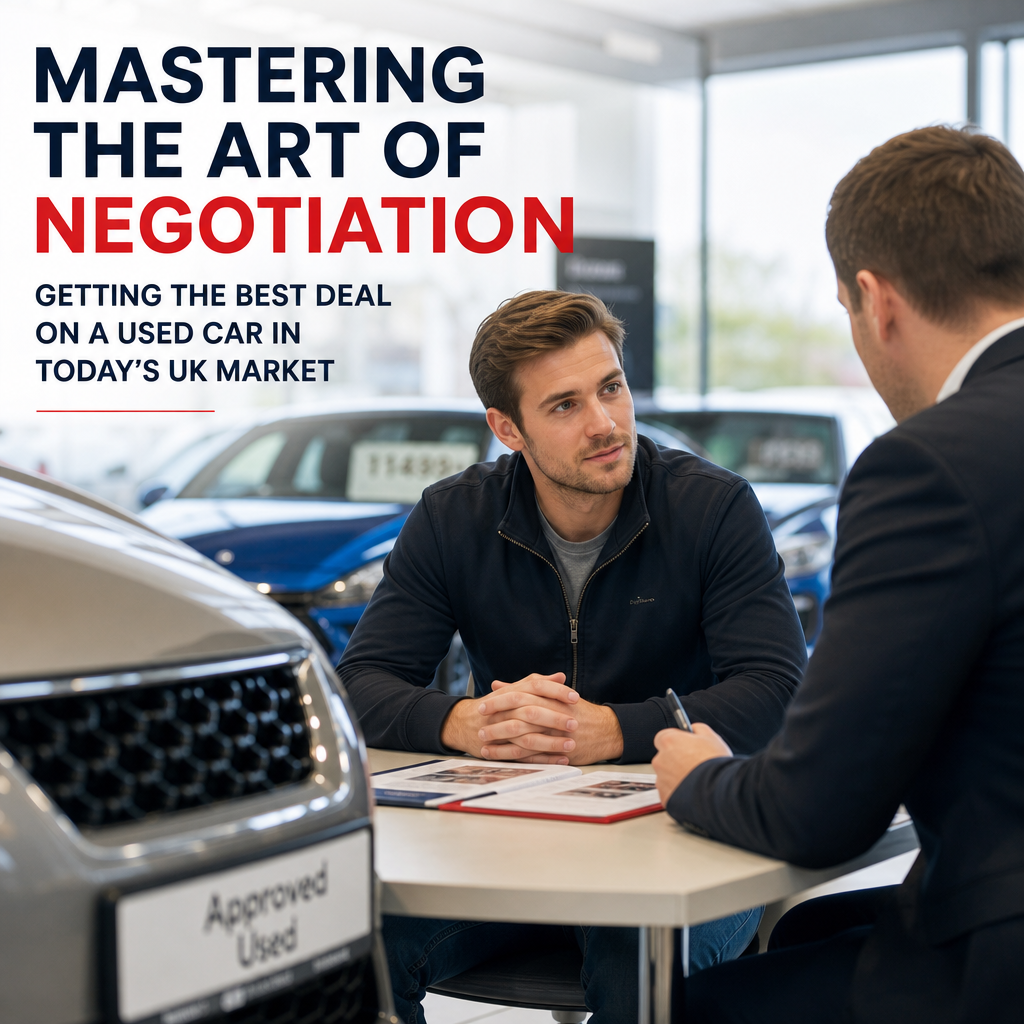
Mastering the Art of Negotiation: Getting the Best Deal on a Used Car in Today's UK Market
In the dynamic world of used car sales, securing a truly great deal isn't just about finding the right car; it's about mastering the art of negotiation. With prices fluctuating due to everything from global chip shortages to rising fuel costs and ULEZ expansions, understanding how to effectively haggle can save you hundreds, if not thousands, of pounds. Whether you’re a seasoned negotiator or a first-timer, this guide for CarsLink.ai will equip you with the knowledge and tactics to drive away with confidence, knowing you’ve got the best possible deal in the current UK market.
Know Your Worth: Mastering Market Research
Before you even step foot on a forecourt or meet a private seller, your most powerful tool is knowledge. Researching the market value of your desired vehicle is paramount. Begin by exploring reputable platforms like CarsLink.ai, Auto Trader, and What Car? to get a comprehensive overview of pricing.
Look for cars with similar mileage, age, condition, and specification. Pay close attention to trim levels, as a higher-spec ‘Titanium’ Ford Focus will command a different price to a basic ‘Zetec’ model. Don’t forget to factor in optional extras like panoramic roofs, heated seats, or advanced safety packs, which can add value.
Current pricing trends are influenced by several factors. High demand for efficient, smaller cars in urban areas might push up prices for models like the Toyota Yaris or Honda Jazz. Conversely, larger, less economical SUVs might be slightly more negotiable if petrol prices are high. Be aware of the impact of Clean Air Zones and ULEZ rules; older, non-compliant diesel or petrol vehicles might be harder for sellers to shift, creating a negotiation opportunity for you if you live outside these zones.
Aim to identify the 'sweet spot' – the average price for a car in good condition, and then identify those that are slightly overpriced or those with potential for a quick sale. This allows you to walk into a negotiation armed with concrete data, rather than just a hunch.
The Art of the Deal: Tactics for Sellers and Dealers
Once you've done your homework, it's time to put on your negotiating hat. The approach differs slightly when dealing with private sellers versus professional dealers.
With Private Sellers: Private sellers are often selling due to personal circumstances – they might be upgrading, downsizing, or need a quick sale for financial reasons. Your goal here is to understand their motivation without being intrusive. Be polite and build rapport. Start with a reasonable offer that’s below the asking price but not insulting (e.g., 10-15% below for a car under £10k, less for higher value cars). Highlight any minor imperfections you’ve noted, not as criticisms, but as reasons for your slightly lower offer. "The MOT history shows advisories for brake pads, and the tyres look a bit worn; I'd need to factor in the cost of those replacements." A private seller will appreciate a smooth, quick transaction, so signalling your readiness to pay (via bank transfer, once verified) can be a strong bargaining chip.
With Dealers: Dealers have more overheads, but also more flexibility. Your first offer should always be for the car itself, not muddied by part-exchange valuations. Focus on the 'outright purchase' price first. Don't be afraid to highlight competitor prices for similar cars you've seen online. "I've seen a very similar Golf R at [competitor dealer] for £X; can you get close to that?"
Dealers also have more scope for ‘extras’. If they won't budge much on price, ask for a full tank of fuel, a fresh MOT, a new service, or an upgraded warranty. Be wary of 'upsells' like expensive paint protection or additional insurance packages; politely decline unless you genuinely want them. If you’re part-exchanging, negotiate the trade-in value separately after agreeing on the price of the car you're buying. This allows you to get the best deal on both ends. Don't show too much enthusiasm; feign a slight indifference and remind them you have other options.
When to Hold, When to Fold: Identifying Red Flags and Walking Away
Knowing when to walk away is arguably the most powerful negotiating tactic. It demonstrates confidence and protects you from making a bad purchase. Identifying red flags is crucial.
Immediate Red Flags:
- Pressure Selling: Any seller (private or dealer) trying to rush you into a decision or dismiss your questions is a major warning sign.
- Lack of Documentation: No service history, no V5C (logbook), or an unwillingness to provide proof of ownership.
- Inconsistent Story: If the seller's account of the car's history or reason for sale changes, be very cautious.
- Suspiciously Low Price: While a bargain is tempting, a car priced significantly below market value often hides serious issues.
- Warning Lights: Any dashboard warning lights illuminated (engine, ABS, airbag) are not minor issues; they require immediate investigation.
- Obvious Damage: Mismatched paint panels, large panel gaps, significant rust, or excessive wear on interior components can indicate undeclared accident damage or neglect.
Non-Negotiable Points (Walk Away):
- Major HPI Check Issues: An outstanding finance agreement, stolen vehicle status, or a significant write-off category (Cat A or B are scrap only, Cat S or N require professional repair verification) are deal-breakers. Always perform a comprehensive HPI check.
- Serious Safety Concerns: If a pre-purchase inspection uncovers critical safety defects that the seller is unwilling to rectify or price into your offer, walk away. Your safety isn't negotiable.
- Seller Refusal of Inspection: If a seller won't allow an independent mechanic to inspect the vehicle, they likely have something to hide.
Empower yourself by remembering there are thousands of used cars on the market. If a deal doesn’t feel right, or if the seller isn’t willing to meet you halfway on reasonable terms, politely decline and move on. You’ll save yourself potential heartache and financial stress in the long run.
The Devil's in the Detail: Leveraging Inspections and History
Once you’ve found a car that looks promising, delve into its history and consider a professional inspection. This provides concrete evidence for your negotiation.
Service History and MOT Records: A Full Service History (FSH), especially from a main dealer or reputable specialist, adds significant value and confidence. Conversely, a patchy history, missed services, or solely DIY records can be a strong bargaining chip. Look for proof of crucial maintenance like cambelt/timing chain replacement (if applicable for higher mileage cars), as these are expensive jobs.
Always check the car's MOT history online using its registration number. This free government service reveals past advisories, failures, and mileage trends. Recurring advisories (e.g., "tyres close to legal limit" repeatedly) or unaddressed warnings are excellent negotiation points. A car with only a few months left on its MOT is also a valid reason to ask for a discount or for the seller to get a fresh MOT certificate.
Pre-Purchase Inspection (PPI): For anything other than the cheapest 'runaround', a professional Pre-Purchase Inspection (PPI) by an independent mechanic, or services like the AA or RAC, is invaluable. While it costs money (typically £150-£250), it can expose hidden faults that could cost you thousands.
The mechanic will provide a detailed report on the vehicle's mechanical and structural condition. Any faults identified – worn tyres, failing suspension bushes, a weakening clutch, or even minor fluid leaks – give you solid ground for negotiation. For example, if the inspection reveals the front brake discs and pads need replacing soon, you can state, "Your mechanic estimated £350 for parts and labour on the brakes, so I'd need that reflected in the price." This isn't just guesswork; it's a quantified, professional assessment.
Leveraging these details transforms your negotiation from subjective opinion to objective fact, significantly strengthening your position and ensuring you drive away with not just a great price, but a reliable vehicle too.
Conclusion
Negotiating for a used car doesn’t have to be daunting. By dedicating time to thorough market research, adopting a calm and confident approach, knowing when to walk away from a bad deal, and diligently leveraging the car's service history and professional inspections, you put yourself in a powerful position. The UK used car market is competitive, but with these strategies, you’re well-equipped to navigate it successfully and secure a deal that works for you. Happy motoring from the team at CarsLink.ai!