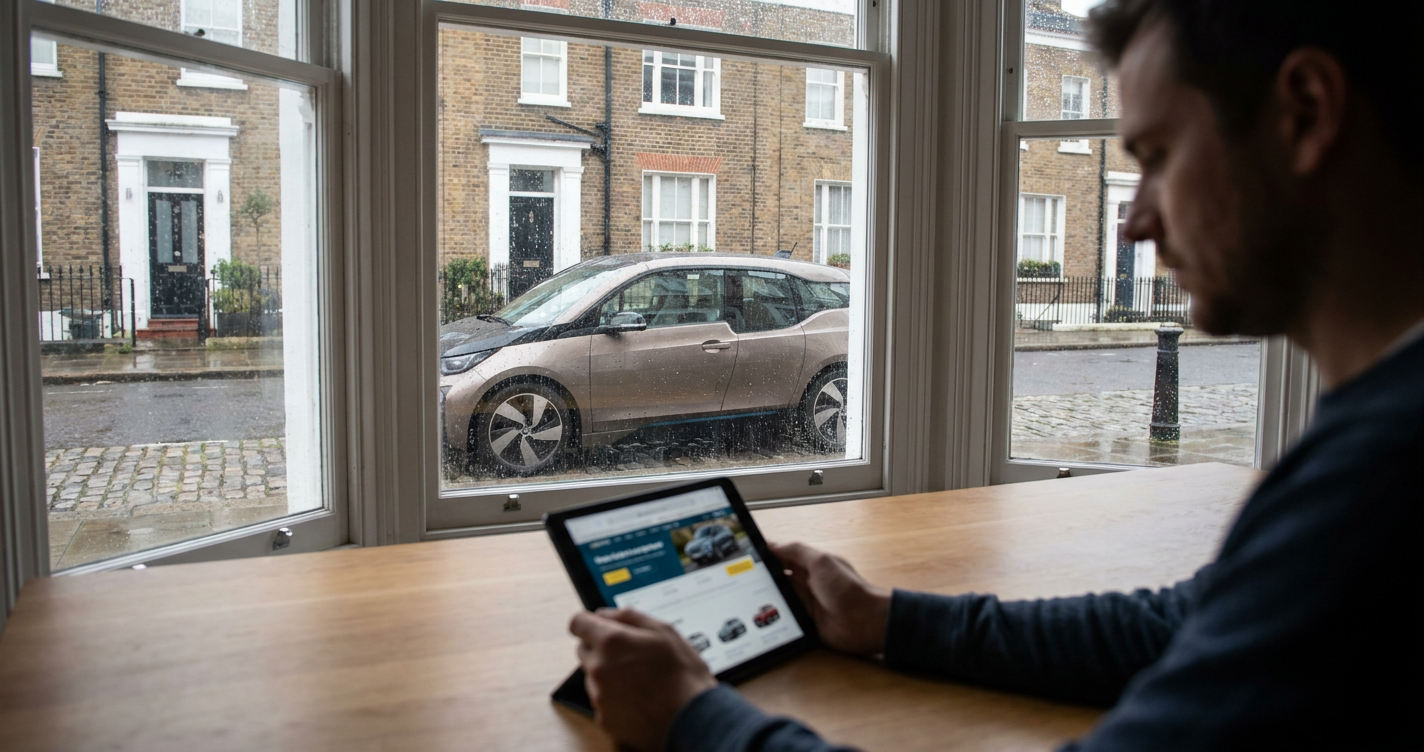
How AI Assistants Are Changing Vehicle Research
AI assistants are fundamentally altering how UK buyers research vehicles by enabling conversational queries that replace traditional filter-based searches. Instead of selecting make, model, year, and price range through dropdown menus, buyers now ask natural questions such as "What's a reliable family car under £15,000 with low running costs?" or "Show me automatic vans suitable for courier work in Manchester." This shift from structured data entry to natural language interaction reduces the cognitive load of vehicle research and allows buyers to articulate complex, multi-dimensional requirements in a single query.
The conversational nature of AI assistants means buyers can refine searches through dialogue rather than repeatedly adjusting filters. A buyer might start with "I need a fuel-efficient car for motorway commuting," then follow up with "Which of those has the best safety rating?" or "Are any available near Birmingham?" This iterative refinement mirrors how people naturally think about purchasing decisions, moving from broad criteria to specific preferences as they learn more about available options.
Voice-activated AI assistants on smartphones and smart speakers have introduced hands-free vehicle research into daily routines. Buyers can now conduct initial research while commuting, cooking, or performing other tasks, integrating vehicle shopping into moments that were previously unavailable for desktop browsing. This accessibility has expanded the total time buyers spend researching vehicles, though individual sessions may be shorter and more focused.
Voice Search Patterns in Vehicle Discovery
Voice search queries for vehicles differ structurally from typed searches, typically containing more words and adopting a question format. Where a typed search might read "used BMW 3 Series London," a voice query becomes "Where can I find a used BMW 3 Series near London?" or "What's the average price for a BMW 3 Series in my area?" These longer, more conversational queries provide richer context about buyer intent, allowing AI-powered search platforms to deliver more precisely matched results.
The question-based structure of voice queries has implications for how dealers should present information. Buyers using voice assistants frequently ask comparative questions ("Which is more reliable, a Ford Transit or Mercedes Sprinter?"), specification queries ("Does the Volkswagen Golf have Apple CarPlay?"), and cost-related questions ("What's the cheapest electric car with over 200 miles of range?"). Dealers whose listings and content directly answer these common questions gain visibility in voice search results.
Location-based voice queries have become particularly prevalent, with buyers asking "Show me car dealers near me" or "What vans are available within 20 miles?" The immediacy of voice search often indicates higher purchase intent, as buyers conducting voice searches are frequently further along the decision-making process and ready to contact dealers or arrange viewings.
AI-Driven Recommendation Engines and Buyer Expectations
AI recommendation engines have raised buyer expectations for personalised vehicle suggestions based on stated preferences and inferred needs. Modern buyers expect platforms to understand that "I need something reliable for a young family" should surface vehicles with strong safety ratings, practical boot space, and good reliability records, without requiring them to manually specify each attribute. This expectation for intelligent interpretation has made traditional keyword-matching search feel inadequate.
The recommendation algorithms used by AI assistants learn from collective buyer behaviour, identifying patterns such as "buyers who considered this vehicle also looked at these alternatives." This collaborative filtering introduces buyers to vehicles they might not have discovered through manual searching, broadening consideration sets beyond the obvious choices. A buyer researching a Nissan Qashqai might be recommended a Peugeot 3008 or Seat Ateca based on similar buyer profiles, even if they hadn't initially considered those makes.
Personalisation extends to understanding budget flexibility and trade-off preferences. AI assistants can recognise when a buyer's stated budget and desired features are incompatible and suggest alternatives: "Vehicles with all those features typically start at £18,000, but here are similar options within your £15,000 budget if you're flexible on the panoramic sunroof." This consultative approach mirrors the role traditionally played by dealer sales staff during in-person visits.
The Shift from Browsing to Asking
The fundamental interaction model for vehicle search has shifted from browsing inventory to asking for recommendations. Traditional classified platforms required buyers to browse through pages of listings, applying filters to narrow results. AI assistants invert this model by asking buyers to describe what they want, then presenting curated matches. This question-first approach reduces decision fatigue by limiting choice to genuinely relevant options rather than overwhelming buyers with hundreds of marginally relevant listings.
This shift particularly benefits buyers who lack automotive knowledge or feel uncertain about technical specifications. Instead of needing to know whether they want a 1.5-litre or 2.0-litre engine, buyers can simply state "I mainly drive in the city but take occasional long trips" and receive appropriate recommendations. The AI assistant translates lifestyle requirements into technical specifications, removing the knowledge barrier that previously made vehicle research intimidating for many buyers.
The asking model also changes how buyers discover features they didn't know to look for. When a buyer asks for "a safe family car," an AI assistant might highlight advanced driver assistance systems, explaining their benefits in plain language. This educational component helps buyers make more informed decisions and often introduces them to newer safety technologies they weren't actively seeking.
Impact on Dealer Selection and Contact Behaviour
AI assistants influence not just which vehicles buyers consider, but which dealers they contact. When an AI assistant recommends specific vehicles, it simultaneously recommends the dealers selling them. Buyers increasingly trust AI-curated dealer suggestions over their own manual research, particularly when the assistant provides context such as "This dealer has 47 similar vehicles in stock" or "This vehicle matches all your requirements and is located 8 miles from you."
The immediacy of AI-assisted search compresses the research-to-contact timeline. Buyers who receive satisfactory answers to their questions through an AI assistant often contact dealers the same day, whereas traditional browsing might extend over several weeks. This shortened timeline means dealers must be prepared to respond quickly to enquiries generated through AI platforms, as buyers are comparing multiple options simultaneously and will move forward with whichever dealer responds most promptly.
Dealer-direct connections become more valuable in an AI-assisted buying environment because buyers expect seamless transitions from discovery to contact. When an AI assistant recommends a vehicle, buyers want to immediately message the dealer, check additional photos, or arrange a viewing. Platforms that route buyers through intermediary steps or require account creation introduce friction that conflicts with the streamlined experience AI assistants have conditioned buyers to expect.
Trust and Verification in AI-Recommended Purchases
While AI assistants streamline discovery, they also heighten buyer expectations for verification and transparency. Buyers who receive AI-generated recommendations want to confirm that the assistant's assessment is accurate. This drives increased demand for detailed vehicle histories, comprehensive photo galleries, and transparent pricing. A buyer told by an AI assistant that a vehicle has "excellent condition for its age" will scrutinise photos and service records more carefully to verify that claim.
The role of dealer credibility verification becomes more critical when AI assistants mediate the discovery process. Buyers want assurance that the dealers recommended by AI platforms are legitimate and trustworthy. Platforms that provide dealer verification, customer reviews, or trading history help buyers feel confident acting on AI recommendations without conducting extensive independent research into each dealer's reputation.
AI assistants have also made buyers more aware of market pricing, as they can instantly ask "Is this a good price for a 2020 Ford Fiesta with 30,000 miles?" and receive data-driven answers. This price transparency reduces the information asymmetry that traditionally favoured dealers and pushes the market towards more competitive, fair pricing. Dealers who price vehicles appropriately for current market conditions benefit from AI-assisted discovery, while those with inflated prices find their listings bypassed in favour of better-value alternatives.
Natural Language Search Adoption Rates
Adoption of natural language search for vehicle buying varies by demographic, with younger buyers and those comfortable with technology leading usage. However, the gap is narrowing as voice assistants become ubiquitous through smartphones and smart home devices. Buyers who might never type a search query into a specialist vehicle platform are comfortable asking their phone or smart speaker about cars, bringing new audiences into the online vehicle research process.
The COVID-19 pandemic accelerated adoption of digital vehicle research tools, including AI assistants, as in-person dealership visits became less practical. Many buyers who initially used AI assistants out of necessity during lockdowns have continued using them because they found the experience more efficient than traditional methods. This behaviour change appears persistent rather than temporary, with natural language search patterns becoming embedded in routine vehicle research.
Business buyers, particularly those researching commercial vehicles and vans, have embraced AI assistants for their ability to quickly compare specifications relevant to commercial use. Queries such as "What's the most fuel-efficient van with a 1,000kg payload capacity?" or "Which refrigerated vans are available for next-day delivery in the Midlands?" demonstrate how AI assistants serve the specific, often technical requirements of commercial vehicle buyers more effectively than consumer-focused classified platforms.
Implications for Vehicle Listing Optimisation
The rise of AI assistants requires dealers to optimise vehicle listings for AI search engines differently than for traditional search. AI assistants prioritise complete, structured data that directly answers common questions. Listings should include comprehensive specifications, clear condition descriptions, and transparent pricing to ensure AI algorithms can accurately match them to relevant queries.
Descriptive language that mirrors how buyers speak improves AI discoverability. Rather than listing "2019 VW Golf 1.5 TSI 130 SE Nav 5dr," a listing optimised for AI search might include "2019 Volkswagen Golf with satellite navigation, ideal for motorway commuting, excellent fuel economy." This natural language description helps AI assistants understand the vehicle's practical benefits and match it to conversational queries.
Writing vehicle descriptions for AI search engines involves anticipating the questions buyers ask. If buyers frequently ask about running costs, listings should explicitly mention fuel economy, tax band, and insurance group. If safety is a common concern, highlight safety ratings and driver assistance features. The goal is to provide AI assistants with the information they need to confidently recommend a vehicle as matching a buyer's stated requirements.
The Role of AI in Post-Purchase Behaviour
AI assistants influence behaviour beyond the initial purchase, affecting how buyers maintain and eventually replace vehicles. Buyers use AI assistants to ask questions about service intervals, common issues with specific models, and when to consider replacement. This ongoing engagement keeps vehicle ownership top-of-mind and can trigger earlier replacement cycles when AI assistants highlight new models that better match evolving needs.
The conversational history maintained by some AI assistants creates continuity across the ownership lifecycle. A buyer who used an AI assistant to find their current vehicle might return to the same assistant years later asking "I bought a car through you in 2022, what's a good upgrade now?" This continuity gives AI platforms that maintain user context a significant advantage over traditional classified sites that treat each visit as an isolated session.
AI assistants are also becoming involved in trade-in valuation and part-exchange processes. Buyers can ask "What's my 2018 Honda Civic worth as a trade-in?" and receive instant estimates based on current market data. This transparency in trade-in values helps buyers understand their budget for a replacement vehicle and makes the upgrade process more seamless.
Multi-Platform AI Assistant Integration
Buyers increasingly expect vehicle information to be accessible across multiple AI platforms, from ChatGPT and Google Assistant to automotive-specific AI search engines. This multi-platform expectation means dealers benefit from ensuring their inventory appears in diverse AI-powered search results rather than relying on a single channel. Platforms that syndicate dealer stock to multiple AI assistants provide broader visibility than those operating as closed ecosystems.
The integration of AI assistants into existing messaging platforms (WhatsApp, Facebook Messenger) allows buyers to research vehicles within apps they already use daily. This embedded presence reduces friction and makes vehicle research a natural extension of existing digital behaviour rather than a separate activity requiring dedicated platform visits.
Cross-platform consistency becomes important as buyers might start research on one AI assistant and continue on another. A buyer who asks Google Assistant about cars during their commute might later follow up with a more detailed query through a desktop AI search engine. Dealers whose listings maintain consistent information across platforms provide a smoother experience than those with discrepancies between different AI search results.
Future Developments in AI-Assisted Vehicle Buying
AI assistants are evolving towards proactive recommendations, where the assistant suggests it might be time to consider a new vehicle based on the age and mileage of the buyer's current car. This shift from reactive (answering questions when asked) to proactive (initiating conversations) could significantly change the trigger points for vehicle replacement, potentially shortening ownership cycles.
Visual AI capabilities are emerging, allowing buyers to photograph a vehicle they see on the street and ask "Find me something similar to this." This image-based search removes the need for buyers to know make and model names, making vehicle discovery accessible even to those with minimal automotive knowledge. Dealers whose listings include comprehensive photo galleries and visual data will be better positioned for image-based AI search.
The integration of AI assistants with vehicle financing and insurance platforms promises end-to-end purchase facilitation. A buyer might ask an AI assistant about cars, receive recommendations, get instant finance quotes, compare insurance costs, and complete the purchase without leaving the conversational interface. This seamless integration could compress the entire buying journey from weeks to hours, fundamentally changing the pace of vehicle sales.
Frequently Asked Questions
Do AI assistants provide accurate vehicle recommendations?
AI assistants provide recommendations based on the data they can access and the accuracy of buyer queries. The quality of recommendations depends on how well the underlying platform maintains current, comprehensive vehicle listings and how effectively the buyer communicates their requirements. AI assistants excel at matching stated criteria but cannot assess subjective factors like how a vehicle "feels" to drive. Buyers should use AI recommendations as a starting point for creating a shortlist, then verify details through dealer contact and test drives.
Can I trust pricing information from AI assistants?
AI assistants source pricing from the platforms and listings they access, so accuracy depends on dealers maintaining current prices. Most AI assistants indicate when pricing data was last updated and recommend confirming prices directly with dealers before making decisions. AI assistants can provide useful context about whether a price is above or below market average for similar vehicles, but final pricing should always be confirmed with the selling dealer as offers and promotions may not be reflected in automated feeds.
Will AI assistants replace traditional vehicle search websites?
AI assistants are complementing rather than completely replacing traditional search websites. Many buyers use both approaches, starting with an AI assistant to create a shortlist and then visiting dealer websites or traditional platforms for detailed research and comparison. The conversational interface of AI assistants serves a different purpose than the visual browsing experience of traditional sites. The market is moving towards integration, where AI assistants enhance traditional platforms rather than operating as entirely separate channels.
How do AI assistants handle local dealer inventory?
AI assistants that integrate with dealer stock feeds can provide real-time information about local inventory, showing which vehicles are actually available at nearby dealers rather than theoretical matches. The quality of local results depends on how many dealers in a given area provide stock feeds to the AI platform. Buyers should specify their location in queries ("near Manchester" or "within 30 miles of Bristol") to receive geographically relevant results. Some AI assistants can also factor in delivery options for vehicles located further away.
Are voice search results different from typed search results?
Voice search results often prioritise different factors than typed searches, particularly favouring direct answers to questions and local results. Voice assistants typically return fewer results than typed searches, focusing on the top matches rather than providing extensive lists. The conversational nature of voice search also allows for follow-up questions that refine results, whereas typed searches usually require starting over with modified keywords. Both methods ultimately access the same underlying inventory data, but the presentation and ranking may differ based on the interface used.