Hidden History: Your UK Guide to Spotting Flood or Accident Damage on Used Cars
The allure of a great deal on a used car can be powerful. Thousands of fantastic pre-owned vehicles are available across the UK, offering superb value and reliability. However, beneath the gleaming paintwork and attractive price tag, some cars hide a secret past – one involving flood damage or a significant accident. These hidden histories can lead to costly repairs, safety issues, and a significantly diminished driving experience.
As your trusted guide at CarsLink.ai, we believe in empowering you with the knowledge to make informed decisions. This comprehensive guide will arm you with practical tips and red flags to spot potential flood or accident damage, ensuring your next used car purchase is a sound one.
The Visual Verdict: Exterior Clues That Tell a Story
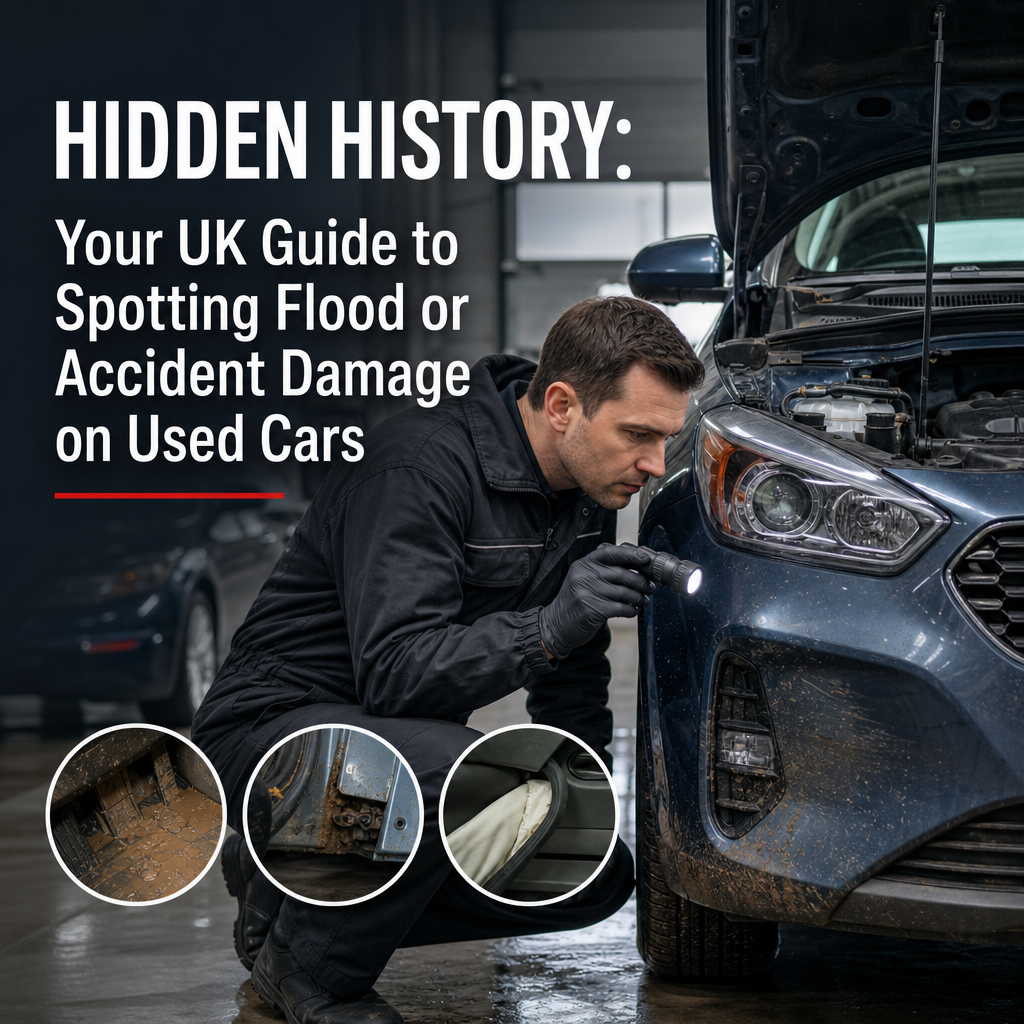
When first approaching a potential purchase, become a detective. Start your investigation with a meticulous examination of the vehicle's exterior.
- Uneven Panel Gaps: This is often the most immediate giveaway of previous accident repair. Carefully inspect the gaps around the bonnet, boot lid, and all four doors. Are they consistent in width? A wider gap on one side of the bonnet compared to the other, or a door that sits slightly proud, can indicate a panel has been removed, replaced, or that the vehicle's underlying structure has been compromised and repaired. Look for evidence of misaligned headlights or tail lights too.
- Paint Mismatches and Overspray: Step back and view the car from different angles and in varying light conditions. Do all the panels appear to be the same shade? Even subtle differences in colour can indicate a respray. Pay close attention to areas like the bumpers, which are often the first to be repaired or replaced after an impact. Also, look for overspray – tiny specks of paint – on rubber seals around windows, plastic trim, the inside of wheel arches, or even on the exhaust pipe. This suggests a rushed or careless paint job, often covering up repairs.
- Unusual Rust or Corrosion: While surface rust on brake discs after rain is normal, rust in unusual places is a major red flag for flood damage. Inspect under the bonnet for corrosion on nuts, bolts, wiring harnesses, and the battery tray. Check the brake pedal pivot, seatbelt anchor bolts (pull the belt out fully and look at the mounting point), and screws under the dashboard. Look inside door jambs, under the rubber weather stripping, and around headlight or tail light housings. Any rust in these typically dry areas strongly suggests water ingress.
- Tyre and Wheel Condition: Uneven tyre wear – where one side of the tyre is significantly more worn than the other – can be a tell-tale sign of a suspension or alignment issue stemming from an accident. While kerbed alloy wheels are common, excessive damage or wheels that don't match (e.g., one looks brand new while the others are worn) could hint at replacement due to impact.
The Interior Investigation: More Than Meets the Eye
Once inside, engage your senses. The interior can often reveal more about a car's hidden past than its exterior.
- Damp Smells: Trust your nose. A persistent musty, mouldy, or mildewy smell is a strong indicator of water damage, especially flood damage. Be wary of strong air fresheners or ozone treatments, which sellers might use to mask these odours. Check the boot, under the seats, and inside the glove compartment.
- Water Marks and Stains: Look for tide marks or staining on the upholstery, particularly on the lower edges of seats, door cards, and seatbelts (pull them out fully to check the entire length). Examine the headliner for water stains, which could indicate a leaking sunroof or windscreen, but combined with other signs, could point to more extensive flooding.
- Mud, Silt, or Debris: This is a definitive sign of flood damage. Lift the carpets and floor mats, especially in the footwells and the boot. Look for dried mud, silt, sand, or leaves in crevices, under seats, inside air vents, or even behind dashboard panels. Use a torch to peer into hard-to-reach areas.
- Electrical Gremlins: Water and electronics are a disastrous combination. Test every electrical component: windows, mirrors, central locking, radio, air conditioning, wipers, all interior and exterior lights. Look for flickering lights, intermittent faults, or components that simply don't work. Check the fuse box for signs of corrosion or dried mud, and if possible, examine electrical connectors under the dashboard for rust.
- Dashboard Irregularities: Misaligned dashboard panels, inconsistent backlighting on buttons, or even replaced switches could suggest tampering or previous repair work. Be vigilant for any non-standard elements or poor fitment.
The Paper Trail: Crucial Document Checks
A car's history documents are invaluable. Never skip this vital step.
- HPI Check (or Equivalent): This is non-negotiable for any used car purchase in the UK. A comprehensive history check from a reputable provider (like HPI, My Car Check, or Experian) will reveal if the car has outstanding finance, has been reported stolen, or, crucially, if it has been an insurance write-off. It will also provide detailed mileage history and the number of previous owners.
- Insurance Write-Off Categories (UK Specific): If the HPI report flags a write-off, understand the categories:
- Cat S (Structural Damage): Introduced in October 2017 (replacing Cat C), this means the vehicle has sustained damage to its structural frame or chassis. While repairable, its structural integrity was compromised. Buying a Cat S car requires extreme caution and a thorough professional inspection.
- Cat N (Non-Structural Damage): Also introduced in October 2017 (replacing Cat D), this indicates the vehicle has sustained non-structural damage (e.g., cosmetic, electrical, or bolt-on parts). The cost of repair exceeded the insurer's economic threshold, but the chassis wasn't affected. While generally less concerning than Cat S, a detailed understanding of the repair work is essential.
- For older vehicles: You might still encounter Cat C (repairable, but repair cost exceeded value) or Cat D (repairable, but repair cost significant vs. value).
- Service History and MOT Certificates: A complete service history provides a timeline of maintenance and can highlight any unexplained gaps that might coincide with an accident or major repair. Check previous MOT certificates for advisories relating to structural integrity, corrosion, or suspension components. Crucially, verify that the mileage readings align across all documents; inconsistencies can indicate clocking.
- V5C (Logbook): Always verify the Vehicle Identification Number (VIN) on the V5C matches the VIN stamped on the car (visible through the windscreen, under the bonnet, and often in a door jamb). This ensures you're looking at the correct car's history.
The Test Drive: Feeling the Faults
The test drive is your opportunity to feel how the car performs and identify any underlying issues that the visual inspection might have missed.
- Unusual Noises: Listen intently. Any knocks, clunks, grinding, or squealing during acceleration, braking, or turning can signal problems with the suspension, steering, or brakes, often a result of accident damage. Pay attention to how the car sounds over bumps – excessive rattling or creaking could be loose bodywork or suspension components.
- Steering and Alignment: Does the car pull to one side when driving in a straight line on a flat road? Is the steering wheel perfectly straight when the car is going straight? Any deviation here is a major red flag for issues with alignment, suspension, or even a bent chassis, all common after an accident. The steering should feel smooth and responsive, not vague, heavy, or loose.
- Braking Performance: Test the brakes gently first, then apply them more firmly (safely, of course). The car should brake in a straight line, without pulling to one side. Listen for grinding, squealing, or pulsing through the pedal, which can indicate worn or damaged brake components.
- Transmission: For manual cars, ensure the gears engage smoothly without crunching or difficulty. For automatics, check for smooth, timely shifts without lurching, slipping, or delayed engagement.
- Warning Lights: Observe the dashboard when you start the car. Most warning lights (engine management, ABS, airbag, etc.) should illuminate briefly and then turn off. If any lights remain on, investigate immediately. Be suspicious if a seller tries to start the car before you've had a chance to see the initial light sequence; some unscrupulous individuals might remove bulbs or disable warning lights.
Conclusion
Buying a used car is a significant investment, and while the majority of deals are straightforward, it pays to be vigilant. Armed with this comprehensive guide, you're now better equipped to uncover any hidden history of flood or accident damage on a potential purchase. Don't be afraid to walk away if something doesn't feel right, and always consider a pre-purchase inspection by a qualified mechanic for complete peace of mind, especially if any red flags appear.
At CarsLink.ai, we're committed to helping you find your perfect used car safely and confidently. By following these steps, you'll significantly reduce the risk of buying a vehicle that brings future headaches rather than driving pleasure. Happy hunting!