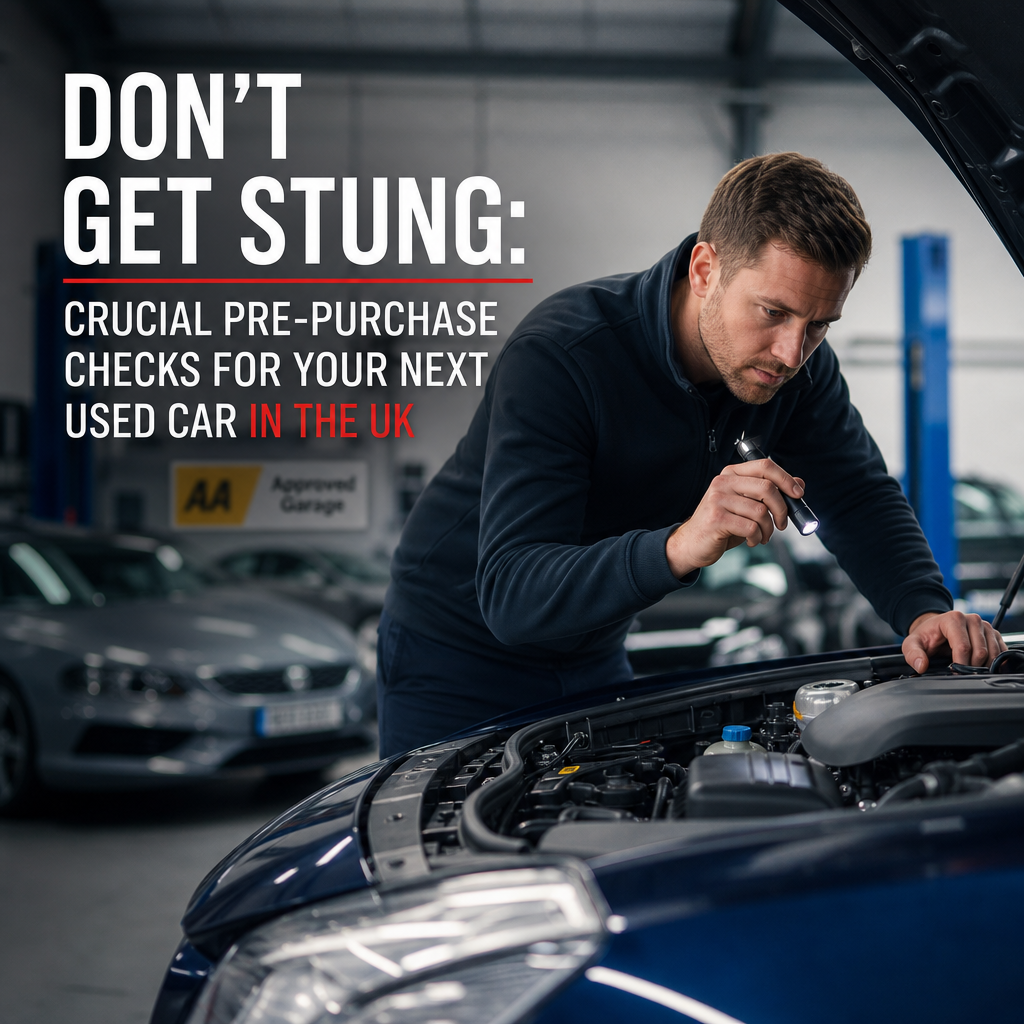
Don't Get Stung: Crucial Pre-Purchase Checks for Your Next Used Car in the UK
The thrill of finding your next set of wheels is palpable. A quick scroll through CarsLink.ai, a few promising contenders, and suddenly you’re picturing yourself cruising down the A1. But before you get swept away by shiny paintwork and a tempting price tag, hit the brakes. Buying a used car in the UK offers fantastic value, but it also carries inherent risks. A hasty decision can lead to costly repairs, endless headaches, and the crushing disappointment of a hidden lemon.
At CarsLink.ai, we believe in empowering our buyers with the knowledge to make informed decisions. This guide will walk you through the essential pre-purchase checks that go far beyond a quick glance, helping you uncover potential issues and ensuring you drive away with a reliable motor, not a money pit.
Beyond the MOT: Your Test Drive and Under-Bonnet Inspection
While a valid MOT certificate is a legal requirement and offers a snapshot of a car's roadworthiness, it's merely a minimum standard. Your test drive and a thorough under-bonnet inspection are your primary tools for uncovering deeper truths.
On the Test Drive:
- The Cold Start: Insist on starting the car from cold. This is where many issues announce themselves. Listen for unusual rattles, clunks, high-pitched squeals, or excessive smoke from the exhaust (a puff of white on a cold morning is usually fine, but blue or thick black smoke is a red flag).
- Gearbox and Clutch: For manuals, check for smooth gear changes without crunching or excessive force. The clutch pedal should feel firm and engage smoothly; test for slip by accelerating hard in a higher gear. For automatics, shifts should be imperceptible – no jerking, lagging, or 'flaring' of revs between gears.
- Brakes: Drive on a quiet road and brake firmly. The car should stop in a straight line without pulling to one side. Listen for grinding, squealing, or clunking. The pedal should feel firm, not spongy.
- Steering: On a straight road, the steering wheel should sit straight. Feel for excessive play, vagueness, or any knocking or whining when turning the wheel fully from lock to lock.
- Suspension: Deliberately drive over speed bumps and uneven surfaces (safely!). Listen for knocks, clunks, or excessive bouncing. The car should feel composed, not floaty or crashy.
- In-Cabin Electrics: Test everything. Windows, mirrors, central locking, air conditioning, heating, radio, sat-nav, interior lights, wipers, and washers. Even small electrical gremlins can be expensive to fix.
- Warning Lights: Crucially, check the dashboard for any illuminated warning lights (engine management, ABS, airbag, oil pressure, battery, etc.) after the car has started. If they stay on, investigate immediately. Some sellers might try to reset them just before your arrival, so a slightly longer test drive might see them reappear.
Under the Bonnet (Engine Off and Cool):
Before you even start the engine, pop the bonnet. Look for:
- Fluid Levels and Condition: Check the oil (level, colour – should be brown/golden, not black sludge or milky), coolant (level, colour – no oil contamination visible), brake fluid, and power steering fluid. Any signs of mixing or low levels are causes for concern.
- Belts and Hoses: Inspect drive belts for cracks, fraying, or excessive wear. Check hoses for cracks, bulges, or signs of leaks around their connections.
- Battery: Look for corrosion on the terminals, which can indicate poor maintenance.
- General Cleanliness: Is the engine bay suspiciously clean, suggesting recent jet-washing to hide leaks? Or is it genuinely well-maintained with clear signs of proper care?
- Leaks: Look for any fresh or dried drips, stains, or puddles on the engine block itself or on the ground beneath.
Unmasking Hidden Issues: Rust, Electrics, and Suspension Woes
Even with a seemingly good test drive, certain common issues might not immediately present themselves.
- Rust Hotspots: Rust is a major enemy of older UK cars, thanks to our damp climate and salted winter roads. Don't just look at the visible bodywork. Get down and check:
- Sills: The panels beneath the doors are notorious rust traps. Push gently; bubbling paint can hide serious rot.
- Wheel Arches: Especially the rear arches, where dirt and water collect. Ford Fiestas and Focuses of certain generations, for example, are well-known for rear arch rust.
- Boot Floor & Spare Wheel Well: Lift the boot carpet and check underneath for moisture or corrosion.
- Chassis Rails: Look underneath the car (safely!) for serious structural rust. A torch is your friend here. Minor surface rust is often acceptable, but anything flaky or hole-ridden is a serious red flag.
- Electrical Gremlins: Modern cars are packed with electronics, and these can be a source of frustrating and expensive problems.
- Intermittent Faults: Be wary of "sometimes it works, sometimes it doesn't" explanations for things like electric windows, central locking, or dashboard displays. These can be notoriously difficult to diagnose.
- Warning Light Recurrence: If a seller says "Oh, that light just came on," it's probably been on for a while.
- Example: Complex German marques like BMW and Mercedes, while fantastic cars, can develop intricate electrical issues as they age, often requiring specialist diagnosis.
- Suspension Woes: Beyond the test drive, look for tell-tale signs.
- Uneven Tyre Wear: Check all four tyres for consistent wear across the tread. Scalloping, or heavy wear on just the inner or outer edge, can indicate serious suspension problems (e.g., worn bushes, tracking issues, or even accident damage).
- Bounciness: Push down hard on each corner of the car. It should rebound once and settle. If it bounces excessively, the shock absorbers are likely worn.
The Paper Trail: Verifying Service History and Documentation
The car's documentation provides crucial insight into its past care and legitimacy. Never skip this step.
- Service Book & Receipts:
- Examine the service book for consistent stamps from reputable garages, showing regular maintenance and a logical progression of mileage and dates. Are there any suspicious gaps?
- Receipts and invoices offer more detail, listing specific parts replaced and work done. Match these to the service book.
- Digital Service Records: Many modern cars (BMW, Mercedes, Audi, VW) now have digital service histories. Ask the seller for evidence or permission to verify with a main dealer.
- V5C (Logbook):
- This is the car's registration document and proof of ownership. Ensure the name and address on the V5C match the seller's ID.
- Check the number of previous owners.
- Look for any unusual markings or signs of tampering. Never buy a car without its V5C.
- MOT Certificate and History:
- Always check the car's MOT history online at
gov.uk/check-mot-history. This free service will show you past MOT passes, failures, and, crucially, advisory notes. - Look for consistency in mileage; any significant dips or jumps are a red flag for 'clocking' (mileage tampering).
- Advisory notes highlight issues that are not a fail now but will likely need attention soon. Use these as bargaining chips or reasons to walk away.
- Always check the car's MOT history online at
Spotting Red Flags: Accidents, Poor Repairs, and "Bargains"
Some issues scream "trouble" if you know what to look for.
- Inconsistent Panel Gaps: Stand back and look at the car from various angles. Uneven gaps between body panels (bonnet, wings, doors, boot lid) are strong indicators of previous accident damage and repair.
- Paint Match & Overspray: Look for variations in paint colour or texture, especially between panels and in different lighting conditions. Open the doors and boot – look for overspray on rubber seals, hinges, or wiring, which indicates a poor respray.
- Undisturbed Bolts: Open the bonnet and check the bolts holding the wings and bonnet in place. If they look scraped, rusty on the edges, or have been painted over, it suggests the panels have been removed or replaced.
- Tyre Wear and Condition: While checking for uneven wear (as mentioned earlier), also check the brand and condition of the tyres. Four good quality, matching tyres suggest a car that's been cared for. Cheap, mismatched, or budget tyres could indicate corners have been cut elsewhere.
- "Too Good to Be True" Bargains: If a deal seems suspiciously cheap for a popular model, it usually is. Research the market value thoroughly using sites like CarsLink.ai. A very low price often masks underlying problems or indicates a category write-off.
- Category Write-Offs (Cat S/N): Cars written off by insurers are categorised (Cat S for structural damage, Cat N for non-structural). While these can be perfectly safe if professionally repaired, they should be priced significantly lower and disclosed by the seller. Always use a reputable history check service (like HPI or MotorCheck) to confirm if the vehicle has been written off and to ensure it hasn't been stolen or has outstanding finance.
Conclusion
Buying a used car should be an exciting experience, not a leap of faith. By taking the time to conduct these crucial pre-purchase checks, you significantly reduce your risk of getting stung. Don't be afraid to ask questions, take your time, and if anything feels off, be prepared to walk away. Peace of mind is priceless when it comes to your vehicle. For significant investments or if you're feeling unsure, consider investing in a professional pre-purchase inspection from an independent mechanic.
At CarsLink.ai, we're here to help you find your perfect used car. But remember, the final inspection is always down to you. Happy hunting, and drive safe!