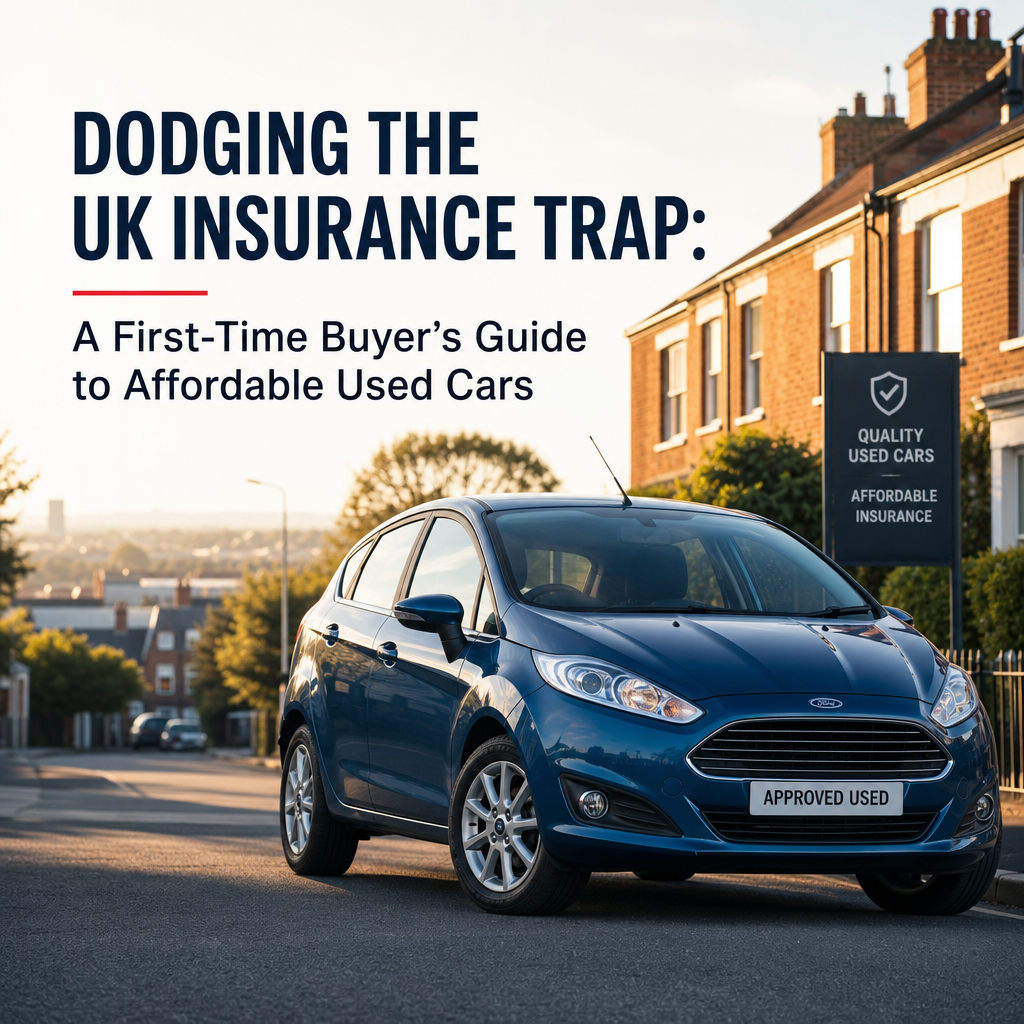
Dodging the UK Insurance Trap: A First-Time Buyer's Guide to Affordable Used Cars
The open road, the freedom to explore, and the sheer convenience of having your own set of wheels – getting your first car is an exciting milestone. However, for many first-time buyers in the UK, this dream often collides with a significant financial hurdle: eye-watering insurance premiums. Insurers view new drivers as a higher risk, which translates into higher costs. But don't despair! With smart choices and a bit of savvy, owning your first car doesn't have to break the bank.
This guide from CarsLink.ai will walk you through how to navigate the challenges, from picking the right car to finding a budget-friendly policy, ensuring your journey into car ownership is both thrilling and affordable.
The Insurance Hurdle: Understanding Why Premiums Bite
Before we delve into solutions, it’s crucial to understand why first-time drivers face such steep insurance costs. Simply put, a lack of driving history means no established 'no-claims discount' and less data for insurers to assess your risk profile. They typically assume a higher likelihood of accidents or claims based on statistics for new and younger drivers.
Insurers consider a multitude of factors when calculating your premium:
- The Driver: Your age, occupation (some professions are deemed lower risk), postcode, and any previous driving convictions (even minor ones) significantly impact the cost. Living in an area with high rates of car theft or vandalism will also push premiums up.
- The Car: This is a major one. The make, model, engine size, value, and crucially, its 'insurance group' (more on this below) all play a role. Faster, more powerful, or more expensive cars are inherently pricier to insure.
- How You Use It: Your estimated annual mileage, whether the car is used for commuting, and where it's typically parked overnight (garaged, on a driveway, or on the street) all influence risk.
- Policy Details: The type of cover (Third Party, Fire & Theft, or Fully Comprehensive), the excess you agree to pay, and whether you pay annually or monthly also factor in.
Understanding these elements empowers you to make informed decisions that can lead to significant savings.
Car Choice Matters: Identifying Low Insurance Group Vehicles
One of the most impactful decisions you'll make is the car itself. Every car in the UK is assigned an 'insurance group' from 1 to 50, with Group 1 being the cheapest to insure and Group 50 the most expensive. These groups are determined by factors such as repair costs, security features, performance, and the cost of parts.
For first-time buyers, targeting cars in lower insurance groups (typically groups 1-10) is paramount. These are generally smaller, less powerful, and more common cars with readily available, cheaper parts. Think sensible, reliable runabouts rather than sports cars.
Practical Examples of Low Insurance Group Used Cars:
- Volkswagen Up!, Skoda Citigo, SEAT Mii: These are essentially the same car under different badges, offering excellent fuel economy and compact dimensions. Many come in very low insurance groups (1-4).
- Toyota Aygo, Peugeot 107/108, Citroën C1: Another trio of popular city cars known for their reliability and low running costs, often found in insurance groups 1-5.
- Hyundai i10: A consistently popular choice, the i10 offers surprising interior space for its size and often sits in low insurance groups (2-6).
- Vauxhall Corsa & Ford Fiesta: While ubiquitous, be mindful that different engine sizes and trim levels can push these out of the lowest groups. Look for models with smaller engines (e.g., 1.0L or 1.2L) and basic specifications.
Always check the specific insurance group for any car you're considering, as even a slightly larger engine or a higher trim level (e.g., 'Sport' versions) can significantly affect the premium. You can often do this by entering the car's registration number on comparison websites before getting a formal quote.
Smart Policy Savings: Navigating Insurance Options
Once you've shortlisted some affordable cars, it's time to tackle the policy itself. Several strategies can help bring those premiums down:
- Telematics (Black Box) Insurance: This is often the biggest money-saver for new drivers. A small device (the "black box") is fitted to your car to monitor your driving style, speed, braking, acceleration, and even the time of day you drive. Safe, smooth drivers are rewarded with lower premiums, often reviewed periodically. While some policies might have curfews or penalise harsh driving, the potential savings are often worth it.
- Adding an Experienced Named Driver: Including an older, experienced driver with a clean record (e.g., a parent) on your policy can sometimes reduce premiums, as it spreads the risk. However, be absolutely certain that the new driver is the main user of the car. "Fronting" – falsely claiming an experienced driver is the main user when they are not – is illegal and can lead to your policy being invalidated.
- Payment Options: Paying your premium annually in one lump sum is almost always cheaper than monthly instalments. Monthly payments typically incur interest charges, adding to the overall cost. If you can afford it, pay upfront.
- Voluntary Excess: This is the amount you agree to pay towards any claim yourself. Increasing your voluntary excess (on top of the compulsory excess set by the insurer) can lower your premium. However, ensure you can realistically afford this amount should you need to make a claim.
- Shop Around Relentlessly: Never accept the first quote you receive. Use multiple comparison websites (e.g., CompareTheMarket, GoCompare, MoneySuperMarket) and also check direct with insurers who may not be on comparison sites. Prices can vary wildly between providers for the exact same level of cover.
- Security Features: Alarms, immobilisers, and even keeping your car locked in a garage overnight can sometimes lead to small discounts.
Beyond Insurance: Budgeting for the Full Picture
While insurance is often the biggest initial shock, it's crucial to budget for all the other ongoing costs of car ownership. Overlooking these can quickly turn your affordable car into a money pit.
- Road Tax (Vehicle Excise Duty - VED): Every car on UK roads needs to pay VED. For cars registered since April 2017, the cost is largely based on CO2 emissions for the first year, then a flat rate annually (currently £190 for most petrol/diesel cars, but electric cars are currently exempt). For older cars, it can be based on engine size. Always check the annual road tax for any car you're considering.
- MOT (Ministry of Transport Test): Once a car is three years old, it requires an annual MOT test to ensure it meets minimum road safety and environmental standards. While the test itself has a maximum fee (currently £54.85), you must budget for potential repair costs if the car fails.
- Servicing: Regular maintenance is non-negotiable for safety, reliability, and preventing larger, more expensive issues down the line. Budget for annual minor services (oil change, filters) and periodic major services (spark plugs, brake fluid, etc.). A car with a full service history is also a good sign of a well-maintained vehicle.
- Fuel: This is an ongoing and significant expense. Factor in your likely mileage and the car's average miles per gallon (MPG). Smaller, more efficient engines will save you money at the petrol pump.
- Emergency Fund: Cars are complex machines, and things will go wrong. A flat tyre, a dead battery, or an unexpected repair can quickly set you back hundreds of pounds. Build up an emergency fund specifically for these unforeseen costs so you're not caught out.
Finding Your First Set of Wheels: Essential Checks for Peace of Mind
Once you've done your research and budgeting, it's time to find the right car. But don't rush into a purchase; diligence now can save you a fortune and a lot of heartache later.
- HPI Check (or similar vehicle history check): This is absolutely essential. For a small fee (typically £15-£20), an HPI check will reveal:
- If the car has outstanding finance.
- If it has been reported stolen.
- If it has been written off by an insurer (Cat S or Cat N).
- Any mileage discrepancies (clocking).
- The number of previous owners.
- It's non-negotiable for peace of mind.
- Thorough Inspection: Visually inspect the car in daylight. Look for rust, uneven panel gaps (suggesting accident repair), worn tyres, dashboard warning lights, and check all the electrics work. Don't forget to check under the bonnet for obvious leaks or signs of neglect.
- Test Drive: Take the car for a decent test drive, including some varied roads. Listen for strange noises, check the brakes, steering, and gearbox for smooth operation. Do all the gears engage properly? Does the clutch feel right?
- Documentation: Always verify the V5C logbook (registration document) matches the car and the seller's address. Check for a full MOT history (available online) and, ideally, a comprehensive service history.
- Reputable Sellers: Buying from an established dealer (main or independent) often provides more consumer protection, a warranty, and ensures the car has been properly checked. While private sales can be cheaper, they come with fewer legal protections (buyer beware!). Look for sellers with good reviews and clear, detailed descriptions.
Conclusion
Getting your first car in the UK is an exciting prospect, and while the insurance trap can seem daunting, it's far from insurmountable. By making smart choices about the car you buy, adopting savvy insurance strategies, budgeting comprehensively for all costs, and diligently checking your prospective purchase, you can absolutely achieve affordable car ownership.
Take your time, do your homework, and use resources like CarsLink.ai to find reliable, insurance-friendly used cars. With careful planning, you'll soon be enjoying the freedom of the open road, without the financial stress. Happy motoring!