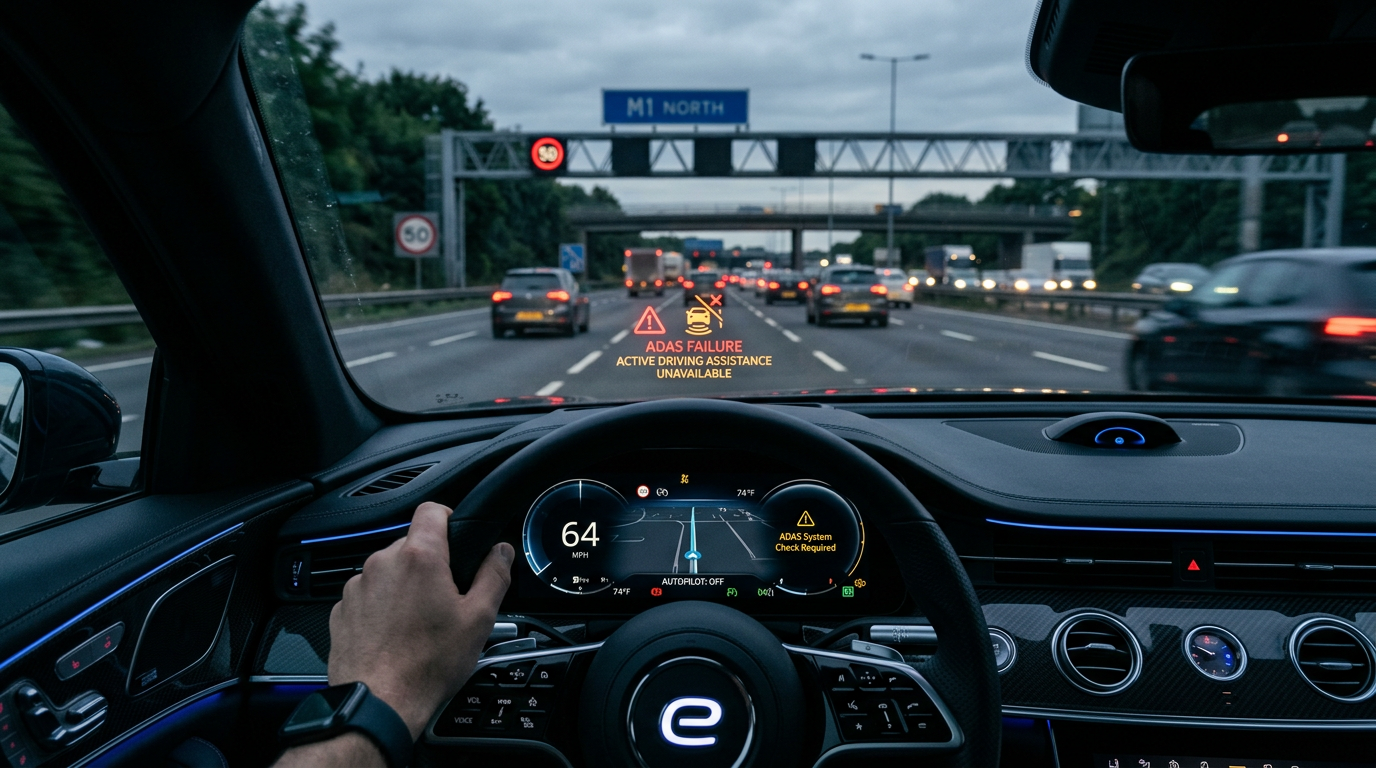
The automotive landscape in 2026 is vastly different from a decade ago. Advanced Driver Assistance Systems (ADAS)—ranging from autonomous emergency braking (AEB) and lane-keep assist to sophisticated Level 2+ semi-autonomous motorway pilots—are no longer premium options; they are standard equipment.
However, as cars become "computers on wheels," the complexity of these safety systems has led to a new breed of mechanical failure. When your lane-keep assist drifts or your emergency braking triggers for no reason (ghost braking), it isn’t just a nuisance; it’s a legal matter of "satisfactory quality."
If you have purchased a vehicle in 2026—whether new or used from a dealership—and its safety tech is failing, the Consumer Rights Act 2015 (CRA 2015) remains your strongest shield. Here is how you can exercise your right to reject a car for failing ADAS.
Buyer Rights: The CRA 2015 Framework
Under the Consumer Rights Act 2015, any vehicle sold by a trader to a consumer must meet three core pillars. If the ADAS suite fails to meet these, you have a statutory right to a remedy.
1. Satisfactory Quality
The law dictates that a car must be of a standard that a "reasonable person" would expect. In 2026, a reasonable person expects safety critical sensors (LiDAR, Radar, and Cameras) to function without constant error messages. A car with a faulty AEB system that disengages intermittently is arguably not of satisfactory quality.
2. Fit for Purpose
If you specifically requested a vehicle with "Traffic Jam Assist" because of a heavy commute, and that system fails to function, the car is not fit for the specific purpose you made known to the dealer.
3. As Described
If a used car was advertised as having "Full Autonomous Parking" or "Adaptive Cruise Control," but the hardware is faulty or the software subscription has been disabled without prior notice, the car is not "as described."
The "Right to Reject" Timeline
- The Short-Term Right to Reject (First 30 Days): If an ADAS fault appears within the first 30 days of delivery, you can reject the car and demand a full refund. You do not have to give the dealer a chance to repair it first.
- The Final Right to Reject (After 30 Days): Between 30 days and six months, you must give the dealer one opportunity to repair the fault. If the ADAS calibration fails again, or if the repair remains unsuccessful, you can trigger your final right to reject for a full or partial refund.
Dealer and Trader Obligations
Traders often argue that ADAS failures are "software glitches" that don't constitute a mechanical failure. Legally, this distinction does not exist under the CRA 2015.
The Burden of Proof
In 2026, the law remains clear: if a fault emerges within the first six months of ownership, it is legally presumed that the fault was present at the time of delivery. The obligation is on the dealer to prove the car was fault-free, rather than on you to prove it was broken.
Transparency and the CPRs 2008
Under the Consumer Protection from Unfair Trading Regulations 2008 (CPRs), dealers are prohibited from omitting "material information." If a dealer sells a used EV or high-tech petrol car knowing the ADAS camera is misaligned due to a previous poor windscreen replacement, they may be committing a criminal offence by misleading the consumer.
Digital Content Standards
The CRA 2015 also includes specific provisions for "Digital Content." Since 2026 vehicles rely on "Over-the-Air" (OTA) updates, a faulty software update that "bricks" your safety sensors is a failure of digital content. The dealer (as the primary contractor) is responsible for ensuring the software remains functional.
ADAS Failures: What Qualifies for Rejection?
Not every minor beep justifies a refund. To successfully reject a car in 2026, the fault usually needs to be "significant." Common valid reasons include:
- Ghost Braking: The car abruptly applies brakes when no obstacle is present. This is a major safety breach under the Road Traffic Act 1988 regarding vehicle roadworthiness.
- Blind Spot Monitoring Failure: If the system fails to detect vehicles, it renders a key safety feature advertised by the manufacturer useless.
- Sensor Misalignment: Constant "Sensor Blocked" messages on clear days often indicate a hardware defect or a failing ECU (Electronic Control Unit).
Your Protection via Finance: Section 75 and Section 99
If you didn’t buy the car outright—which most UK drivers don't in 2026—you have additional layers of protection.
The Consumer Credit Act 1974 (Section 75)
If you paid even a £100 deposit on a credit card for a car costing up to £30,000, the card provider is "jointly and severally liable." If the dealer refuses to acknowledge a faulty ADAS system, you can claim the full cost of the car back from your bank.
Section 99 (Voluntary Termination)
While not a "rejection" for a fault, if you are halfway through a PCP or HP agreement and are frustrated with tech issues, Section 99 allows you to return the car once you have paid 50% of the total amount payable.
Steps to Reject Your Vehicle
- Stop Driving: Once an ADAS fault makes the vehicle feel unsafe, continuing to drive it can be seen as "accepting" the fault.
- Evidence Gathering: Take photos of dashboard warning lights. If your car has built-in dashcam footage of "ghost braking" incidents, save it.
- Formal Letter of Rejection: You must notify the dealer in writing. State clearly that you are exercising your "Short-Term Right to Reject" under the Consumer Rights Act 2015.
- Contact the Finance Provider: If the car is on finance, the vehicle actually belongs to the bank. You must inform them of the rejection process.
Key Takeaways for 2026
- 30-Day Window: Act fast. The right to a full "no-questions" refund for faulty ADAS ends at 30 days.
- Software is Hardware: Don't let a dealer tell you a software bug isn't a "fault." If the system doesn't work, the car isn't as described.
- Safety First: ADAS is classified as safety equipment. Failures here are often viewed more seriously by the Financial Ombudsman Service (FOS) than cosmetic issues.
- Six-Month Rule: If the fault appears within 180 days, the law is on your side regarding the "burden of proof."
Disclaimer: This article is for general informational purposes only and does not constitute legal advice. While it references UK legislation such as the Consumer Rights Act 2015 and Consumer Credit Act 1974, laws and their interpretations can change. If you are involved in a legal dispute, please consult a qualified legal professional or Citizens Advice.