By June 2026, the UK used car market has undergone a significant shift. With the average age of vehicles on our roads now exceeding nine years, the prevalence of insurance write-offs—specifically Cat N (Non-structural)—has risen. While a Cat N designation once deterred many buyers, the skyrocketing costs of brand-new vehicles and the refinement of repair technologies mean these cars are now a mainstream choice for value-seeking motorists.
However, the question remains: how do you verify repair quality in an era of advanced driver assistance systems (ADAS) and composite materials? At CarsLink.ai, we’ve seen a surge in users seeking "provenance peace of mind." This guide goes beyond the basic HPI check to ensure your potential bargain isn't a safety liability.
Understanding MIAFTR Salvage Categories in 2026
The Motor Insurance Anti-Fraud and Theft Register (MIAFTR) remains the central database for vehicle write-offs. To verify repair quality, you must first understand what you are actually buying.
| Category | Definition | Status in 2026 |
|---|---|---|
| Cat A | Scrap only. Must be crushed. | Illegal to return to the road. |
| Cat B | Break for parts only. | Chassis must be destroyed. |
| Cat S | Structural damage. | Repairable, but requires professional geometry checks. |
| Cat N | Non-structural damage. | Repairable. Includes electrics, trim, and minor panels. |
The "N" stands for non-structural, but in 2026, "non-structural" can still mean "highly complex." A modern bumper isn't just plastic; it houses ultrasonic sensors, radar units for autonomous emergency braking (AEB), and perhaps even LiDAR.
The 2026 Challenge: ADAS and Software Calibration
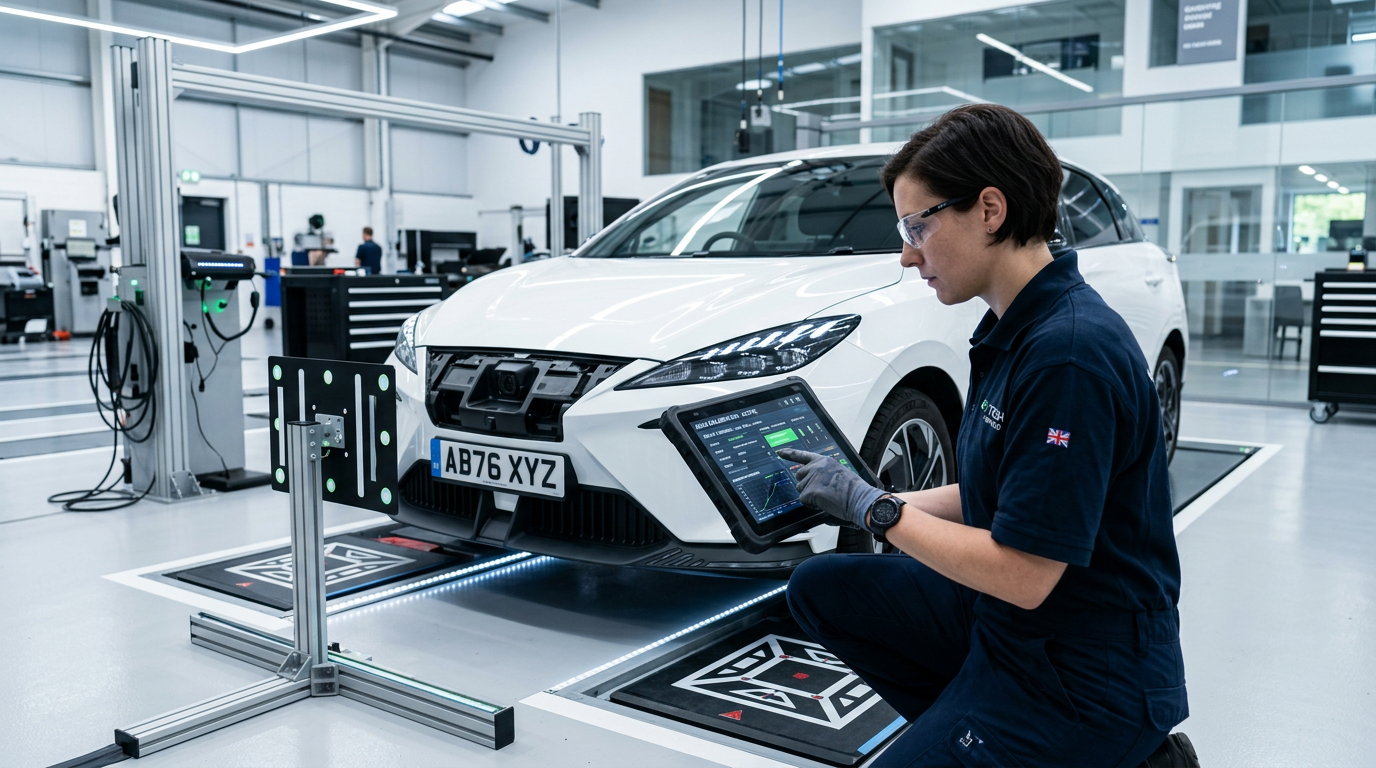
The biggest risk with a Cat N car today isn't a wonky door gap; it’s a misaligned sensor. If a car suffered a front-end "non-structural" impact, the bumper and headlights may have been replaced perfectly, but if the ADAS sensors weren't calibrated to millimetre precision, your lane-keep assist or adaptive cruise control could fail at a critical moment.
How to Verify:
- Demand the Calibration Certificate: In 2026, any reputable repairer should provide a digital certificate proving the ADAS systems have been recalibrated following the repair.
- Diagnostic Health Check: Use an OBD-II scanner or ask for a "fault code report." If there are "U-codes" (communication errors) hidden in the ECU, the repair was likely a "quick flip."
Inspecting Write-Off Repair Standards
When a car is written off, the insurance company deemed the repair cost to be uneconomical relative to the vehicle's value. This often happens because of high labour rates and the cost of OEM parts. To make a profit, some "backstreet" repairers might cut corners.
1. Paint and Finish (The Visual Clue)
Check the car in natural daylight. Use a paint depth gauge (available cheaply online) to check for heavy filler usage. While Cat N doesn't involve the frame, thick filler on a rear quarter panel can crack over time, leading to rust and MOT failure.
2. The V5C and MOT History
Check the V5C logbook to see if the car was off the road for a significant period. Cross-reference this with the MOT history on the GOV.UK website. A car that vanished for six months and then reappeared with a "clean" MOT might have been repaired hastily. Look for advisories immediately following the repair period that mention "undertrays fitted" or "covers obscuring components"—this can be a tactic to hide poor underside work.
3. Electrical Integrity
Non-structural damage often involves water ingress (floods) or minor engine bay fires. Check for:
- Corrosion on battery terminals.
- Dampness under the footwell carpets.
- Mismatched wiring looms or "vampire clips" where electronics have been spliced.
Used Car Provenance: The Digital Trail
In 2026, used car provenance is about more than just a service book. Tools like CarsLink.ai allow buyers to aggregate data from multiple sources. For a Cat N vehicle, you should look for:
- Salvage Auction Images: Most Cat N cars pass through Copart or Synetiq. By searching the VIN, you can often find "before" photos. If the "non-structural" damage looks suspiciously liked a kinked B-pillar, walk away.
- Parts Provenance: Did the repairer use "Green Parts" (recycled OEM parts) or cheap aftermarket imitations? Green parts are often higher quality and better for the environment, fitting the sustainability trends of 2026.
Insurance and Resale: The "Write-Off Tax"
Even a perfectly repaired Cat N car will typically be worth 20-25% less than its "clean" equivalent. Ensure your purchase price reflects this.
Furthermore, while most insurers in 2026 will cover Cat N vehicles, some may charge a slightly higher premium or insist on an independent engineer’s report. Always get an insurance quote before committing to the purchase.
The 2026 Inspection Checklist for Cat N Buyers
- [ ] VIN Match: Ensure the VIN on the dashboard, door shut, and V5C align.
- [ ] Panel Gaps: Ensure gaps between the bonnet, wings, and doors are uniform.
- [ ] Airbag Check: Ensure the "SRS" light illuminates and goes out correctly. Check for "squishy" dashboard surfaces where an airbag may have deployed and been poorly patched.
- [ ] Road Test: Does the car pull to one side? Non-structural damage shouldn't affect alignment, but a "Cat N" that drives poorly may actually be an unrecorded "Cat S."
Conclusion
Buying a Cat N vehicle in 2026 is a savvy way to get more car for your money, provided you move beyond the surface level. By focusing on ADAS calibration, digital provenance, and physical inspection standards, you can secure a safe, high-quality vehicle at a fraction of the market price.
For the most accurate valuations and history checks on salvaged or repaired vehicles, use CarsLink.ai to verify every detail before you sign on the dotted line.
Are you looking to buy or sell a repaired vehicle? Explore our latest listings and expert valuation tools at [CarsLink.ai] today.